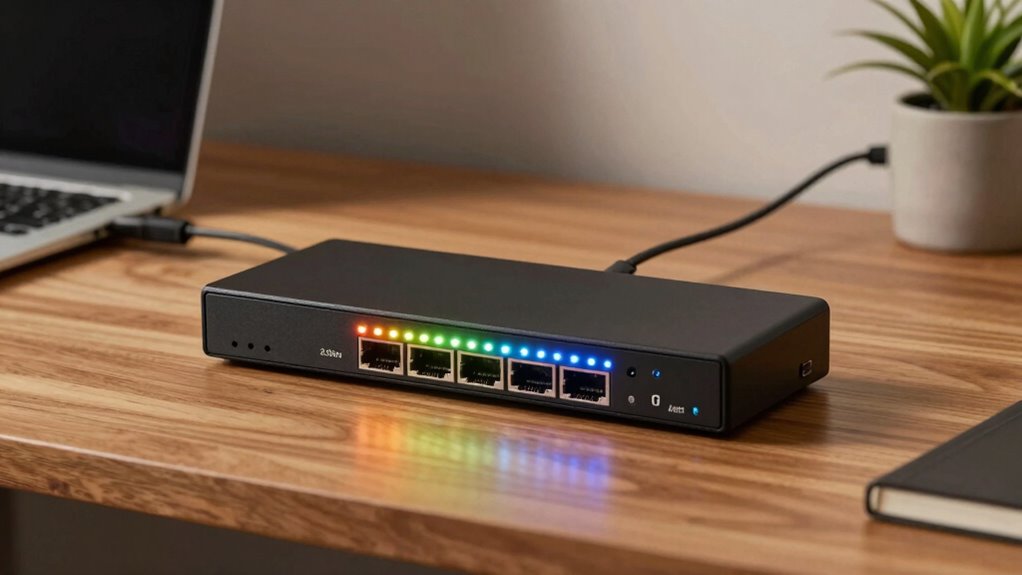

For anyone upgrading a home office network, a 2.5GbE switch offers a significant speed boost over traditional Gigabit setups, enabling faster data transfers and smoother workflows. The TP-Link TL-SG105S-M2 stands out as the best overall choice thanks to its reliable performance and simple unmanaged design. If you’re looking for a managed option, the Omada ES210X-M2 provides advanced control, while the VunLink 10Gb Ethernet Switch offers high port density for expanding connectivity. However, tradeoffs between unmanaged simplicity and managed features, port count, and price can make choosing the right switch tricky. Keep reading for a full breakdown of these options and what you need to know to pick the best fit for your home office setup.

Get hardware and tech essentials delivered free with Prime
- Fast, free delivery on millions of items
- Prime Video, Amazon Music and more included
- Member-only deals all year
Key Takeaways
- Managed switches like the Omada ES210X-M2 provide advanced features but come with a higher price and complexity.
- Unmanaged switches such as the TP-Link TL-SG105S-M2 are simple to set up and ideal for straightforward network upgrades.
- Port count varies from 6 to 8 ports in most options, influencing expansion potential based on your current and future needs.
- Some switches include SFP ports for fiber or high-speed uplinks, useful for high-performance home office setups.
- Fanless design is common and beneficial for quiet operation in a home environment, but may limit cooling and performance at high loads.
| TP-Link TL-SG105S-M2 5-Port Multi-Gigabit Unmanaged Ethernet Switch |  | Best Overall for Simple Home Networks | Number of Ports: 5 | Compatible Devices: Desktop | Data Transfer Rate: 25 Gbps | VIEW ON AMAZON | See Our Full Breakdown |
| Omada ES210X-M2, 8 Port 2.5G Easy Managed Switch |  | Best for Managed Network Control and Expansion | Number of Ports: 8 | Port Speed: 2.5 Gbps | Uplink Ports: 2 x 10 Gbps SFP+ | VIEW ON AMAZON | See Our Full Breakdown |
| 6 Port 2.5G Unmanaged Ethernet Switch, 4 x 2.5G Base-T Ports, 2 x 10G SFP |  | Best for Versatile High-Speed Connectivity | Ports: 4 x 2.5G Ethernet, 2 x 10G SFP | Standards: IEEE 802.3bz | Lightning Protection: 6KV | VIEW ON AMAZON | See Our Full Breakdown |
| STEAMEMO 8-Port 2.5G Ethernet Switch with 10G SFP |  | Best for High Bandwidth Demands and Ease of Use | Number of Ports: 8 | Data Transfer Rate: 60Gbps | Switch Type: Unmanaged | VIEW ON AMAZON | See Our Full Breakdown |
| TP-Link TL-SG108S-M2 8-Port Multi-Gigabit 2.5G Unmanaged Ethernet Switch |  | Best Overall for Simplicity and Speed | Ports: 8 | Speed: 2.5 Gbps | Switching Capacity: 40 Gbps | VIEW ON AMAZON | See Our Full Breakdown |
| 7-Port 2.5GbE Managed Switch with 2x 10G SFP+ Ports, VLAN, LACP, QoS, Fanless Metal Design |  | Best for Network Control and Expansion | Number of Ports: 7 | Port Types: 5 x 2.5G, 2 x 10G SFP+ | Data Transfer Rate: 2.5 Gbps | VIEW ON AMAZON | See Our Full Breakdown |
| VunLink 10Gb Ethernet Switch with 8 x 2.5GbE and 2 x 10GbE Ports |  | Best for High-Speed, No-Fuss Expansion | Number of Ports: 10 | Compatible Devices: Desktop, Gaming Console, Laptop, Printer, Server | Interface: RJ45 | VIEW ON AMAZON | See Our Full Breakdown |
| 6 Port 2.5G Unmanaged Ethernet Switch, 4 x 2.5G Base-T Ports, 2 x 10G SFP+ Ports |  | Best for Compact High-Speed Networks | Ports: 4 x 2.5G, 2 x 10G SFP+ | Standards: IEEE 802.3bz | Switching Capacity: 60 Gbps | VIEW ON AMAZON | See Our Full Breakdown |
| NICGIGA 6 Port 10Gbps Network Switch with 2.5Gb and 10Gb Ports |  | Best for High-Speed, Versatile Home Networks | Number of Ports: 6 | Ports: 2 x 10Gb, 4 x 2.5Gb | Switching Capacity: 60 Gbps | VIEW ON AMAZON | See Our Full Breakdown |
| 5gbe switch for home office | Number of Ports | Design | Switching Capacity |
|---|---|---|---|
| TP-Link TL-SG105S-M2 5-Port Mu | 5 | — | — |
| Omada ES210X-M2 | 8 | Fanless, metal | — |
| 6 Port 2.5G Unmanaged Ethernet | — | Fanless, desktop/wall mount | Unknown |
| STEAMEMO 8-Port 2.5G Ethernet | 8 | — | — |
| TP-Link TL-SG108S-M2 8-Port Mu | — | Fanless | 40 Gbps |
| 7-Port 2.5GbE Managed Switch w | 7 | Fanless metal | — |
| VunLink 10Gb Ethernet Switch w | 10 | Fanless | 80 Gbps |
| 6 Port 2.5G Unmanaged Ethernet | — | Fanless, metal | 60 Gbps |
| NICGIGA 6 Port 10Gbps Network | 6 | — | 60 Gbps |
More Details on Our Top Picks
TP-Link TL-SG105S-M2 5-Port Multi-Gigabit Unmanaged Ethernet Switch
The TP-Link TL-SG105S-M2 stands out for its straightforward plug-and-play design, making it ideal for users who want reliable high-speed connectivity without complexity. Compared to the VunLink 6 Port 10G/2.5G model, it offers a more compact form factor and silent operation, perfect for small home offices. However, it lacks advanced management features, limiting customization. Its metal case ensures durability, and auto-negotiation guarantees broad device compatibility, but the absence of a included power adapter may be inconvenient. This switch makes the most sense for users seeking a simple, dependable upgrade to their existing network.
Pros:- Supports high-speed 2.5-Gigabit connections for fast data transfer
- Fanless design ensures silent operation
- Durable metal casing for longevity
- Easy plug-and-play setup
Cons:- Limited to unmanaged switch functionality
- No included power adapter details
Best for: Home users and small office setups needing a reliable, unmanaged switch with high-speed ports.
Not ideal for: Tech enthusiasts or network administrators requiring managed features or VLAN configurations.
- Number of Ports:5
- Compatible Devices:Desktop
- Data Transfer Rate:25 Gbps
- Switch Type:Unmanaged
- Case Material:Metal
- Item Dimensions:5.45 x 5.45 x 3.98 inches
Our verdict“This switch is best suited for users seeking a simple, silent upgrade for small networks without the need for management features.”
Omada ES210X-M2, 8 Port 2.5G Easy Managed Switch
The Omada ES210X-M2 is designed for users who want more control over their network, combining high-speed 2.5G ports with cloud management capabilities. Unlike the VunLink 6 Port 10G/2.5G, it offers advanced features like VLAN support, IGMP Snooping, and auto loop prevention, making it suitable for small but growing networks. Its fanless, durable metal construction ensures quiet operation, but its 8-port limit may restrict larger setups. Cloud management offers convenience, but it requires compatibility with the Omada platform. This switch is best for those who want to fine-tune their network with managed features without complex enterprise hardware.
Pros:- High-speed 2.5G ports suitable for modern devices
- Silent, fanless operation
- Cloud-based management for remote control
- Durable metal casing
Cons:- Limited to 8 ports, not ideal for larger networks
- Requires Omada platform for management features
- No PoE support
Best for: Small offices or home networks needing manageable, high-speed ports with remote control.
Not ideal for: Home users who prefer simple plug-and-play setups or don’t require management features.
- Number of Ports:8
- Port Speed:2.5 Gbps
- Uplink Ports:2 x 10 Gbps SFP+
- Management:Cloud-based via Omada SDN
- Design:Fanless, metal
- Features:VLAN, IGMP Snooping
Our verdict“This switch targets users who want managed network features with high-speed ports for small, adaptable networks.”
6 Port 2.5G Unmanaged Ethernet Switch, 4 x 2.5G Base-T Ports, 2 x 10G SFP
The YuanLey 6 Port 2.5G switch offers a balanced mix of high-speed ports with two 10G SFP options, making it versatile for both small home and office setups. Unlike the STEAMEMO 8-Port 2.5G, it provides VLAN support for added network security, which is beneficial for users with multiple devices. The fanless design ensures quiet operation, but SFP modules are not included, adding extra cost for expansion. Its unmanaged nature simplifies setup but limits advanced control. This model is ideal for users wanting high-speed connectivity combined with basic network security features.
Pros:- Supports 2.5G and 10G high-speed connections
- VLAN support enhances network security
- Fanless, quiet operation
- Versatile mounting options
Cons:- SFP modules are not included
- Limited to unmanaged features
- Additional cost for SFP modules
Best for: Home offices or small networks requiring flexible, high-speed ports with some security options.
Not ideal for: Larger networks or users seeking managed, customizable switch configurations.
- Ports:4 x 2.5G Ethernet, 2 x 10G SFP
- Standards:IEEE 802.3bz
- Lightning Protection:6KV
- Design:Fanless, desktop/wall mount
- Temperature Range:-10°C to 50°C
- Switching Capacity:Unknown
Our verdict“This switch suits users who need a flexible, unmanaged multi-gigabit switch with VLAN support at a reasonable price point.”
STEAMEMO 8-Port 2.5G Ethernet Switch with 10G SFP
The STEAMEMO 8-Port 2.5G switch offers a straightforward solution for demanding applications like NAS and gaming, with a 60Gbps capacity and plug-and-play operation. Compared to the VunLink 6 Port 10G/2.5G, its larger port count and simple design make it more accessible for typical home office setups. Its fanless build keeps noise minimal, but it doesn’t include advanced management features, limiting customization. The support for VLAN through One-Key setup is a plus for security-conscious users, but a lack of included power supply may cause inconvenience. This switch is ideal for users prioritizing high speed and ease of use in small networks.
Pros:- High throughput with 60Gbps capacity
- Plug-and-play installation
- Fanless, silent operation
- Supports VLAN for security
Cons:- Limited to unmanaged features
- No included power supply
- Basic management features only via One-Key VLAN
Best for: Home users or small offices needing high bandwidth for NAS, gaming, or streaming with simple setup.
Not ideal for: Users requiring detailed network management or larger, more complex networks.
- Number of Ports:8
- Data Transfer Rate:60Gbps
- Switch Type:Unmanaged
- Case Material:Metal
- Item Dimensions:7.8 x 4.6 x 1.73 inches
- Operation Temperature Range:Wide
Our verdict“This switch is best for users wanting high-speed, simple connectivity with minimal configuration effort.”
TP-Link TL-SG108S-M2 8-Port Multi-Gigabit 2.5G Unmanaged Ethernet Switch
The TP-Link TL-SG108S-M2 stands out as a versatile, straightforward choice for those seeking high-speed connectivity without complexity. Its 8 ports support 2.5Gbps data transfer, making it suitable for fast file sharing, NAS, and gaming setups. Compared to the VunLink 10Gb Ethernet Switch, it offers a lower overall transfer capacity but excels in plug-and-play simplicity and silent operation, ideal for users who prefer a fuss-free upgrade. Its unmanaged nature limits advanced features, but that tradeoff keeps setup simple and cost-effective. Designed for small home offices or users upgrading existing networks, this switch balances performance and ease of use. However, compatibility issues with older devices and lack of management features may be drawbacks for tech-savvy users with complex needs.
Pros:- Supports high-speed 2.5Gbps connections for quick data transfer
- Fanless, silent operation suits quiet home environments
- Simple plug-and-play setup with no additional wiring needed
Cons:- Limited to unmanaged switch functionality, no advanced features
- Potential compatibility issues with older networking equipment
Best for: Home users or small offices seeking straightforward high-speed upgrades without needing advanced network management
Not ideal for: Network administrators requiring detailed control or advanced configuration options
- Ports:8
- Speed:2.5 Gbps
- Switching Capacity:40 Gbps
- Auto-Negotiation:Yes
- Design:Fanless
Our verdict“Best suited for users wanting a reliable, easy-to-use switch that enhances their home network without complexity.”
7-Port 2.5GbE Managed Switch with 2x 10G SFP+ Ports, VLAN, LACP, QoS, Fanless Metal Design
This managed switch offers a flexible solution for those wanting more control over their home or small office network. Its 5 x 2.5G ports and 2 x 10G SFP+ ports provide ample bandwidth for NAS, gaming, and multiple devices. Unlike the VunLink 10Gb Switch, which is unmanaged, this model enables VLAN segmentation, bandwidth prioritization, and link aggregation, making it ideal for users who need customized network traffic management. Its fanless, durable metal design ensures quiet operation, though configuring these features requires some network knowledge, which might be a barrier for beginners. Best suited for tech-savvy users needing tailored network setups, this switch offers powerful features at the expense of simplicity.
Pros:- Supports advanced features like VLAN, LACP, and QoS for customized networks
- High-speed 2.5G and 10G SFP+ ports for flexible expansion
- Fanless, robust metal housing for silent, durable operation
Cons:- No PoE support, limiting device powering options
- Requires some network knowledge to fully utilize features
- Limited port count for larger network needs
Best for: Advanced home users or small business owners comfortable with network management and configuration
Not ideal for: Users seeking a plug-and-play experience with minimal setup or technical expertise
- Number of Ports:7
- Port Types:5 x 2.5G, 2 x 10G SFP+
- Data Transfer Rate:2.5 Gbps
- Switch Type:managed
- Design:Fanless metal
Our verdict“This switch is perfect for experienced users wanting a high-performance, managed network with advanced control options.”
VunLink 10Gb Ethernet Switch with 8 x 2.5GbE and 2 x 10GbE Ports
The VunLink 10Gb Ethernet Switch offers broad high-speed connectivity suitable for demanding home networks. Its 8 ports support 2.5Gbps, while 2 ports provide 10Gbps, making it ideal for NAS, gaming, and data-heavy tasks. Compared with the NICGIGA 6 Port 10Gbps Switch, it provides more ports and greater flexibility, though both are unmanaged and lack advanced features. Its plug-and-play design, combined with a fanless, durable metal case, makes installation straightforward and noise-free. However, the absence of management features means less control over traffic prioritization, which could be a concern for users with complex network needs.
Pros:- Supports high-speed 2.5G and 10G connections for rapid data transfer
- Plug-and-play setup with auto-negotiation
- Fanless, durable metal construction ensures silent operation
Cons:- Limited to unmanaged switch features, no advanced control
- SFP+ modules not included, additional cost for fiber connectivity
Best for: Home tech enthusiasts seeking high-speed, simple network expansion without configuration fuss
Not ideal for: Those needing detailed traffic management or VLAN segmentation
- Number of Ports:10
- Compatible Devices:Desktop, Gaming Console, Laptop, Printer, Server
- Interface:RJ45
- Switching Capacity:80 Gbps
- Design:Fanless
Our verdict“Ideal for users who want quick, high-speed network expansion with minimal setup effort.”
6 Port 2.5G Unmanaged Ethernet Switch, 4 x 2.5G Base-T Ports, 2 x 10G SFP+ Ports
This NICGIGA unmanaged switch offers a compact, reliable solution for high-speed connections in small setups. Its 4 x 2.5G ports and 2 x 10G SFP+ ports provide ample bandwidth for NAS, gaming, or servers, comparable to the VunLink model but with a slightly smaller footprint. The fanless metal design ensures quiet operation, and its plug-and-play nature makes for easy installation. Unlike the managed options, it doesn’t support VLAN or bandwidth control, limiting flexibility for complex network configurations. Best suited for small, high-speed network segments in home or small office environments, but less ideal if advanced traffic management is needed.
Pros:- Supports high-speed 2.5G and 10G connections for fast data transfer
- Easy installation with plug-and-play design
- Durable, fanless metal case ensures quiet operation
Cons:- Limited to unmanaged features, no VLAN or QoS support
- SFP+ modules are not included, additional purchase needed
Best for: Users needing a compact, high-speed switch for small networks or specific device clusters
Not ideal for: Those requiring advanced network features or extensive port expansion
- Ports:4 x 2.5G, 2 x 10G SFP+
- Standards:IEEE 802.3bz
- Switching Capacity:60 Gbps
- Design:Fanless, metal
- Temperature Range:-10°C to 50°C
Our verdict“Suitable for small-scale, high-speed setups where simplicity and reliability are priorities.”
NICGIGA 6 Port 10Gbps Network Switch with 2.5Gb and 10Gb Ports
The NICGIGA 6 Port 10Gbps Switch provides a balanced mix of high-speed ports suitable for demanding home setups. Its 2 x 10Gb ports and 4 x 2.5Gb ports deliver rapid data transfer for NAS, gaming, or WiFi 7 routers. Unlike the VunLink switch, which is entirely unmanaged, this model offers a straightforward setup in a durable metal case with silent operation. Its flexibility makes it appealing for users who want fast connectivity but don’t require complex management features. The main limitation is the lack of specific power supply details and no onboard management, which might restrict advanced network tuning.
Pros:- Supports multiple high-speed connections for demanding tasks
- Plug-and-play with durable, silent metal construction
- Supports various speeds from 1G to 10G for flexibility
Cons:- No management features, limiting traffic control
- Power supply details not specified
Best for: Home users needing a dependable, high-speed switch with some versatility in port speeds
Not ideal for: People looking for managed switch capabilities or detailed traffic controls
- Number of Ports:6
- Ports:2 x 10Gb, 4 x 2.5Gb
- Switching Capacity:60 Gbps
- Supported Speeds:10G/5G/2.5G/1G
- Mounting Options:Desktop/Wall
Our verdict“Ideal for users wanting quick, high-performance connectivity with minimal fuss.”

How We Picked
These products were selected based on their port versatility, build quality, and ease of use in a home office environment. Priority was given to switches offering true 2.5GbE speeds, reliable performance, and good value for their intended user. Managed versus unmanaged options were evaluated to match different user preferences—those wanting simple plug-and-play setups versus those requiring advanced network control. Port configuration, additional features like SFP slots, and physical design also influenced the ranking, with a focus on balancing performance with affordability for typical home office needs.| 5gbe switch for home office | Design |
|---|---|
| TP-Link TL-SG105S-M2 5-Port Mu | — |
| Omada ES210X-M2 | Fanless, metal |
| 6 Port 2.5G Unmanaged Ethernet | Fanless, desktop/wall mount |
| STEAMEMO 8-Port 2.5G Ethernet | — |
| TP-Link TL-SG108S-M2 8-Port Mu | Fanless |
| 7-Port 2.5GbE Managed Switch w | Fanless metal |
| VunLink 10Gb Ethernet Switch w | Fanless |
| 6 Port 2.5G Unmanaged Ethernet | Fanless, metal |
| NICGIGA 6 Port 10Gbps Network | — |
Factors to Consider When Choosing 2 5gbe Switch For Home Office
Choosing the right 2.5GbE switch for your home office involves understanding several key factors. Beyond just port count, considerations like managed versus unmanaged operation, physical design, and future expandability impact long-term satisfaction. Making an informed decision helps avoid bottlenecks and ensures your network can handle current and future data loads with ease.Port Count and Expansion Potential
Assess your current device count and anticipate future growth. Most home offices will find 6 to 8 ports sufficient, but if you plan to add more devices or use network-attached storage, a switch with more ports or uplink options like SFP slots can be beneficial. Keep in mind that more ports often mean higher cost and size, so match your choice to your actual needs to avoid overspending or clutter.
Managed vs. Unmanaged Switches
Unmanaged switches are straightforward, requiring no configuration, making them ideal for users who want a quick setup. Managed switches, on the other hand, provide features like VLANs, QoS, and traffic prioritization, which are useful if your network requires segmentation or advanced control. However, managed options are usually more complex and costlier, so consider your technical comfort and future needs before choosing.
Speed and Uplink Options
While 2.5GbE is the focus, some switches include 10Gb uplink ports for connecting to a high-speed NAS or router. This can maximize data throughput and reduce bottlenecks in demanding setups. If your network involves large file transfers or streaming, opting for a switch with SFP ports or multiple uplinks offers added flexibility and performance, but at a higher price.
Build Quality and Noise
Most home office switches are fanless, which keeps noise levels low—crucial for quiet work environments. Durability and build quality matter if the unit will be mounted or moved frequently. Cheaper models may compromise on cooling or materials, risking overheating or shorter lifespan. Select a well-built switch with a silent operation to maintain a comfortable workspace.
Pricing and Value
While budget options can handle basic needs, investing in a slightly more expensive switch often provides better build quality, more features, and future-proofing. Balance cost with your current requirements and potential network growth. Sometimes, spending a little more initially prevents the need for an upgrade soon after, especially if you rely heavily on high-speed transfers and multiple devices.
Frequently Asked Questions
Do I need a managed switch for my home office?
Most home office setups benefit from unmanaged switches due to their simplicity and plug-and-play nature. Managed switches are better suited if you require advanced features like VLAN segmentation, traffic prioritization, or network monitoring. For typical users, unmanaged switches provide enough speed and reliability without the complexity, but if you plan to grow or want more control, a managed switch could be worth the investment.
Is a 2.5GbE switch compatible with my existing Gigabit Ethernet devices?
Yes, 2.5GbE switches are backward compatible with standard Gigabit devices, meaning your older equipment will function normally. The main advantage appears when connecting devices that support 2.5GbE or higher, providing faster transfer speeds. Keep in mind, the network’s overall performance depends on all connected devices supporting the higher speeds, so mixed environments may not reach full 2.5GbE potential.
What’s the benefit of having SFP ports on my switch?
SFP ports allow for fiber or high-speed uplinks, which are useful if you need to connect to a high-performance router or NAS over longer distances or at higher speeds. They also enable linking multiple switches in a larger network without sacrificing port count or speed. For most home offices, SFP ports are optional but valuable if you seek maximum future flexibility or have demanding data transfer needs.
Should I prioritize fanless design or additional features?
A fanless switch keeps noise levels minimal, ideal for quiet work environments. However, fanless models may have lower thermal capacity, potentially affecting performance under sustained heavy loads. If your network traffic is light and quiet operation is a priority, a fanless switch makes sense. Conversely, if you anticipate heavy data use, consider a switch with active cooling or better thermal management, even if it introduces some noise.
How do I know if a switch will support future network upgrades?
Look for switches with higher port counts, uplink options like SFP or 10Gb ports, and managed features that allow network segmentation and traffic control. These features provide room for expansion and can adapt to faster or more complex network setups. Investing in a switch with these capabilities now can extend its usefulness as your home office network evolves, preventing the need for an immediate upgrade.
Conclusion
For most home office users seeking straightforward speed improvements, the TP-Link TL-SG105S-M2 offers excellent value and ease of use. If you want advanced control, the Omada ES210X-M2 is a compelling choice, suitable for users who need network segmentation or QoS features. Budget-conscious buyers should consider the NICGIGA 6 Port 10Gbps Switch for future-proofing, while those with larger setups or demanding data needs will appreciate the high port density and SFP options of models like the VunLink 10Gb Ethernet Switch. Ultimately, your decision should align with your current device count, technical comfort, and future growth plans—ensuring your home office network remains fast, reliable, and adaptable.