📊 Full opportunity report: Undervolting Your GPU for Local Inference: Lower Heat, Same Tokens/sec on ThorstenMeyerAI.com — validation score, market gap, and execution plan.
TL;DR
Undervolting a GPU through power limiting can significantly lower heat and noise during AI inference tasks while maintaining nearly the same tokens/sec. This technique is easy to implement and safe, offering efficiency gains for long-running workloads.
Recent experiments and practical guides confirm that undervolting GPUs via power limiting can substantially reduce heat and noise during local AI inference workloads, with minimal impact on tokens per second.
Researchers and enthusiasts have demonstrated that lowering the power limit of GPUs like the NVIDIA RTX 4090 and RTX 5090 results in significant temperature and noise reductions. For example, reducing power to around 70% of maximum can cut heat output by over 20% while maintaining approximately 94% of the original inference speed, according to recent performance data. This approach leverages the fact that inference workloads are often memory-bandwidth-bound, meaning the GPU’s core clock speed is less critical for performance than in gaming or compute-intensive tasks.
The easiest method involves adjusting the ‘power limit’ slider in GPU tuning software such as MSI Afterburner, which automatically manages voltage and clock adjustments within safe parameters. This method is reversible and does not risk hardware damage. More advanced users can undertake undervolting by editing the GPU’s voltage-frequency curve directly, which may yield even better heat-performance ratios but requires stability testing and technical expertise.
Industry data shows that capping power at around 50-60% of maximum can maintain over 90% of tokens/sec performance while reducing power consumption by about 30-40%. This translates into cooler, quieter operation and lower energy costs, especially important for all-day inference tasks.
Undervolt for inference:
lower heat, same tokens/sec.
Local inference is memory-bound — the GPU core spends much of its time waiting on VRAM, not maxing out compute. So when you cap its power, heat falls fast while throughput barely moves. Drag the slider in Part 2 to see the trade for yourself.
(the real limit)
(often waiting)
you pay for in heat
| Power limit | Power draw | Temp | Speed kept | Efficiency |
|---|---|---|---|---|
| 100% (stock) | 390 W | 72°C | 100% | baseline |
| 80% | 330 W | 70°C | 98.6% | +17% |
| 70%recommended | 300 W | 67°C | 93.4% | +22% |
| 60% | 260 W | 62°C | 91.5% | +37% |
| 55%peak efficiency | 240 W | 60°C | 89.2% | +45% |
| 50% | 220 W | 58°C | 82.6% | +46% |
| 40% (too far) | 180 W | 52°C | 61.3% | falls off |
- One slider, 100% → 70%. The card reduces voltage and clocks on its own.
- Can’t damage anything — you’re restricting the card, not pushing it.
- No stability testing needed.
- Captures most of the available benefit.
- Edit the voltage-frequency curve — hold a clock at lower voltage.
- Target around 0.9–0.95V to start; better chips go lower.
- Keeps more performance for the same heat cut.
- Test under your real workload — a curve stable for 10 min can fail on hour 3.
MSI Afterburner (works on any brand). Headless Linux: nvidia-smi or LACT.sudo nvidia-smi -pl 300.Impact of Power Limiting on AI Inference Efficiency
This development is significant for AI practitioners and data centers because it offers a simple, low-cost way to improve hardware longevity, reduce energy consumption, and lower noise levels without sacrificing inference throughput. As inference workloads are less compute-bound, most users can adopt these settings with minimal performance trade-offs, making high-power GPUs more practical for extended use in office or server environments.

NVIDIA GeForce RTX 5080 Founders Edition
- Blackwell Architecture for Gaming and Creators: Optimized platform for gamers and creators
- Tensor Cores for AI Performance: Enhanced AI with FP4 and DLSS 4
- NVIDIA Reflex 2: Reduced latency with Frame Warp
As an affiliate, we earn on qualifying purchases.
As an affiliate, we earn on qualifying purchases.
GPU Factory Settings and Inference Workload Characteristics
Modern GPUs like NVIDIA's RTX series are factory-tuned for gaming and high-benchmark performance, with conservative voltage curves to ensure stability at maximum clocks. However, these settings often produce excess heat and power use during inference, where the GPU's bottleneck is typically memory bandwidth, not core compute power. Prior to this, most guides focused on gaming, where undervolting can risk performance drops, but inference workloads have different bottlenecks, allowing for more aggressive power management.
Recent tests and user reports confirm that limiting power does not significantly impact tokens/sec during inference, making it an attractive optimization for AI workstations seeking efficiency and quieter operation.
"Reducing the power limit of your GPU during inference can cut heat and noise substantially, with negligible performance loss, because most inference tasks are memory-bound."
— Thorsten Meyer, AI tuning expert

Graphics Cards GPU Brace Support Magnetic Adjustable Height 49mm-80mm Black
- Material: Aluminum-magnesium alloy for durability
- Height Adjustment: Supports 49-80mm height with telescopic screw
- Easy Installation: Tool-less setup, quick and safe
As an affiliate, we earn on qualifying purchases.
As an affiliate, we earn on qualifying purchases.
Remaining Questions on Long-Term Stability and Compatibility
While initial data and user reports are promising, long-term stability of aggressive undervolting and power limiting across diverse workloads and hardware variants remains to be fully verified. Additionally, the impact on GPU lifespan and warranty conditions under sustained undervolting has not been conclusively documented. Further testing is needed to confirm these methods' safety over extended periods and in different system configurations.

MONIGEAR Network Temperature Humidity Monitor, THERMOMETER, Environmental Sensor, Supports MQTT, BACnet, SNMP, Modbus TCP, PoE Power Supply
- Supports Multiple Protocols: Modbus TCP, SNMP, BACnet, MQTT
- Cloud Integration: Compatible with AWS, Azure, Tuya, Home Assistant
- Proactive Alerts: Email notifications and IFTTT automation
As an affiliate, we earn on qualifying purchases.
As an affiliate, we earn on qualifying purchases.
Next Steps for Implementing and Optimizing GPU Power Limits
Users interested in adopting undervolting and power limiting should start with the easy method—adjusting the power slider in GPU tuning software—and monitor performance and temperatures closely. Future updates may include more refined undervolting profiles, community-driven stability tests, and manufacturer guidance. Ongoing research will clarify long-term effects and help develop best practices for inference-specific GPU tuning.
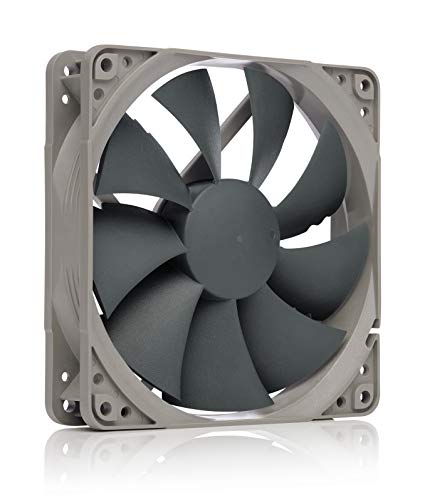
Noctua NF-P12 redux-1700 PWM, Quiet Fan 120mm
- Size: 120x120x25 mm
- Voltage: 12V
- Connector: 4-pin PWM
As an affiliate, we earn on qualifying purchases.
As an affiliate, we earn on qualifying purchases.
Key Questions
Will undervolting affect my GPU's lifespan?
While reducing voltage and power can decrease heat stress, the long-term impact on GPU lifespan is not yet fully established. Proper testing and conservative adjustments are recommended.
Is this method safe for all GPU models?
Power limiting via software like MSI Afterburner is generally safe for most modern GPUs, but undervolting directly on the voltage curve requires caution and may not be supported on all models.
Can I revert these changes if I experience issues?
Yes, both power limiting and undervolting are reversible. You can reset your settings to factory defaults at any time.
Does undervolting reduce inference speed significantly?
Most tests show that at typical power limits (50-70%), the reduction in tokens/sec is minimal—often less than 5%. The trade-off favors heat and noise reduction.
Should I undervolt or just use the power limit slider?
For most users, starting with the power limit slider is sufficient and safer. Undervolting offers further optimization but requires more technical skill and testing.
Source: ThorstenMeyerAI.com