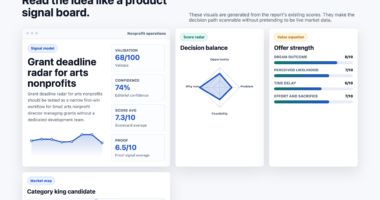

📊 Full opportunity report: HBM Ate The Fab on ThorstenMeyerAI.com — validation score, market gap, and execution plan.
TL;DR
In 2026, HBM has overtaken traditional RAM as the dominant memory component, leading to a worldwide shortage. Major manufacturers like SK Hynix, Samsung, and Micron are fully committed to HBM production, intensifying supply constraints across the industry.
High Bandwidth Memory (HBM) has become the dominant component driving the global memory shortage in 2026, with all major suppliers fully committed to its production. This shift impacts the availability of GPUs and AI accelerators, making HBM the central factor in the ongoing supply crunch.
In 2026, HBM has transitioned from a niche technology to the primary driver of memory supply constraints worldwide. Its high cost, manufacturing complexity, and demand for cutting-edge AI and graphics hardware have led to a severe shortage that affects both high-end GPUs and other memory-dependent components.
Leading suppliers, SK Hynix, Samsung, and Micron, have all confirmed they are in production for the latest HBM4 generation, with capacity fully booked through 2026. Nvidia, a major customer, relies heavily on HBM, with reports indicating that roughly 90% of SK Hynix’s HBM supply is allocated to Nvidia alone.
This surge in HBM demand has made it more profitable for manufacturers to focus on this technology, reducing the production of traditional DDR5 RAM and contributing directly to the global RAM shortage. The economics of HBM, with its high wafer area consumption and yield challenges, mean that every wafer dedicated to HBM effectively reduces the supply of standard memory modules.
HBM ate the fab
The thing the factories make instead of your RAM is a tower of stacked memory bolted to every AI chip. In three years it went from niche part to the component that sets the price of nearly all the world’s memory — and now a chunk of its GPUs.
A tower, not a sheet
HBM stacks DRAM dies vertically, links them with thousands of through-silicon vias, and sits beside the GPU to deliver 5–10× the bandwidth of normal graphics memory. AI is bandwidth-bound — without it, the world’s most expensive silicon sits starved for data. But stacking is inefficient: one HBM bit eats 3–4× the wafer area of DDR5, and one defect can ruin a whole tower.
≈ 8 HBM stacks wrap every AI GPUThis isn’t artificial scarcity — AI really is bandwidth-bound, HBM really is the fix, and it really does eat 3–4× its weight in fab capacity. The discomfort is structural: one component, coupled to one customer’s demand, now sets the price of nearly all memory and a slice of GPUs. The market is now $35B → ~$100B by 2028, ~41% of all DRAM revenue (was 8% in 2023), and sold out through 2026. The one hope: with all three suppliers finally racing on HBM4, competition can add supply. The matching risk: if AI demand corrects, HBM is where it breaks first. Next: DDR5 now, DDR6 soon.
Impact of HBM on Global Memory and GPU Markets
The dominance of HBM in the memory industry has significant consequences for the supply and pricing of GPUs, AI hardware, and consumer electronics. As HBM capacity remains fully booked, the availability of traditional RAM and graphics cards is constrained, leading to increased prices and delays for consumers and manufacturers alike.
This shift also signals a change in industry priorities, with memory manufacturers prioritizing high-margin, high-performance HBM over commodity RAM, potentially reshaping the supply chain and market dynamics for years to come.

EVGA GeForce RTX 3090 FTW3 Ultra Gaming, 24GB GDDR6X, 10496 CUDA Cores, 1800MHz Boost Clock, 3x Fans, ARGB LED, Metal Backplate, PCIe 4, HDMI, DisplayPort, Desktop Compatible
As an affiliate, we earn on qualifying purchases.
As an affiliate, we earn on qualifying purchases.
The Rise of HBM and Its Market Impact
Historically, HBM was a niche product, but since 2023, its importance has skyrocketed due to its superior bandwidth, especially for AI and high-performance computing. The technology’s aggressive development cycle and the high costs associated with stacking multiple DRAM dies have made it the focus of major memory manufacturers.
Leading suppliers like SK Hynix, Samsung, and Micron have all ramped up HBM production, with the market expanding rapidly from $35 billion in 2025 to an estimated $100 billion in 2028. Nvidia’s reliance on HBM for its top GPUs and AI accelerators has further driven demand, with supply fully committed for 2026.
This focus on HBM has come at the expense of traditional DDR5 RAM, which now faces shortages as wafer capacity is diverted toward high-margin HBM production, intensifying the overall memory crunch.
“We are fully committed to HBM4 production for 2026, and capacity is booked through the year.”
— Samsung spokesperson
HBM memory modules for AI hardware
As an affiliate, we earn on qualifying purchases.
As an affiliate, we earn on qualifying purchases.
What Aspects of the HBM Shortage Are Still Unclear?
While it is confirmed that HBM is the primary driver of the 2026 memory shortage, the exact extent of its impact on specific product lines, such as consumer graphics cards or lower-tier AI accelerators, remains uncertain. The pace at which new HBM generations will alleviate supply issues is also still developing, and potential new capacity additions are not yet confirmed.
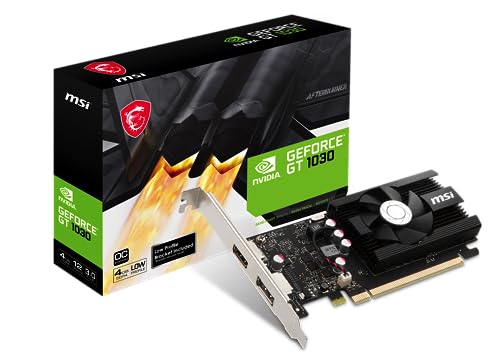
msi Gaming GeForce GT 1030 4GB DDR4 64-bit HDCP Support DirectX 12 DP/HDMI Single Fan OC Graphics Card (GT 1030 4GD4 LP OC)
Chipset: NVIDIA GeForce GT 1030
As an affiliate, we earn on qualifying purchases.
As an affiliate, we earn on qualifying purchases.
Upcoming Developments in HBM Production and Market Response
Manufacturers are expected to continue ramping up HBM4 and HBM4E production, with capacity increases anticipated in late 2026 and into 2027. Industry analysts predict that as supply begins to meet demand, GPU and AI hardware shortages may ease, but the high costs and yield challenges will persist. Monitoring capacity expansion and supplier capacity releases will be key to understanding how the market will stabilize.

The HBM Shock : What is the Memory Hegemony that Dominates the GPU Era (Japanese Edition)
As an affiliate, we earn on qualifying purchases.
As an affiliate, we earn on qualifying purchases.
Key Questions
Why has HBM become so dominant in 2026?
HBM offers significantly higher bandwidth than traditional RAM, which is critical for AI, high-performance computing, and advanced graphics. Its technological advantages have driven major manufacturers to prioritize HBM, despite its higher manufacturing complexity and costs.
How does HBM production affect the supply of regular RAM?
Because HBM consumes much more wafer area and has lower yields, manufacturers divert wafer capacity from standard DDR5 RAM to HBM. This reduction in DDR5 output directly contributes to the global RAM shortage.
Will the HBM shortage last beyond 2026?
It is uncertain. While capacity expansions are expected, the high costs and technical challenges of HBM production suggest shortages may persist into 2027, especially if demand continues to grow at the current rate.
What does this mean for consumers waiting for GPUs?
GPU availability may remain limited or face price increases until supply chains adjust and new HBM capacity comes online. Consumers should expect continued tight supply in high-end graphics cards and AI hardware.
Source: ThorstenMeyerAI.com