

Nvidia's recent stock decline has left many investors at a crossroads. Should you jump in and buy now, or is it wiser to wait for more clarity? The company's strong foothold in AI and gaming promises growth, but the high P/E ratio raises concerns. With forecasts pointing to potential gains, the question remains: is the risk worth the reward? The answer might surprise you as we explore the current market landscape.
Play games included with Prime
Start a Prime free trial and play with Amazon Luna on your devices.
As an affiliate, we earn on qualifying purchases.
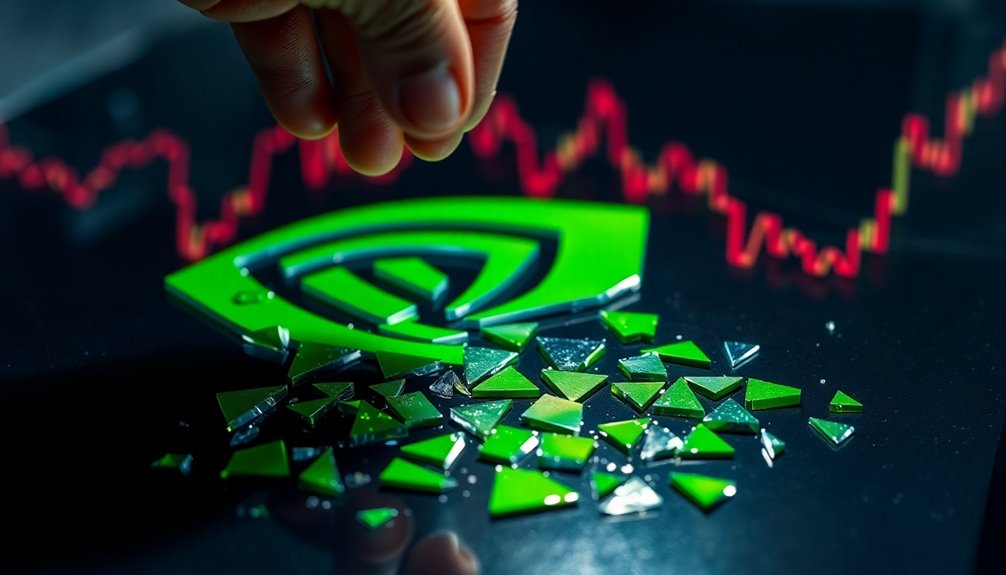
As Nvidia faces fluctuations in its stock price, you might wonder how this tech giant, with a market cap nearing $3.27 trillion, is navigating its challenges. Recently, Nvidia's stock has seen a rollercoaster ride, with predictions suggesting it could range between $106 and $140 by 2025.
Despite this volatility, Nvidia remains a top performer on the S&P 500, boasting an impressive 147% total return over the past year. The driving forces behind Nvidia's growth include its leadership in AI technology, a robust gaming sector, and expanding data centers. Companies like cloud providers and enterprises rely heavily on Nvidia's products, which significantly contribute to its success. Furthermore, Nvidia's market value stands at $3.6 trillion, making it the largest company by some measures.
However, there's a catch: Nvidia's high P/E ratio of around 52.65 raises eyebrows concerning its sustainability and potential overvaluation. With such lofty valuations, you'd want to weigh the risks carefully.
Looking ahead, short-term forecasts for 2025 anticipate further volatility, with optimistic predictions suggesting prices could soar around $150 before potentially pulling back. By 2030, some analysts believe Nvidia's stock might reach a staggering $362, fueled by advancements in AI and autonomous vehicles.
These projections hinge on the company maintaining its competitive edge and continuing to innovate. But don't forget—competition from AMD and Intel could threaten Nvidia's dominance, making it crucial for the company to stay ahead of emerging trends.
As an investor, you might be pondering whether now is the right time to buy or if it's wiser to wait it out. Nvidia's stock is often labeled as a high-risk, high-reward investment due to its volatile nature.
While growth prospects in AI and data centers are strong, external economic factors could impact Nvidia's performance, especially during market downturns. Yet, investor sentiment remains optimistic, with many viewing Nvidia as a cornerstone of tech portfolios.
As an affiliate, we earn on qualifying purchases.
As an affiliate, we earn on qualifying purchases.
As an affiliate, we earn on qualifying purchases.
As an affiliate, we earn on qualifying purchases.
Fall yard work Picks
leaf blowers
As an affiliate, we earn on qualifying purchases.