
In today's unpredictable markets, you need to ask the right questions to stay ahead. How do geopolitical tensions and changing interest rates impact your investment choices? Are you fully aware of the risks tied to market shocks and rising inflation? It's vital to consider how technology can shape your strategies while maintaining a focus on quality. These questions can guide your decision-making process, but there's more to uncover about navigating this landscape effectively.

What factors are shaping today's markets? You're facing a landscape filled with volatility and risks, primarily driven by geopolitical uncertainty. These risks aren't just buzzwords; they directly impact your investment decisions and market confidence. As tensions rise globally, you may find it harder to predict market movements.
Additionally, the divergence in interest rates between regions complicates matters further. While U.S. rates hover around 4%, Western Europe's are expected to dip below 2%, creating uneven playing fields for international investments. Market volatility also poses a significant threat. Any changes can lead to market shocks, especially in sectors heavily reliant on international trade. You may need to keep a close eye on how these tariffs could ripple through both inflation rates and interest rates. As businesses in various countries cycle through different growth phases, you could see market dispersion, making it essential to stay informed and agile in your investment strategies.
Looking ahead to 2025, the global economic outlook remains optimistic, despite the challenges. The U.S. is expected to continue its role as a growth engine, with real consumer spending projected to grow at a robust 2.5%. This growth signals opportunities for savvy investors like you. Diversification of your investment portfolio can help mitigate risks associated with market volatility.
Moreover, as inflation normalizes, interest rates might decrease, potentially benefiting your investment portfolio. Corporate profit growth also looks promising, with S&P 500 profits expected to increase between 10% and 15%.
To navigate this complex environment, you might consider various investment strategies. For instance, options can serve as effective tools for managing risk amidst fluctuating interest rates. Focusing on quality investing—targeting companies with strong balance sheets—could provide a safer path.
Moreover, don't limit yourself to the tech sector; diversifying across different sectors can yield unexpected gains, especially in non-tech cyclicals benefiting from pro-growth policies.
As you adjust your strategies, keep the regulatory environment in mind. A climate of less regulation and lower taxes may stimulate growth, but it's crucial to approach investments with caution, particularly given elevated asset valuations and ongoing geopolitical risks.
With technological advancements reshaping industries, you'll want to stay ahead of trends, especially in the booming AI sector, while also ensuring that you're capitalizing on broadening earnings growth across all S&P 500 sectors. Your ability to ask the right questions and adapt will be your greatest asset in navigating today's markets.
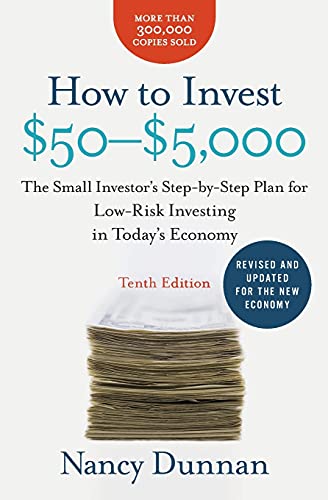
How to Invest $50-$5,000 10e: The Small Investor's Step-by-Step Plan for Low-Risk Investing in Today's Economy
As an affiliate, we earn on qualifying purchases.
As an affiliate, we earn on qualifying purchases.

Portfolio Selection: Efficient Diversification of Investments (Cowles Foundation Monograph: No. 16)
As an affiliate, we earn on qualifying purchases.
As an affiliate, we earn on qualifying purchases.

AI-Powered Real Estate Investing: The 2026 Guide to AI Tools, Prompt Engineering & Automated Systems for Building a Million-Dollar Property Portfolio
As an affiliate, we earn on qualifying purchases.
As an affiliate, we earn on qualifying purchases.

Technical Analysis of the Financial Markets: A Comprehensive Guide to Trading Methods and Applications
Used Book in Good Condition
As an affiliate, we earn on qualifying purchases.
As an affiliate, we earn on qualifying purchases.