
Analysis shows that the upcoming Fed decision likely won’t stop the Uptober rally because markets have already priced in expectations, and investor confidence remains high. Strong earnings, positive economic indicators, and benign inflation expectations support the ongoing optimism. With steady interest rates and resilient fundamentals, the rally is expected to continue despite potential volatility. To understand how these factors interplay and what might influence future moves, keep exploring these insights further.
Key Takeaways
- Markets typically price in Fed expectations beforehand, reducing the impact of the actual decision.
- Strong earnings, positive macro data, and technical bullish signals support ongoing market gains.
- Economic indicators like steady GDP, low unemployment, and robust retail sales reinforce investor confidence.
- Sector performance, especially tech and financials, continues to drive the rally despite potential volatility.
- Stable interest rate outlook and inflation moderation suggest the Fed’s decision won’t disrupt the Uptober rally.
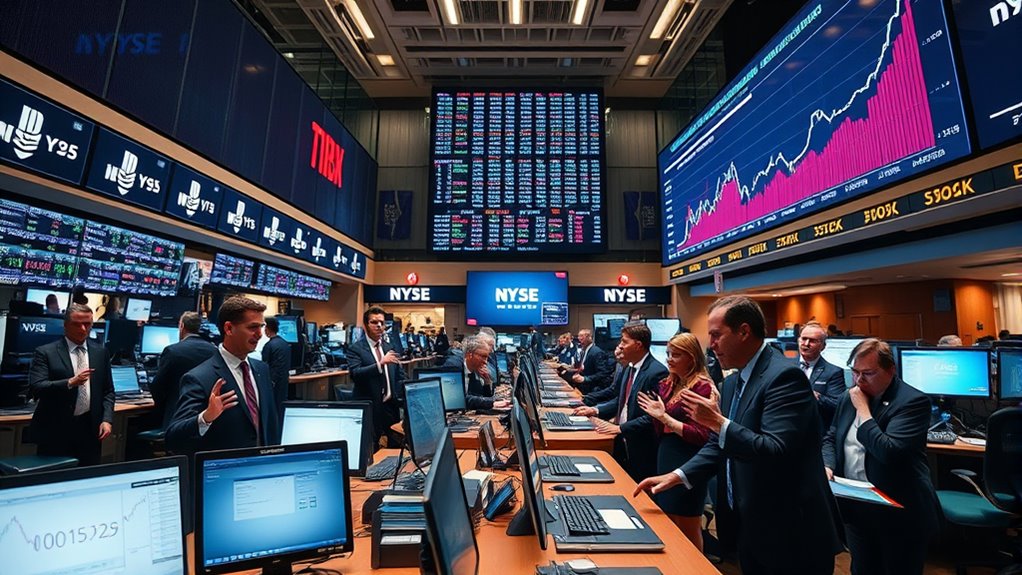
Although the Federal Reserve’s upcoming policy decision on October 28-29, 2025, often sparks market uncertainty, analysts believe it won’t derail the ongoing Uptober rally. Markets tend to price in expectations ahead of the Federal Reserve’s meetings, making the actual decision less impactful than many fear. Historically, markets have sometimes rallied before Fed announcements, thanks to easing concerns and investor optimism. The Fed’s communication strategy aims to reduce volatility around these events, which further minimizes sudden shocks. Most analysts agree that even if the Fed makes minor rate adjustments, it won’t markedly disrupt the current market momentum.
Fed policy decisions in late October are unlikely to halt the ongoing Uptober rally.
Instead, the rally is driven chiefly by strong corporate earnings outlooks and favorable macroeconomic data. Recent job reports and consumer spending figures have reinforced investor confidence, highlighting a resilient economy that can withstand short-term rate fluctuations. Technical indicators also point to bullish trends that remain intact, despite the potential for brief volatility around the Fed’s decision. Past October Fed decisions have often coincided with market gains, not declines, because broader economic confidence continues to underpin investor sentiment.
Economic indicators support the continuation of the Uptober rally. Steady GDP growth projections, signs of moderation in inflation rates, and low unemployment levels bolster confidence in the economic outlook. These factors combine to support equity valuations and reduce fears of aggressive policy tightening. Manufacturing indexes show expansion, and retail sales data continues to surpass expectations, reflecting robust consumer demand—further fueling positive market sentiment.
Several market sectors are driving the rally’s optimism. Technology companies are reporting earnings that exceed forecasts, while financials benefit from a stable interest rate outlook. Consumer discretionary spending remains resilient despite macroeconomic uncertainties, and energy stocks are supported by steady commodity prices and supply conditions. Healthcare innovation continues to attract investment, adding to the overall positive momentum.
Regarding interest rates and bonds, the Fed is expected to keep rates steady or make minor adjustments, which should minimize market shocks. Bond yields are likely to stay stable, supporting risk-on assets like equities. The Fed’s forward guidance reduces uncertainty about the future rate path, helping maintain investor confidence. With inflation showing signs of moderation, there’s less urgency for aggressive policy moves, further supporting the current rally.
Investor behavior around Fed events remains optimistic. Many market participants demonstrate a risk appetite, with allocations favoring equities based on strong earnings and growth prospects. Short-term volatility may spike, but quick recoveries are common. Derivative strategies are increasingly used to hedge, not abandon positions, and high liquidity levels sustain buying pressure during Fed decision windows. Overall, the combination of economic strength, sector performance, and market resilience suggests the Uptober rally will continue regardless of the Fed’s upcoming decision. Additionally, color accuracy in financial reporting can also influence investor perceptions and sentiment.
Frequently Asked Questions
How Will the Fed’s Decision Impact Long-Term Market Trends?
Your long-term market trends will likely benefit from the Fed’s rate cuts if they lead to sustained easing, lowering yields and encouraging borrowing. Growth and AI stocks, small caps, and emerging markets could rally as financing costs drop. However, be cautious—if the Fed signals more hikes or inflation persists, these gains might reverse. Keep an eye on economic data and global developments to understand how trends will evolve.
What Specific Indicators Suggest the Rally Will Continue?
You’ll find that rising investor confidence, driven by expectations of upcoming rate cuts, signals the rally’s continuation. Specifically, the fact that sector-specific gains, like in housing, are already emerging shows momentum. Additionally, economic indicators such as steady employment and consumer spending suggest the economy remains resilient. These signs point to sustained positive sentiment, boosting your chances of riding this rally further as lower rates fuel investment and market optimism.
Could Geopolitical Events Alter the Market’s Upward Trajectory?
Geopolitical events could definitely influence the market’s upward trend. If tensions escalate, stock markets might face declines, especially in emerging markets where risks are higher. However, historically, markets tend to rebound within 6 to 12 months after shocks. Your best move is to focus on high-quality, large-cap stocks, particularly in sectors like Industrials, Financials, and Energy, which often withstand geopolitical turbulence better. Stay vigilant and diversify to manage potential risks.
How Are Inflation Rates Influencing Investor Confidence?
Inflation rates are making investors think twice, and rightfully so. You’re feeling the weight of persistent inflation, which keeps confidence shaky even as the economy shows signs of growth. With inflation above the Fed’s target, you’re cautious about market moves, knowing that rising prices and policy uncertainty can turn the tide quickly. It’s a balancing act—hoping for gains but wary of inflation’s sneaky grip on your investments.
What Sectors Are Expected to Benefit Most From the Rally?
You should focus on small-cap and value sectors, as they remain undervalued and stand to benefit from rate cuts and economic optimism. Financials and Industrials are poised for gains due to improving conditions, while Communications, Real Estate, Energy, and Healthcare offer resilience and long-term value. Technology and Consumer Discretionary sectors also continue to lead the rally, driven by growth potential and ongoing demand, making them attractive options for investors seeking momentum.
Conclusion
You might think the Fed’s decision will halt the Uptober rally, but history suggests otherwise. Markets often rally despite rate hikes, driven by investor optimism and economic resilience. While some believe tightening policies will dampen gains, evidence shows that stocks can continue upward trends amid cautious optimism. So, don’t be surprised if the rally persists—sometimes, market momentum defies even the most hawkish central bank decisions. Keep watching; the trend might surprise you.