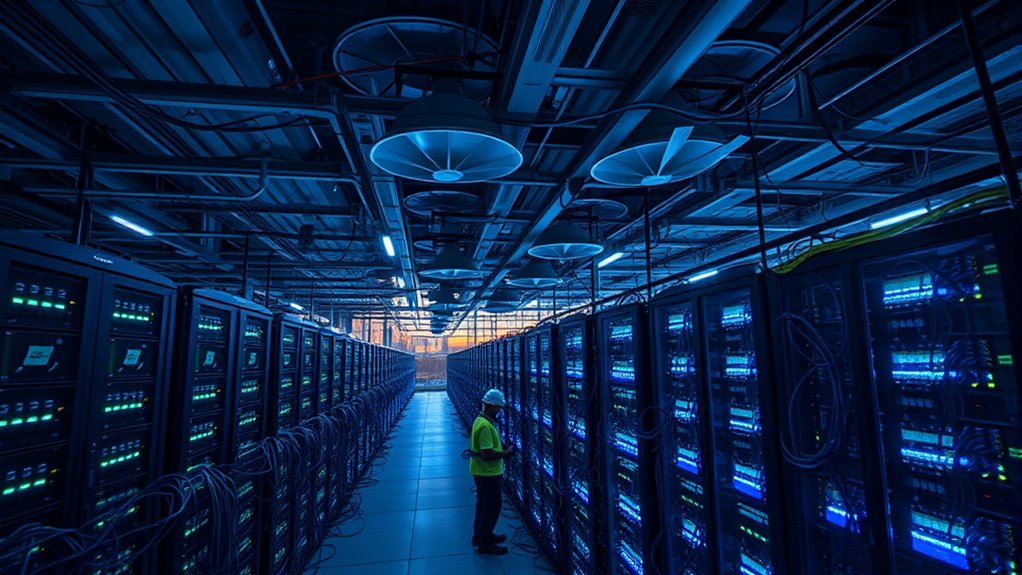

The debate over Bitcoin’s energy use hinges on whether its environmental impact outweighs its benefits. Critics highlight its high fossil fuel consumption, while supporters argue mining near renewables helps promote sustainable power. Additionally, Bitcoin’s decentralized network boosts security and financial inclusion. Many miners are now shifting toward greener practices, which could lower its carbon footprint over time. Curious to see how these factors balance out? Keep exploring to better understand the full picture.
Key Takeaways
- Bitcoin’s energy consumption is significant but increasingly sourced from renewable energies, supporting sustainability efforts.
- Mining near renewable sites helps absorb excess renewable energy, promoting grid stability and green infrastructure.
- Decentralization enhances network security and resilience, contributing to financial inclusion and system robustness.
- Industry trends show a shift toward greener practices, reducing Bitcoin’s environmental footprint over time.
- The environmental impact debate involves weighing energy use’s economic and security benefits against ecological costs.

Is Bitcoin’s energy consumption justified? That’s a question many people are asking as the debate over its environmental impact heats up. On one side, critics highlight the massive amount of energy required to mine Bitcoin, often pointing to fossil fuels as the primary source. But if you look closer, you’ll see that Bitcoin’s network isn’t just consuming energy for the sake of it. Instead, it’s playing an essential role in advancing renewable integration and network decentralization, which can have broader positive implications. By supporting renewable energy sources, Bitcoin mining operations can become part of a cycle that encourages more sustainable power generation. Miners can locate their operations near renewable energy sites—such as hydropower, wind, or solar farms—helping to absorb excess supply that might otherwise go wasted. This not only enhances the viability of renewables but also accelerates their integration into the grid. As renewable sources become more prominent, Bitcoin mining can act as a flexible demand source, helping stabilize power grids and incentivize the development of cleaner energy infrastructure. Additionally, the increasing adoption of sustainable practices among miners indicates a shift toward greener energy solutions, which could significantly reduce the industry’s carbon footprint over time.
Moreover, the decentralized nature of Bitcoin’s network is a core strength that supports its resilience and security. Unlike traditional financial systems, which rely on centralized institutions, Bitcoin’s distributed ledger is maintained by nodes spread across the globe. This network decentralization reduces the risk of censorship, manipulation, or systemic failure. It also empowers individuals and communities to participate in global finance without intermediaries. This democratization of money aligns with the broader goals of technological progress and financial inclusion. While critics argue that the energy use is excessive, supporters contend that the network’s decentralization plays an indispensable role in safeguarding digital assets and promoting a more equitable economic system.
It’s worth considering that Bitcoin’s energy use is not static; it’s evolving as the industry adopts greener practices. Many mining companies are actively shifting toward renewable sources, motivated by both environmental concerns and economic incentives. Over time, this shift could considerably reduce the carbon footprint associated with Bitcoin. When you weigh the benefits of renewable integration and network decentralization against the environmental costs, the justification for Bitcoin’s energy consumption begins to look more nuanced. It’s not simply about energy use in isolation but about how that energy supports a resilient, inclusive, and sustainable financial infrastructure that could, in the long run, foster broader environmental benefits.

Bitcoin Home Miner Nerdqaxe++12TH/s 240W with Four Fans and Eight BM1370 ASIC Chips Dual-Fan Plug-and-Play 2.4G WiFi and Quiet for Crypto Machine Bitcoin Miner for Beginners
Powerful 12TH/s Performance at 240W:Powered by eight advanced BM1370 ASIC chips, this Bitcoin miner delivers a strong 12TH/s...
As an affiliate, we earn on qualifying purchases.
Frequently Asked Questions
How Does Bitcoin’s Energy Use Compare to Traditional Banking Systems?
You might think Bitcoin uses more energy than traditional banking, but it’s complex. Bitcoin’s energy use is high due to proof-of-work, which supports blockchain decentralization and cryptocurrency scalability. While banks also consume energy, their infrastructure is more centralized and less transparent. Comparing the two, Bitcoin’s energy footprint is significant, but ongoing innovations aim to improve efficiency, balancing decentralization benefits with environmental concerns.
What Are the Environmental Benefits of Bitcoin Mining?
You might be surprised to learn that Bitcoin mining can promote environmental benefits through increased cryptocurrency adoption and the use of energy-efficient algorithms. As adoption grows, miners are pushed to optimize their energy use, reducing waste. Implementing energy-efficient algorithms also minimizes consumption, lowering carbon footprints. This shift encourages innovation, making Bitcoin mining more sustainable and environmentally friendly, ultimately supporting broader eco-conscious efforts within the cryptocurrency space.
Can Renewable Energy Sources Sufficiently Power Bitcoin Mining Operations?
Yes, renewable energy sources can sufficiently power Bitcoin mining operations. With renewable integration, miners can tap into wind, solar, and hydro resources, making energy scalability achievable. As technology advances, you’ll find it easier to expand mining capacity sustainably, reducing environmental impact. By prioritizing renewable sources, you guarantee that your operations stay eco-friendly while meeting the growing energy demands of Bitcoin mining.
How Is the Bitcoin Community Addressing Energy Consumption Concerns?
You see, the Bitcoin community actively tackles energy concerns through renewable integration and community initiatives. They’re pushing for more sustainable mining practices by encouraging miners to use solar, wind, or hydro power. Additionally, community-led projects promote transparency and innovation in energy efficiency. These efforts help reduce carbon footprints, showing that Bitcoin can grow responsibly while supporting renewable energy adoption and fostering a greener, more sustainable ecosystem.
What Technological Innovations Could Reduce Bitcoin’s Energy Footprint?
Think of green mining and energy-efficient protocols as the twin engines driving Bitcoin’s future. You can leverage innovations like proof-of-stake or layered scaling solutions to cut energy use remarkably. These technologies act like a gust of fresh air, making mining more sustainable. By adopting green mining practices, you’re helping reduce Bitcoin’s carbon footprint, ensuring the network stays resilient while being kinder to our planet.

Bitaxe Gamma 601 Bitcoin Miner, Open Source Solo BTC Mining Machine, BM1370 ASIC Chip, 1TH/s - 1.2TH/s SHA-256, 2.4G WiFi, Home Crypto Miner, incl. 5V Power Supply & Stand, AxeOS, Black
1-1.2TH/s Efficient Mining with BM1370 ASIC Chip: Powered by a single high-performance BM1370 ASIC chip—optimized for SHA-256 Bitcoin...
As an affiliate, we earn on qualifying purchases.
Conclusion
You now see that Bitcoin’s energy use isn’t as black-and-white as some claim. While it’s true that Bitcoin consumes significant power—around 91 terawatt-hours annually—you also realize that much of this energy comes from renewable sources, and its decentralized nature promotes financial inclusion. The debate isn’t just about numbers; it’s about balancing innovation with sustainability. As Bitcoin continues to evolve, understanding these nuances helps you form a more informed perspective on its future impact.

NerdOctaxe Gamma 9.6 TH/s Bitcoin ASIC Miner – Open-Source Home Miner with BM1370, Wi-Fi & USB-C, Complete Kit, Power Supply & Stand
⚡ Up to 9.6 TH/s total hash rate with ~180 W power consumption (~15 J/TH), delivering powerful and...
As an affiliate, we earn on qualifying purchases.

DTV ₿ ELECTRONICS Bitaxe Ultra Open Source Bitcoin ASIC Miner - BTC Miner with 500 GH/s Hash Rate, Low Power Consumption - Quiet Solo Bitcoin Miner for Home Use with Multi-Regional PSU
Open-Source Bitcoin Miner Machine: The Bitaxe Ultra features a fully open-source design, enabling users to customize and optimize...
As an affiliate, we earn on qualifying purchases.