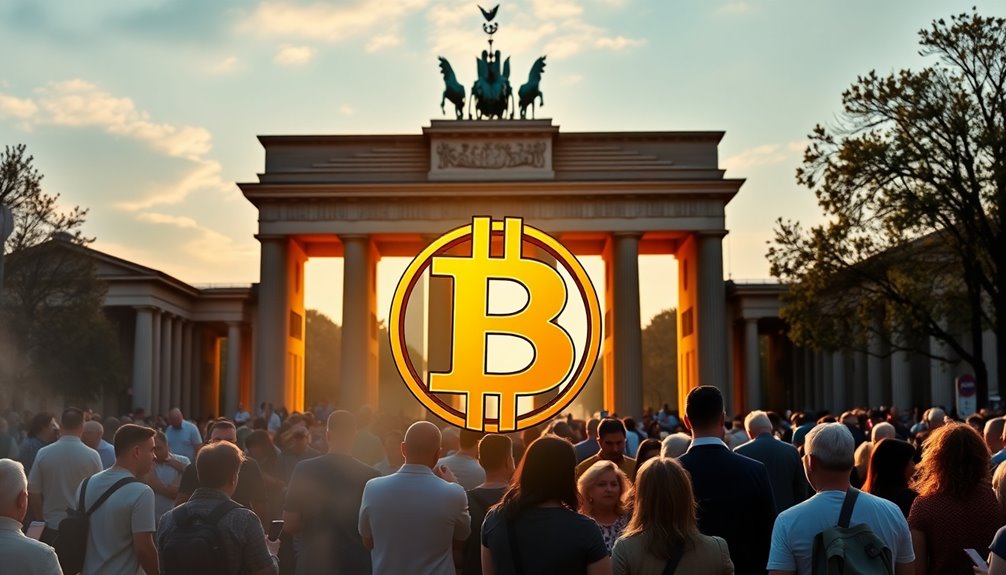
Bitcoin plays a key role in giving you financial freedom by letting you control your money outside traditional banks and governments. Its decentralized system promotes transparency, privacy, and economic independence. Regulations are evolving to build trust and protect your interests while making transactions safer and easier worldwide. This shift opens up access for everyone, including unbanked populations. If you want to understand how Bitcoin continues to shape financial independence, there’s more to explore ahead.
Key Takeaways
- Bitcoin enables individuals to control their finances independently without reliance on centralized banks.
- Its decentralized nature promotes economic freedom and reduces government or institutional influence.
- Bitcoin offers low-cost, rapid cross-border transactions, enhancing global financial accessibility.
- Cryptographic security ensures privacy and reduces risks of identity theft and fraud.
- Regulatory frameworks increase trust and legitimacy, encouraging broader adoption and financial inclusion.

Bitcoin has revolutionized the way people think about money by providing a decentralized alternative to traditional banking systems. This innovation empowers you to take control of your finances without relying on centralized authorities. As more individuals adopt Bitcoin, it challenges existing financial structures and opens new avenues for economic independence. One of the key factors enabling this shift is the evolving landscape of cryptocurrency regulation. Governments worldwide are working to establish frameworks that balance innovation with security, ensuring that users can transact freely while preventing illicit activities. These regulations help legitimize cryptocurrencies, making it easier for you to trust and use Bitcoin confidently. At the same time, the focus on digital identity plays a vital role in this ecosystem. Unlike traditional banking, where your identity is tied to physical documents, Bitcoin transactions are secured through cryptographic keys, offering a form of digital identity that’s both private and secure. This means you can participate in financial activities without exposing sensitive personal information, reducing the risk of identity theft and fraud. The integration of digital identity solutions with Bitcoin allows for seamless verification processes, fostering greater privacy and control over your personal data. As regulations develop, they can also facilitate the onboarding process for new users, making it easier for you to access Bitcoin services legally and safely. Moreover, these regulations aim to establish clear standards for security and compliance, which benefits you by providing a more stable and trustworthy environment for your digital assets. You’re no longer limited by geographic or bureaucratic barriers; instead, you can transact across borders with relative ease, knowing that regulatory frameworks are working to protect your interests. The combination of cryptocurrency regulation and digital identity advancements helps build a more inclusive financial system. It enables those who are unbanked or underbanked to participate in the global economy using Bitcoin, granting greater financial freedom. You gain the ability to send and receive money quickly, with lower fees, and without traditional intermediaries that often restrict access or impose high costs. Additionally, the development of innovative unique and wicked planters offers creative ways to engage with digital assets through themed or functional designs. Ultimately, Bitcoin’s contribution to financial freedom lies in its capacity to decentralize control, foster transparency, and reinforce privacy, all within a regulated environment that enhances trust. As you navigate this new landscape, understanding the importance of regulation and digital identity can help you leverage Bitcoin’s potential fully, ensuring your financial independence is protected and expanded.

Trezor Model One – The Original Cryptocurrency Hardware Wallet, Bitcoin Security, Store & Manage 1000's of Coins&Tokens, Easy-to-Use Interface, Quick & Simple Setup (Black)
All-in-one hardware wallet for easy crypto security, storage & use
As an affiliate, we earn on qualifying purchases.
As an affiliate, we earn on qualifying purchases.
Frequently Asked Questions
How Secure Is Bitcoin Against Hacking and Theft?
Bitcoin is generally secure thanks to strong cryptographic security measures, but it isn’t immune to hacking vulnerabilities. You can reduce risks by using reputable wallets, enabling two-factor authentication, and keeping your private keys safe. While the blockchain itself is highly resistant to hacking, exchanges and third-party services can be targets. Stay vigilant, follow best security practices, and stay informed to protect your Bitcoin from theft and hacking threats.
Can Bitcoin Replace Traditional Banking Systems Entirely?
Yes, Bitcoin could replace traditional banking systems someday as cryptocurrency adoption grows and decentralized finance becomes more mainstream. You might find that it offers you greater control over your money, faster transactions, and lower fees. However, challenges like regulatory issues and scalability still exist. If these are addressed, Bitcoin has the potential to transform how you manage and transfer your funds, making traditional banks less central to your financial life.
What Are the Environmental Impacts of Bitcoin Mining?
Bitcoin mining profoundly impacts the environment through high energy consumption, which leads to a substantial carbon footprint. You might not realize that the process requires powerful computers running constantly, often using electricity generated from fossil fuels. This results in increased greenhouse gas emissions and environmental degradation. While innovative solutions are emerging, the current environmental impacts of Bitcoin mining remain a concern, urging miners and users to contemplate greener alternatives.
How Does Bitcoin’s Volatility Affect Long-Term Financial Planning?
You might wonder if Bitcoin’s volatility threatens your long-term plans. It certainly challenges market stability, making consistent investment strategies harder. But with careful risk management, you can navigate the swings and still benefit from its growth potential. Keep an eye on market trends, diversify your portfolio, and stay patient. While the ride may be bumpy, your financial future can remain resilient if you adapt wisely to Bitcoin’s unpredictable nature.
Are There Legal Restrictions on Bitcoin Use Worldwide?
You should know that there are legal restrictions on Bitcoin use worldwide, mainly due to regulatory challenges. Many countries are establishing laws to guarantee legal compliance, which can vary greatly. Some nations embrace Bitcoin, while others impose bans or strict regulations. Before using Bitcoin, you need to research your local laws to avoid legal issues and stay compliant, as regulations continue to evolve rapidly across different jurisdictions.

SAMYERLEN Crypto Seed Phrase Storage, 304 Stainless Steel Secure Bitcoin Wallet, Private Key Recovery Cold Storage Backup 3 Plates 24 Words Compatible with BIP39 Hardware Wallets, Ledger, Trezor
Safeguard Your Crypto Assets: The SAMYERLEN Tablet is made of grade 304 steel and features intense laser engraving,…
As an affiliate, we earn on qualifying purchases.
As an affiliate, we earn on qualifying purchases.
Conclusion
You have the power to take control of your finances, to break free from traditional limitations, and to embrace the future of money. Bitcoin offers transparency, security, and independence. It’s your chance to challenge the status quo, to forge your own financial path, and to claim true freedom. With every transaction, you step closer to sovereignty. Your financial future is in your hands—empower yourself, embrace change, and unleash the potential of Bitcoin today.

DIGITAL WALLETS AND DECENTRALIZED FINANCE: "The Complete Guide for Beginners: How to Manage Your Money in the Digital Era, Blockchain, … Financial Security and Earning Opportunities"
As an affiliate, we earn on qualifying purchases.
As an affiliate, we earn on qualifying purchases.

Burner Bitcoin Wallet — Physical Reloadable Crypto Card | Cold Storage for Bitcoin with Hardware-Grade Security (No Seed Phrase) | No App, Browser Based, PIN Locked | Offline Hardware Wallet
Simple, Secure Bitcoin Storage for Anyone: Create a safe, offline place to hold Bitcoin without needing an app,…
As an affiliate, we earn on qualifying purchases.
As an affiliate, we earn on qualifying purchases.