
You might find it intriguing how El Salvador is adjusting its Bitcoin legislation to align with the IMF agreement. The government's shift to voluntary Bitcoin transactions for businesses marks a significant change in their approach. This new law aims to stabilize the economy while keeping Bitcoin as legal tender. But what does this mean for the future of cryptocurrency in the country, especially amid ongoing economic challenges?
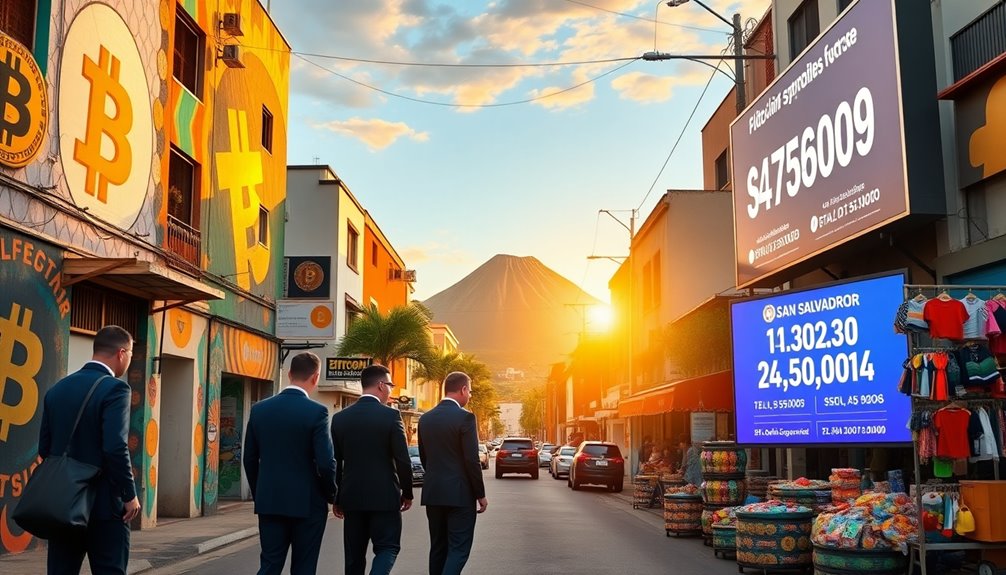
As El Salvador navigates the complexities of its Bitcoin policies, the recent $1.4 billion loan agreement with the IMF has prompted significant adjustments to its approach. You might recall that El Salvador made history in 2021 by adopting Bitcoin as legal tender, a bold move that showcased its commitment to cryptocurrency. However, as the IMF raised concerns over Bitcoin's volatility and its impact on the nation's economy, it became clear that changes were necessary to stabilize the financial landscape.
The loan agreement is more than just a financial transaction; it's part of a broader strategy to secure an additional $3.5 billion in funding from various financial institutions. To comply with the IMF's stipulations, El Salvador has implemented new legislative changes, making it clear that businesses are no longer mandated to accept Bitcoin. This shift allows the private sector to opt for voluntary participation, easing the pressure on businesses that may have struggled to adapt to the cryptocurrency's fluctuations.
Despite these changes, Bitcoin retains its legal tender status, although its practical use has been adjusted. Public sector engagement with Bitcoin is now limited, and taxes must be paid in U.S. dollars, further solidifying the dollar's role in the economy. As part of its ongoing strategy, the government continues to build its Bitcoin reserves, showcasing its commitment to cryptocurrency integration.
In a significant move, the government is also looking to phase out the Chivo wallet, a digital wallet intended to facilitate Bitcoin transactions, signaling a shift in focus towards more traditional financial structures.
Even with these adjustments, El Salvador continues to build its Bitcoin reserves, recently adding 12 BTC to its total of 6,049 BTC, which has yielded a 127% profit since its adoption. This demonstrates a commitment to Bitcoin as part of its economic strategy, despite the overarching need for financial stability.
The IMF agreement aims to lower El Salvador's debt-to-GDP ratio, a crucial step in ensuring the country's economic health.
Looking ahead, El Salvador plans to intensify its Bitcoin purchasing strategy by 2025, indicating a sustained interest in cryptocurrency amid global trends. While other nations explore Bitcoin as a reserve asset, El Salvador remains at the forefront of this movement.
The current regulatory adjustments, though necessary, don't diminish the country's pioneering role in the cryptocurrency landscape. Instead, they set the stage for a more stable and sustainable future in the ever-evolving world of digital finance.

Bitkey Bitcoin Hardware Wallet – The Most Secure Way to Buy, Store and Manage Bitcoin
- Bitcoin Exclusive Design: Dedicated hardware wallet for Bitcoin
- Simplified Wallet Management: Compare prices, send, receive, track value
- Enhanced Security: Three-key self-custody system
As an affiliate, we earn on qualifying purchases.
As an affiliate, we earn on qualifying purchases.

TANGEM Crypto Wallet Pack of 2 – Trusted Cold Storage Hardware Wallet
- Proven Security: Over 9 years, no remote hacks
- Secure Chip Technology: Military-grade EAL6+ security
- Easy Wallet Management: Tap once, no cables or batteries
As an affiliate, we earn on qualifying purchases.
As an affiliate, we earn on qualifying purchases.

Cryptocurrency Mining For Dummies
As an affiliate, we earn on qualifying purchases.
As an affiliate, we earn on qualifying purchases.

The Basics of Bitcoins and Blockchains: An Introduction to Cryptocurrencies and the Technology that Powers Them (Cryptography, Derivatives Investments, Futures Trading, Digital Assets, NFT)
As an affiliate, we earn on qualifying purchases.
As an affiliate, we earn on qualifying purchases.