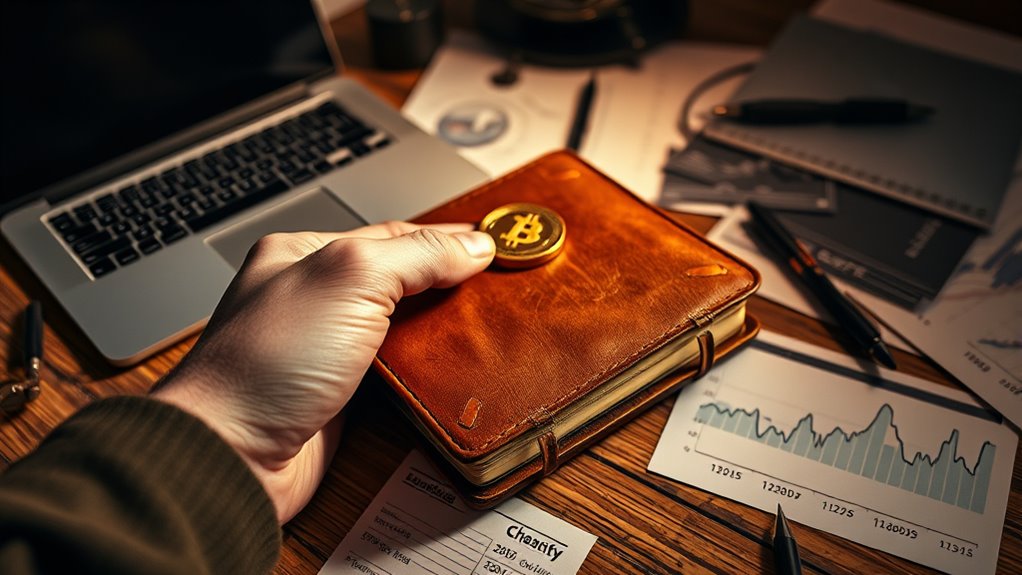

The psychology of HODLing shows that your emotional resilience, personality traits, and social influences heavily shape your investment behavior. Factors like anxiety, FOMO, and a desire for control drive you to hold onto cryptocurrencies despite market swings. Online communities and ideological loyalty further reinforce this mindset. Understanding these psychological triggers can explain why many investors stay committed long-term. Explore these insights further to see how your mind influences your crypto journey.
Key Takeaways
- Emotional traits like anxiety, impulsivity, and dark personality features strongly influence persistent HODLing behavior.
- Social media echo chambers and fringe platforms reinforce loyalty, misinformation, and resistance to market-based decisions.
- FOMO and impulsive buying during surges drive investors to hold long-term, often ignoring market downturns.
- Loyalty to crypto communities and ideological identity underpin HODLing beyond purely financial motivations.
- Negative emotional states and desire for control contribute to irrational holding, despite market volatility.

The psychology behind HODLing reveals a complex interplay of emotional, personality, and social factors that drive long-term cryptocurrency holding. As someone engaged in crypto, you might notice that many investors exhibit higher levels of anxiety, depression, impulsivity, and loneliness compared to those who don’t invest. These emotional states influence your decision-making, often reinforcing a commitment to holding onto your assets despite market fluctuations. Additionally, owning cryptocurrency frequently correlates with “dark” personality traits such as narcissism, psychopathy, sadism, and Machiavellianism. These traits can manifest as a desire for control, dominance, or defiance of traditional financial systems, motivating you to stick with your holdings regardless of external advice or market signals. Understanding the psychology behind HODLing can help you recognize these tendencies and develop healthier investment habits. Your emotional affect tends to skew toward negative states, with reduced positive emotions, which might seem counterintuitive. Instead of feeling confident or optimistic, you may experience persistent worry or frustration, yet still resist selling. This maladaptive emotional pattern, combined with argumentativeness and a tendency to resist authority, shapes your long-term commitment to crypto. Demographically, male investors and those active on fringe social media platforms like Telegram, Reddit, or YouTube are more likely to hold onto their crypto assets. These platforms foster echo chambers, where conspiracy theories and misinformation flourish, reinforcing your nonconformist traits and mistrust of mainstream institutions. These environments can also contribute to AI vulnerabilities, which may influence market behaviors and investor perceptions, often exacerbating emotional reactions. FOMO, or fear of missing out, acts as a powerful psychological driver behind HODLing. When you see rapid price surges, it compels you to buy at or near peaks, driven by the regret of missing potential gains. This impulse can cause you to buy more impulsively or hesitate to take profits, hoping for even greater future profits. The 24/7 nature of crypto markets intensifies this effect, as there’s no closing time to reassess your decisions. FOMO amplifies emotional volatility, making market swings more stressful and unpredictable. Your social media engagement further influences your HODLing tendency. Alternative platforms reinforce your beliefs through echo chambers, where conspiracy theories and misinformation thrive. This environment strengthens your loyalty to the crypto community, often making your commitment less about financial logic and more about identity and ideological alignment. You’re drawn to the strong binding moral foundations—loyalty, authority, and purity—that underpin your dedication to holding long-term, sometimes viewing it as a moral or political stance rather than a purely financial decision. Recognizing these psychological influences can help you better understand your behaviors and the broader dynamics driving crypto markets.
Top picks for "psychology hodl research"
Open Amazon search results for this keyword.
As an affiliate, we earn on qualifying purchases.
Frequently Asked Questions
How Does HODLING Affect Long-Term Investor Mental Health?
HODLing can profoundly affect your mental health over time. When you hold onto crypto assets through market fluctuations, you often face ongoing uncertainty and fear of missing out, which can lead to feelings of loneliness and emotional exhaustion. The constant stress from market volatility and social isolation may cause anxiety and depression. To protect your mental health, practice self-compassion, seek support, and consider mindfulness techniques to manage emotional ups and downs effectively.
What Emotional Factors Drive HODL Decisions During Market Crashes?
During market crashes, your emotional factors play a big role in your decision to hodl. You’re likely driven by a strong belief in Bitcoin’s long-term potential, which reduces fear and FOMO. Community support and shared narratives give you a sense of belonging and resilience. Social influence, like herd behavior and symbols like “diamond hands,” reinforce your commitment, helping you stay emotionally stable and confident despite market downturns.
Can HODLING Lead to Addictive Trading Behaviors?
Hodling is like holding onto a sinking ship, and yes, it can lead to addictive trading behaviors. When you become fixated on waiting for a rebound, you might ignore warning signs or emotional distress, similar to gambling addiction. This compulsive attachment fuels tolerance and loss of control, making it harder to sell even amidst losses. Over time, such behavior disrupts your life, deepening the cycle of dependency and emotional turmoil.
How Do Social Influences Impact HODL Strategies?
Social influences strongly impact your HODL strategies by shaping your investment mindset and behaviors. When you’re part of a community or follow influencers, you tend to align your actions with group norms and trends, often leading to herding behavior. This social pressure and desire for belonging can make you hold onto cryptocurrencies longer than intended, even during downturns, due to the fear of missing out or not fitting in with the group.
What Personality Traits Correlate With Successful HODLING?
Did you know that crypto owners often score high on traits like narcissism and Machiavellianism? When it comes to successful HODLing, you might find that being more emotionally resilient helps. Traits like impulsivity and overconfidence can lead to quick sell-offs, while patience and trust in your long-term vision boost your chances of success. Staying aware of these traits can help you hold steady, even during market turbulence.
Conclusion
So, here you are, clutching onto your crypto like it’s your last lifeline, convinced that patience will turn your gamble into gold. Ironically, your unwavering HODL mindset might just be the very thing that keeps you from cashing out at the right moment. Sometimes, the hardest part isn’t holding on—it’s knowing when to let go. But hey, if you’re still here, maybe the real lesson is that stubbornness isn’t always a flaw.