

Bali is shifting from a paradise image to a modern paradigm by introducing taxes on crypto activities and remote workers. You’ll need to follow new rules if you want to enjoy Bali’s attractions or invest in its crypto scene. The government aims to balance tourism, innovation, and sustainability, attracting higher-spending visitors and investors. If you want to see how Bali manages this progression and what it means for travelers and crypto enthusiasts, keep exploring.
Key Takeaways
- Bali is implementing a 0.1% crypto transaction tax to attract compliant investors and enhance regulatory clarity.
- The new tourism tax of IDR 150,000 aims to fund cultural and environmental preservation, shaping Bali’s sustainable tourism model.
- Higher proposed taxes target filtering low-spending tourists, emphasizing quality experiences and responsible tourism.
- Regulations require licensed guides, authorized currency exchanges, and traffic laws to promote safe, transparent, and sustainable tourism.
- Bali balances growth by supporting crypto-friendly policies and new visa options, seeking a harmonious paradise and innovative paradigm.
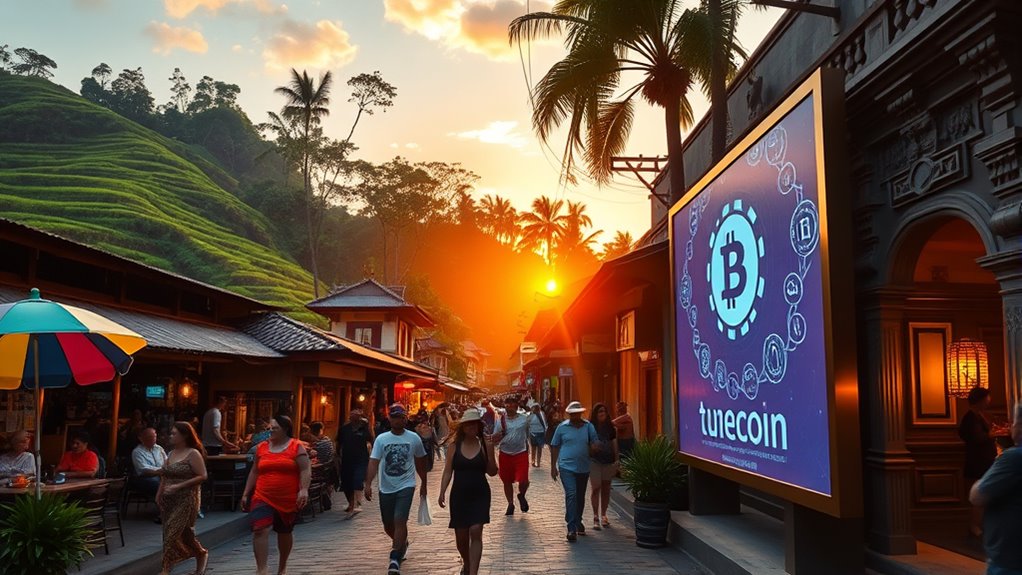
Bali is taking bold steps to capitalize on its growing reputation as a crypto and digital nomad hub by implementing new taxes on cryptocurrency transactions and tourism. This move reflects Bali’s efforts to balance its appeal as a paradise for remote workers and crypto enthusiasts with the need for sustainable growth. Starting February 2024, all international visitors are required to pay a mandatory tourism tax of IDR 150,000 (roughly USD 9). This fee, payable before arrival or during your stay through the official Love Bali website, applies to every foreign tourist regardless of their purpose for visiting. The government intends this tax to help preserve Bali’s rich culture and pristine natural environment while improving tourism infrastructure. It’s a straightforward way for visitors to contribute directly to the island’s ongoing development and conservation efforts. The tax is part of Bali’s broader strategy to fund environmental and cultural initiatives. Discussions are already underway to considerably increase this tax, with proposals to raise it to IDR 500,000 or even IDR 800,000 (USD 35-50). Such a hike would mark a more than 500% increase over the current fee, aimed at filtering out unruly or low-spending tourists and attracting those who spend more on quality experiences. The Bali Regional People’s Council supports this move, viewing it as a way to boost provincial revenues and fund enhanced policing, especially around tourist behavior management. These higher fees are intended not only for fiscal gains but also as a social regulation tool, ensuring that tourism remains sustainable and respectful of local customs. Alongside these financial measures, Bali is tightening its rules on tourist conduct. You’ll now need to hire licensed, culturally trained guides for visits to heritage sites or natural attractions. Currency exchange is strictly regulated, with authorized changers and official Bank Indonesia QR codes for digital payments, making sure transactions are transparent and taxed properly. Motorbike use is also under stricter control—drivers must have valid licenses, wear helmets, and adhere to traffic laws, including speed limits and passenger capacities. These rules aim to improve safety and reduce negative impacts of tourism. Bali’s approach to crypto taxation complements its broader strategy. Cryptocurrency transactions and withdrawals are taxed at final income rates of 0.1% for transactions through approved Indonesian exchanges and 0.2% otherwise. Crypto exchanges are responsible for withholding and remitting these taxes, making Bali an attractive destination for crypto investors and digital nomads seeking low tax burdens. While residents must report crypto activity annually, there’s no separate prepayment required. This balanced approach to taxation, combined with new visa options that could exempt remote workers from local income tax, signals Bali’s intention to position itself as a friendly, innovative hub for crypto and remote work. Additionally, regulatory clarity is being enhanced to make the environment more appealing for crypto businesses and investors. However, the island’s policies also aim to maintain control and sustainability, raising questions about whether paradise can truly be a paradigm for responsible tourism and crypto integration.
Frequently Asked Questions
How Will the Crypto Tax Impact Local Residents?
The crypto tax in Bali might seem small, but it can impact local residents by influencing tourism and investment. As a local, you could see more job opportunities as tourism grows, but higher costs might also raise living expenses. If you’re involved in crypto, you’ll need to understand the tax rules when withdrawing funds. Overall, the tax aims to benefit the community, but it’s essential to stay informed about how it affects your daily life.
What Are the Specific Tax Rates for Crypto Tourism?
You want to know the specific tax rates for crypto tourism, right? In Indonesia, crypto cash-outs face a final income tax of 0.1%, collected by approved exchanges during transactions. VAT rates are 0.11% for registered crypto assets and 0.22% for unregistered ones. These rates make Indonesia relatively friendly for crypto tourists, but your tax obligations depend on your residency status and how you handle your crypto transactions.
How Does Bali Plan to Enforce Crypto Tax Compliance?
You should know that Bali plans to enforce crypto tax compliance through strict monitoring and reporting. Authorities are implementing on-the-spot checks, collaborating with financial institutions, and tightening documentation requirements for businesses and foreigners. They also aim to raise public awareness about tax obligations related to crypto transactions. By combining enforcement with improved communication and infrastructure, Bali seeks to guarantee all crypto activities are transparent and compliant with local tax laws.
Will Crypto Tourism Attract Illegal Activities?
You might wonder if crypto tourism attracts illegal activities. While Bali’s strict ban on crypto payments aims to prevent money laundering, scams, and fraud, some tourists could still seek illicit transactions. Enforcement is tight, with penalties for violations, but the potential exists for cybercrime groups to exploit crypto’s anonymity. Bali’s measures try to balance welcoming tourists and safeguarding the economy from risks linked to illegal activities.
What Benefits Does Bali Expect From Taxing Crypto Tourism?
Bali aims to boost its revenue by taxing crypto tourism, which could generate millions annually. This move helps diversify its economy, ensuring stable funding for environmental and cultural projects. By establishing clear regulations, you’ll find a more attractive destination for digital nomads and crypto investors. The tax encourages responsible tourism, supports local communities, and aligns Bali with global digital economy trends, ultimately strengthening its position as a sustainable, innovative tourist hotspot.
Conclusion
So, get ready to see Bali transform from your tropical paradise into the ultimate crypto gold rush! With its new tax policies on crypto tourism, this island might just become the world’s biggest digital treasure chest. Don’t be surprised if your next vacation turns into a high-stakes adventure, where every sunset could come with a crypto surprise. Bali isn’t just a paradise anymore — it’s becoming the epicenter of the crypto revolution. Buckle up!

Hans’s journalism and editorial leadership background at HARTSBURG NEWS has honed his ability to present information in a credible, well-structured manner. He prioritizes thorough research and factual accuracy, ensuring readers can rely on our coverage.