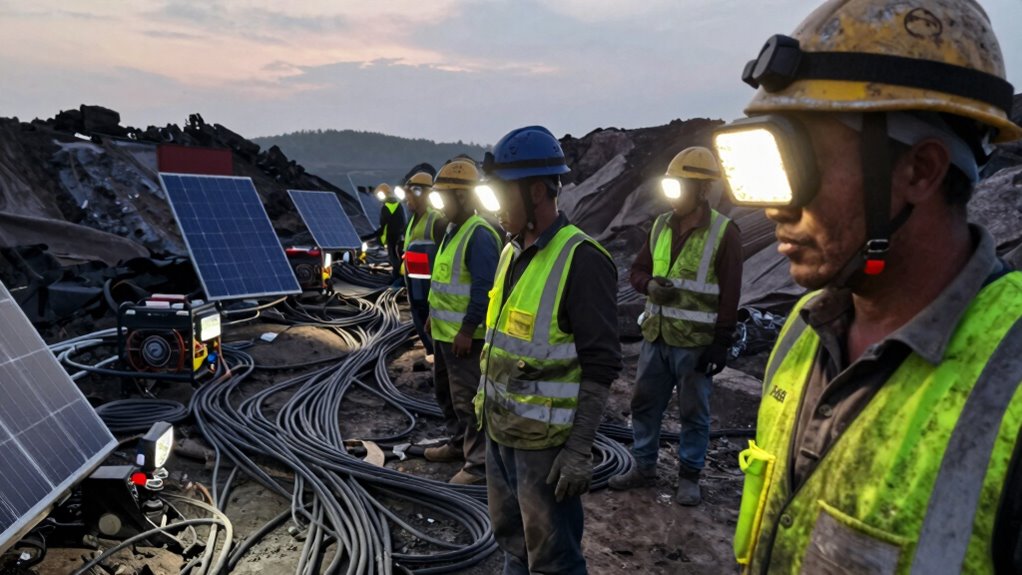

You see, some public miners reprice themselves around energy access to stay competitive and guarantee long-term stability. They’re shifting toward renewable sources like solar and wind to reduce reliance on unstable power grids and control costs. This strategic move protects their profitability from market fluctuations, geopolitical tensions, and regulatory changes. By prioritizing reliable energy, they improve their resilience and appeal to investors. If you want to learn how these strategies shape the industry’s future, keep exploring these trends.
Key Takeaways
- Miners are adopting renewable energy to ensure a stable, predictable power supply and reduce reliance on volatile traditional grids.
- Integrating renewables helps safeguard profitability against market fluctuations, geopolitical risks, and regulatory changes.
- Prioritizing energy access aligns with investor and community expectations, enhancing reputation and attracting green funding.
- Renewable energy acts as a buffer against sudden energy price increases, enabling better budget planning and cost control.
- Embracing energy access strategies positions miners for long-term competitiveness and resilience in a complex energy landscape.

Have you ever wondered how public miners are adjusting their operations to better align with energy access? It’s a question that’s become increasingly relevant as the industry faces mounting pressure to adopt more sustainable practices. Miners are recognizing that renewable integration isn’t just a trend but a necessity for long-term viability. By incorporating renewable energy sources like solar or wind, they can reduce reliance on traditional power grids, which are often inconsistent and costly. This shift helps them stabilize their energy costs and minimize exposure to market volatility, which can cause sudden spikes in energy prices. When market conditions fluctuate unpredictably, miners who have integrated renewables find it easier to manage their operations without being at the mercy of external price swings.
Public miners adopt renewable energy to stabilize costs and reduce exposure to market volatility.
You might notice that this move towards renewable integration isn’t just about environmental benefits. It’s a strategic decision aimed at safeguarding profitability amid a turbulent energy landscape. Traditional energy sources are increasingly subject to market volatility—shifts driven by geopolitical tensions, fuel shortages, or regulatory changes. These unpredictable factors can dramatically impact profit margins for public miners. By investing in renewable energy, they create a buffer against such fluctuations. Solar panels or wind turbines provide a more stable and predictable energy supply, reducing their exposure to sudden cost increases. This approach allows them to plan their budgets with greater certainty, which is critical for maintaining competitiveness in a highly volatile market.
You also see public miners repricing themselves around energy access because they’re aware that sustainable operations appeal to investors and communities alike. When miners prioritize renewable integration, they project a forward-thinking image that resonates with environmentally conscious stakeholders. This not only boosts their market value but also helps secure partnerships and funding that favor green initiatives. Additionally, by focusing on energy access, miners can tap into government incentives or subsidies aimed at promoting clean energy, further reducing operational costs. This strategic realignment makes their business models more resilient and adaptable, ensuring they stay ahead of regulatory pressures and societal expectations.
Ultimately, these efforts reflect a broader understanding: that aligning operational strategies with energy access and sustainability isn’t just good for the planet, but essential for thriving in today’s unpredictable energy markets. Public miners are realizing that embracing renewable integration and mitigating market volatility isn’t optional anymore; it’s a crucial part of their repricing strategy. By doing so, they’re positioning themselves to navigate the complexities of modern energy landscapes, ensuring their operations remain profitable, sustainable, and socially responsible for years to come.
solar panels for industrial use
As an affiliate, we earn on qualifying purchases.
As an affiliate, we earn on qualifying purchases.
Frequently Asked Questions
How Do Energy Costs Impact Mining Profitability?
Energy costs directly impact your mining profitability, as the energy market determines how much you pay for power. When energy prices rise due to cost fluctuations, your expenses go up, squeezing profit margins. Conversely, stable or decreasing energy costs can boost profitability. Staying aware of energy market trends helps you plan better, choose most favorable locations, and adapt your mining operations to minimize the effects of cost fluctuations on your bottom line.
What Renewable Energy Sources Are Miners Adopting?
You’re likely seeing miners adopt renewable energy sources like solar farms and wind turbines to cut costs and boost sustainability. Solar farms provide ample daytime energy, while wind turbines generate power even when the sun isn’t shining. By integrating these sources, miners reduce reliance on traditional energy, lower operational expenses, and improve environmental impact. This shift helps them stay competitive and align with growing demand for greener, more sustainable crypto mining practices.
Are Government Policies Influencing Miner Energy Choices?
You might think government policies don’t matter, but regulatory shifts and subsidy effects heavily influence miner energy choices. As policies evolve, miners adapt by seeking affordable, sustainable power sources, sometimes relocating to regions with favorable regulations. These changes can make renewable options more attractive, reducing costs and increasing profitability. So, government actions shape the energy landscape, guiding miners to prioritize access and sustainability in their operational strategies.
How Do Regional Energy Disparities Affect Mining Strategies?
Regional energy disparities markedly shape your mining strategies by influencing where you set up operations. You’ll consider regional grid stability to guarantee reliable power, avoiding interruptions that can disrupt mining. Local energy regulation also plays an essential role, as strict policies may limit energy use or increase costs. By evaluating these factors, you can optimize your energy access, reduce expenses, and improve efficiency in regions with stable grids and favorable regulations.
What Technological Innovations Improve Energy Efficiency in Mining?
Think of your mining operation as a well-tuned orchestra. Technological innovations like advanced energy storage systems and seamless grid integration act as conductors, enhancing efficiency. They allow you to store excess energy and synchronize with the grid, reducing waste and cutting costs. These tools help you optimize energy use, making your mining process more sustainable and resilient, much like an orchestra producing harmonious, efficient music.
wind turbines for mining operations
As an affiliate, we earn on qualifying purchases.
As an affiliate, we earn on qualifying purchases.
Conclusion
So, don’t dismiss these shifts as just industry noise. By understanding how public miners are adjusting their prices based on energy access, you can better grasp the evolving landscape. Yes, some may worry about costs, but these changes often lead to more sustainable and resilient mining operations in the long run. Embracing this shift means staying ahead of industry trends and recognizing the importance of energy strategies—ultimately, it’s about building a smarter, more efficient future.
renewable energy systems for businesses
As an affiliate, we earn on qualifying purchases.
As an affiliate, we earn on qualifying purchases.
solar energy storage batteries
As an affiliate, we earn on qualifying purchases.
As an affiliate, we earn on qualifying purchases.