
📊 Full opportunity report: AI Beyond The Zero-Sum Game: Insights From Benchmark Partners on ThorstenMeyerAI.com — validation score, market gap, and execution plan.
TL;DR
Benchmark investor Eric Vishria warns that AI markets are not zero-sum; many winners will coexist across layers. Market growth is broad, and differentiation remains critical. Hardware and infrastructure are more complex than they appear.
Eric Vishria, a General Partner at Benchmark, has warned that the AI industry is not a zero-sum game, emphasizing that the market is expanding with multiple large winners across different layers. His insights, shared in a recent interview, challenge the common narrative that a few companies will dominate and consume the entire market, highlighting the importance of differentiation and the complexity of hardware and infrastructure.
Vishria draws parallels from the cloud era, noting that in the early 2000s, many experts underestimated Amazon Web Services (AWS), which eventually became a durable, high-margin business. He explains that the narrative shifted from dismissing AWS as a commodity to recognizing that the market was too big for a single vendor to dominate, leading to a diverse ecosystem of large companies like Snowflake, Confluent, Elastic, and others thriving alongside Amazon and Microsoft. This demonstrates that multiple winners can coexist in a large, expanding market.
He emphasizes that this pattern is likely to repeat in AI, with an oligopoly of winners across various layers—such as inference providers, hardware, and cloud services—and many of these companies could reach valuations of $100 billion. Vishria warns against the fallacy of zero-sum thinking, where one company’s success is seen as a loss for others, arguing instead that the AI market is growing fast enough to support many large, profitable players.
Additionally, Vishria challenges the assumption that infrastructure is inherently commoditized. He cites Fireworks, a specialist running open-source models on NVIDIA hardware, which achieves significantly higher throughput and efficiency than hyperscalers despite using the same hardware. This indicates that running large models efficiently requires deep expertise, creating durable moats rather than simple commodity markets. His insights also extend to hardware, exemplified by Cerebras, where control and specialization matter more than scale alone.
Distilled from Eric Vishria (Benchmark) on Invest Like the Best. Less a set of predictions than a set of disciplines for reading this moment clearly rather than emotionally. Not investment advice.
The error that runs through every wrong AI prediction: carving up a fixed pie when the pie is exploding. The cloud era is the cautionary tale.
Why Multiple Winners Matter in AI Growth
Vishria’s insights suggest that the AI industry will not be dominated by a single or a few companies, but rather by an ecosystem of large, specialized players across different layers. This broadens opportunities for startups and established firms alike, and encourages a focus on differentiation and expertise. For investors and entrepreneurs, understanding that the market is not zero-sum can help avoid overestimating the threat from competitors and recognize the potential for multiple profitable ventures within the expanding AI landscape.

ASRock Intel Arc Pro B60 Creator 24GB Graphics Card, Workstation GPU, Xe2-HPG, 2400MHz, 24GB GDDR6 192-bit, PCIe 5.0, 4X DP 2.1, Blower
- System Compatibility: 2-slot, 271x112x39mm, 200W TDP
- Customer Support: Contact us via Amazon for assistance
- Memory and Bandwidth: 24GB GDDR6, 456 GB/s bandwidth
As an affiliate, we earn on qualifying purchases.
As an affiliate, we earn on qualifying purchases.
Historical Lessons from Cloud and Hardware Markets
The cloud industry’s evolution from 2007 to 2026 exemplifies how markets expand beyond initial predictions. Early skepticism about AWS’s durability gave way to a multi-vendor oligopoly, with companies like Snowflake, Datadog, and Azure emerging as large, independent entities. This history informs current expectations for AI, where similar patterns of growth and competition are emerging. Additionally, hardware companies like Cerebras demonstrate that control, expertise, and specialization can create durable competitive advantages, challenging the notion that infrastructure is purely commodity-based.
"The market was simply too big for one vendor to consume. Snowflake built a $100B+ company on top of Amazon, competing directly with Amazon’s own Redshift."
— Eric Vishria
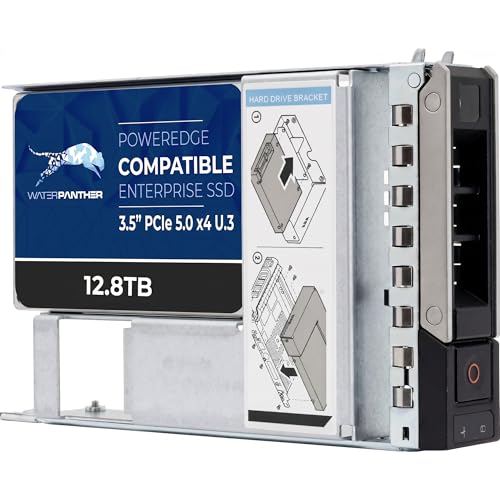
Water Panther 12.8TB 3D TLC PCIe 5.0 x4 NVMe U.3 Hybrid 3.5" SSD for Dell PowerEdge Servers | Mixed-Use | Enterprise Solid State Drive in 16G Tray Compatible with 1VGG0 R760 R6615
- Storage Capacity: 12.8TB high-capacity SSD
- Interface: PCIe 5.0 x4 NVMe
- Data Transfer Speed: Up to 12,000 MB/s read
As an affiliate, we earn on qualifying purchases.
As an affiliate, we earn on qualifying purchases.
Uncertainties About AI Market Dynamics
While Vishria’s analysis is grounded in historical parallels and current observations, it remains uncertain how quickly and exactly the AI ecosystem will evolve into a multi-winner landscape. The pace of technological breakthroughs, regulatory impacts, and market adoption rates could influence the number and scale of winners. Additionally, the precise roles of hardware, inference, and cloud services in shaping the future are still developing and may differ from current expectations.

AI Systems Performance Engineering: Optimizing Model Training and Inference Workloads with GPUs, CUDA, and PyTorch
As an affiliate, we earn on qualifying purchases.
As an affiliate, we earn on qualifying purchases.
Next Steps for Stakeholders in AI Markets
Expect continued diversification in AI startups and established firms across hardware, inference, and cloud layers. Investors should focus on differentiation, expertise, and control rather than market share alone. Companies should prepare for a landscape where multiple large players coexist, emphasizing innovation and specialization. Monitoring developments in hardware efficiency, inference techniques, and cloud strategies will be key to understanding the evolving competitive dynamics.
Platform Engineering for Artificial Intelligence: Designing scalable infrastructure, data pipelines, and model lifecycle management for generative AI and agentic protocols (English Edition)
As an affiliate, we earn on qualifying purchases.
As an affiliate, we earn on qualifying purchases.
Key Questions
Does this mean only a few companies will succeed in AI?
No, Vishria suggests that many large companies will coexist and thrive across different layers of the AI ecosystem, as the market is expanding rapidly.
Why is hardware investing different from software or cloud investing?
Hardware investments, such as in specialized chips like Cerebras, depend heavily on control, expertise, and innovation, making them less commoditized and more durable than purely scale-based investments.
What should startups focus on in this expanding AI market?
Startups should emphasize differentiation, deep expertise, and control over their niche to build durable competitive advantages in a landscape of many large winners.
Is the assumption that AI infrastructure is a commodity incorrect?
Yes, according to Vishria, running large models efficiently requires specialized knowledge, creating barriers and moats beyond simple hardware or scale advantages.
Source: ThorstenMeyerAI.com