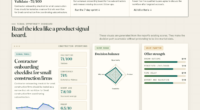
📊 Full opportunity report: The Gulf: Own the Capital on ThorstenMeyerAI.com — validation score, market gap, and execution plan.

Get hardware and tech essentials delivered free — and shop member deals
- Fast, free delivery on millions of items
- Access to Prime Big Deal Days deals on October 6–7
- Prime Video, Amazon Music and more included
TL;DR
Gulf countries are deploying over two trillion dollars into AI and digital infrastructure, aiming to secure ownership of the emerging AI economy. This marks a significant shift in how resource-rich states are shaping future wealth distribution and control.
Gulf states are rapidly investing over two trillion dollars into AI and digital infrastructure, aiming to own the future of the AI economy. This strategic shift marks a move from resource-based wealth to technology-based ownership, setting them apart from Western models that emphasize rules, skills, and income floors.
Since 2017, Gulf countries including the UAE, Saudi Arabia, and Qatar have established dedicated ministries and conglomerates—such as the UAE’s G42, Saudi’s HUMAIN, and Qatar’s Qai—to lead their AI investments. These initiatives are backed by sovereign wealth funds like Saudi’s PIF, Abu Dhabi’s ADIA, and Qatar’s QIA, which together hold approximately five trillion dollars. The investments are focused on building AI data centers, chip partnerships, and frontier labs, with the goal of making the state an owner of the AI economy rather than a mere consumer.
This approach reflects a broader economic model: using resource wealth to acquire the means of production—compute, data, and AI—while oil depletes. Gulf states are leveraging their abundant energy resources and solar power to support power-intensive AI infrastructure, aiming to convert their resource windfalls into ownership of future technological assets. Unlike Norway’s savings-oriented sovereign fund, Gulf funds are designed to distribute wealth directly to citizens through jobs, subsidies, and services, effectively making them capital dividend states.
Own the Capital
For five rows, one lever stayed dark. The Gulf pulls it hard: own the capital, distribute its returns to citizens — and now spend that capital to buy into AI, so the dividend outlives the oil.
Independent commentary, produced with AI assistance under human editorial oversight. The views are the author’s own and may change. This is analysis, not policy, economic, investment, or legal advice. Descriptions of Gulf sovereign wealth funds, the rentier social contract, national AI champions (G42, MGX, HUMAIN, Qai), and AI-infrastructure investment reflect publicly reported information as of mid-2026 and may change; population, asset, and investment figures are indicative. This phase maps differing approaches and endorses none; characterizations of contested political and labor arrangements present competing views, not a verdict. Country, program, and company names are referenced for analysis and imply no affiliation.
Why Gulf AI Ownership Changes Global Wealth Dynamics
This development signifies a fundamental shift in how resource-rich states are positioning themselves in the global economy, similar to discussions about the labor share. By investing heavily in AI infrastructure and owning the means of production, Gulf countries are attempting to secure a share of the economic gains from AI-driven automation and innovation. This could challenge Western models of wealth distribution and influence the geopolitical landscape, especially as Gulf states use their capital to shape the AI industry at a national level. The move also underscores the strategic importance of owning the infrastructure of the next economy, which relates to the contractual definitions of AI and capital.
As an affiliate, we earn on qualifying purchases.
Gulf’s Strategic Shift from Oil to AI Ownership
For decades, Gulf states have relied on oil exports to fund social contracts that include public employment, subsidies, and free services. Their sovereign wealth funds have managed resource revenues, mainly for future generations, as seen in Norway’s model. However, unlike Norway, which emphasizes wealth preservation, Gulf states are now deploying oil wealth to acquire ownership stakes in AI and digital infrastructure. This pivot is driven by the recognition that oil is a depleting and volatile resource, and that the next economic frontier is digital and AI-driven. Regional investments began around 2017, with the UAE establishing a Ministry of AI and launching G42, followed by Saudi Arabia’s HUMAIN and Qatar’s Qai, signaling a regional strategic realignment towards owning the future of AI.
“The Gulf is using oil wealth to acquire the next means of production—compute, data centers, frontier-AI stakes—while it still can.”
— Thorsten Meyer
As an affiliate, we earn on qualifying purchases.
Uncertainties Surrounding Gulf’s AI Ownership Model
It remains unclear how sustainable this model is in the long term, especially given geopolitical tensions, regulatory challenges, and potential shifts in global AI governance. The extent to which Gulf states can maintain their dominance over AI infrastructure and whether their citizen distribution model will adapt to future economic realities are still developing issues. Additionally, the impact of authoritarian governance on innovation and international cooperation in AI remains an open question.
As an affiliate, we earn on qualifying purchases.
Next Steps in Gulf AI Investment Strategies
Gulf countries are expected to continue expanding their AI investments, with new policies and partnerships announced regularly. Monitoring the deployment of AI infrastructure, the development of national AI champions, and the integration of AI into broader economic plans will be important considerations in AI model strategies. International reactions, especially from Western nations and other resource-rich states, will also influence the trajectory of this model. Further, regional geopolitical developments could accelerate or hinder these efforts.
As an affiliate, we earn on qualifying purchases.
Key Questions
Why are Gulf states investing so heavily in AI now?
They aim to secure ownership of the next economy, diversify away from oil dependence, and maintain their economic influence through strategic investments in digital infrastructure.
How does this differ from Western approaches to AI and wealth?
While Western models emphasize rules, skills, and income floors, Gulf states focus on owning the means of production and distributing wealth directly through resource-backed capital dividends.
What are the risks of Gulf’s AI ownership strategy?
Potential risks include geopolitical tensions, regulatory hurdles, sustainability of the capital model, and the social implications of limited civil and labor protections.
Could this model influence other resource-rich countries?
Yes, if successful, it may inspire similar strategies among other nations seeking to leverage resource wealth for technological dominance.
Source: ThorstenMeyerAI.com
Fall Picks
fall essentials
As an affiliate, we earn on qualifying purchases.