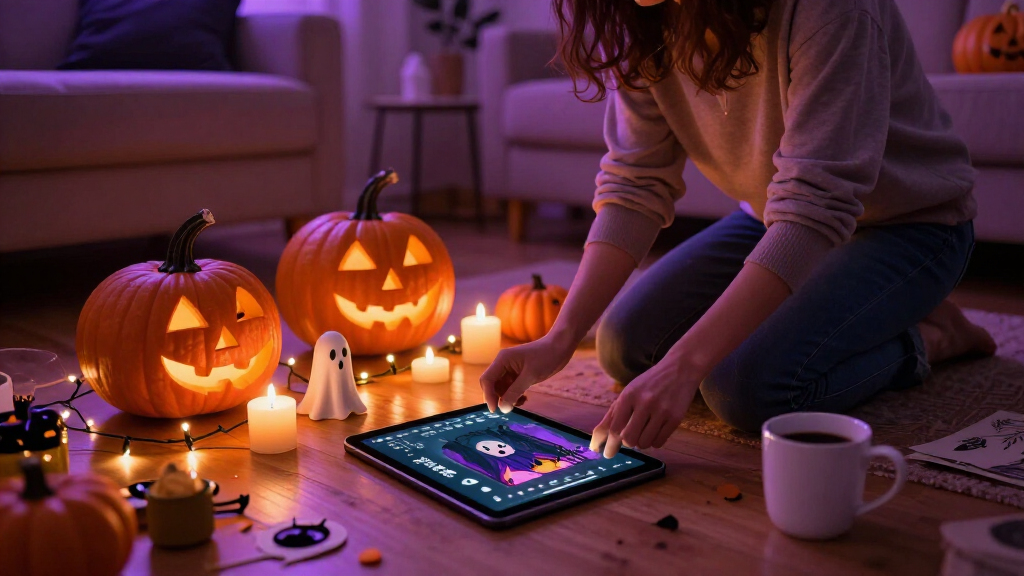

🔍 Read the full analysis: Make Your Halloween Decor Spooky With AI on ThorstenMeyerAI.com

Get hardware and tech essentials delivered free — and shop member deals
- Fast, free delivery on millions of items
- Access to Prime Big Deal Days deals on October 6–7
- Prime Video, Amazon Music and more included
TL;DR
AI-powered Halloween decor spans generated art, responsive character dialogue, and coordinated smart effects, but many products labeled ‘AI’ are just motion sensors with prerecorded audio. Experts advise checking whether features run locally or online, since connectivity, privacy, and licensing all affect reliability and safety.
A new consumer guide on AI-powered Halloween decor is urging holiday shoppers to look past marketing labels, warning that many decorations sold as “smart” or “AI-powered” rely on nothing more than a motion sensor and a prerecorded audio loop. The guide, published by ThorstenMeyerAI.com, explains how to distinguish genuine artificial intelligence capabilities from ordinary automation, how to build coordinated displays that hold up on a busy trick-or-treat night, and where privacy, licensing, and reliability risks come into play.
The central distinction the guide draws is between sensor-triggered automation and actual AI features. A prop that plays the same shriek every time someone walks by is ordinary automation, according to the guide, no matter what the packaging says. Genuine AI-powered decor uses artificial intelligence for tasks such as creating media, recognizing speech, or adapting a character’s response. The difference matters after the first trigger: a recording repeats identically, while an AI feature can interpret input or generate different content.
The guide breaks the category into compartments: generative AI can create a haunted portrait or draft a witch’s dialogue; voice recognition lets a prop respond to spoken phrases; and computer vision can analyze camera images. A porch gargoyle that growls on approach is sensor-triggered, the guide notes, while one that answers a visitor’s question using a speech system adds another layer — with added costs. Generated content needs review, speech recognition can fail in noisy environments, and image analysis may raise privacy concerns.
Marketing language does not always spell out which features a device uses, and product details can change, the guide cautions. Buyers are advised to check current availability, capabilities, pricing, and privacy settings before purchasing, and to determine whether a feature works locally or sends data to an online service — a factor that affects both reliability and what information leaves the home. The guide also outlines a four-step planning process: pick one clear scare moment, create the content, choose the trigger and output, and keep a local fallback so the scene survives connectivity failures.
A motion-triggered recording is automation; AI usually means a system generates or interprets content.
Use generated art, voices, or dialogue to personalize a scene, then review the results and usage terms.
Plan one clear visitor moment before choosing sensors, lights, speakers, or controllers.
Test offline behavior, sensor timing, audio, cable placement, and outdoor protection before Halloween night.
Tell visitors when a display processes faces or voices, limit collection, and provide a way to pass without interacting.
Why the AI Label Matters for Halloween Shoppers
Seasonal decor is a large retail category, and the guide’s core warning — that “AI-powered” is often marketing shorthand for simple automation — has direct financial implications for consumers deciding whether to pay a premium for smart features. A motion-triggered prop that repeats the same sound costs less and behaves predictably; an AI feature may feel more personal but is less predictable and requires more setup, the guide states.
The privacy angle is also concrete. Decorations that use microphones or cameras, or that rely on cloud services for speech or image processing, transmit data out of the home in ways a plastic skeleton never does. For households hosting children on Halloween night, the guide’s advice to verify whether features run locally or online addresses a real tradeoff between capability and data exposure. Reliability matters too: a cloud-dependent light cue can stall when Wi-Fi drops exactly when guests reach the door, which is why the guide recommends local recordings or simple fallback cues for busy evenings.
How Smart Decor Evolved Beyond the Jump Scare
: “Traditional Halloween decorations have long relied on mechanical triggers — pressure pads, infrared motion sensors, and sound-activated switches that play a fixed audio clip or start a motor. That approach remains effective for jump scares and remains the most common technology in mass-market props.
The arrival of consumer generative AI tools has expanded what hobbyists and manufacturers can do: custom portraits, synthetic voices, and characters that vary their responses are now accessible without programming skills. The guide situates current products on a spectrum from motion-triggered props (simple, dependable, fixed output) through generated media (custom art and dialogue the owner edits) and responsive characters (speech tools that vary replies) to connected effects (coordinated lights, speakers, and plugs). Each step up the ladder adds capability but also adds failure points, connectivity needs, and in some cases data transmission.
“A motion sensor that triggers a prerecorded shriek can still make an excellent scare, but by itself it is ordinary automation.”
— ThorstenMeyerAI.com guide
What the Guide Leaves Open
The guide is general consumer advice and does not name or test specific products, so it cannot confirm how any individual decoration on sale this season actually behaves. It acknowledges that marketing language does not always spell out which features a device uses and that product details, availability, and pricing can change — meaning buyers must verify capabilities at the point of purchase.
Performance claims are also conditional rather than settled. Speech recognition can fail in noise, per the guide, a realistic concern on a busy street full of costumed visitors, but it offers no measured failure rates. Similarly, the guide notes that online features may transmit data from the home but does not specify what data, to which services, or under what retention policies — details that would depend on the individual manufacturer. Licensing restrictions on generated media are described as possible limits on commercial use or sharing, without specifics.
Ahead of Halloween Night
Shoppers preparing for the season can apply the guide’s checklist now: verify whether a product’s AI features run locally or in the cloud, review privacy settings before connecting any microphone- or camera-equipped prop to a home network, and test the full display from a visitor’s point of view rather than the builder’s.
Builders using generative tools should build in time to clean up generated voices and visuals, review content for tone and audience appropriateness, and check the license terms before sharing results publicly or using them commercially. The guide recommends keeping a local fallback cue — a simple recording or fixed light change — so the display still works if Wi-Fi or a cloud service fails mid-evening. As AI features spread through more consumer holiday products, the local-versus-cloud question is likely to recur beyond Halloween in upcoming seasonal categories.
Key Questions
Is a motion-activated Halloween prop considered AI-powered?
No, according to the guide. A motion sensor that triggers a prerecorded sound is ordinary automation, even if the packaging says “smart” or “AI-powered.” Genuine AI features involve tasks like generating content, recognizing speech, or adapting responses to input.
What are the main types of AI Halloween decorations?
The guide identifies four approaches: motion-triggered props that play fixed sounds or movements, generated media such as custom art or dialogue, responsive characters that use speech tools to vary replies, and connected effects that coordinate lights, speakers, and plugs into a timed scene.
Do AI decorations pose privacy risks?
They can. Decorations with microphones or cameras, or that rely on cloud services for speech or image processing, may send data to an online service. The guide advises checking whether each feature works locally or transmits data before buying and connecting the device.
What happens if the internet goes out during Halloween?
Cloud-dependent features can stall or fail. The guide recommends keeping a local fallback, such as a stored recording or a simple fixed light cue, so the scene continues to work if Wi-Fi drops while guests are at the door.
Can I use AI-generated voices and images anywhere I want?
Not necessarily. The guide notes that generated content may need cleanup and that its license terms may restrict commercial use or sharing, so users should review the terms of the specific tool before publishing or monetizing the output.
Source: ThorstenMeyerAI.com
Fall Picks
fall essentials
As an affiliate, we earn on qualifying purchases.