🔍 Read the full analysis: 2026’S Best OLED Gaming Monitors: Our Expert Choice Of 9 Models on ThorstenMeyerAI.com

Get hardware and tech essentials delivered free with Prime
- Fast, free delivery on millions of items
- Prime Video, Amazon Music and more included
- Member-only deals all year
TL;DR
In 2026, nine leading OLED gaming monitors stand out for their performance, color accuracy, and features. This guide highlights the top options, their strengths, and what to consider before buying.
Nine OLED gaming monitors have been identified as the best options for 2026, combining high refresh rates, vibrant visuals, and advanced features. For detailed reviews, see the original analysis. These models are selected based on performance, display quality, and user feedback, offering gamers a range of choices for immersive gameplay. The list includes models like the ASUS ROG XG27AQDMG and AOC Agon Pro QD-OLED, which stand out for their balance of cost and cutting-edge technology. You can explore more about top OLED options in our OLED monitor guide.
The top models in this roundup all feature refresh rates of 120Hz or higher, with some reaching 240Hz, ensuring smooth motion during fast-paced gaming. Response times are typically around 1ms, reducing motion blur and ghosting effects. Size options vary from 27-inch to ultrawide 34-inch screens, catering to different gaming preferences and desk setups. Many of these monitors support adaptive sync technologies such as G-SYNC and FreeSync, further improving gameplay fluidity. For an in-depth look at OLED gaming monitors, see the original analysis.
Among the highlighted models, the ASUS ROG XG27AQDMG is praised for its affordability and solid performance, making it the best overall choice. Meanwhile, the AOC Agon Pro QD-OLED is noted for its ultra-fast response and superior color accuracy, appealing to enthusiasts seeking the best visuals. However, all OLED monitors carry some risk of burn-in, especially with static HUD elements, which manufacturers mitigate through features like pixel shifting and screen savers. Connectivity options include HDMI 2.1, DisplayPort 1.4, and USB-C, ensuring compatibility with a range of gaming systems.
The 9 picks
- 1
 LG 32GX850A-B 32-Inch UltraGear 4K UHD OLED Gaming MonitorView on Amazon →
- 2
 LG 34GX90SA-W 34-inch Ultragear WQHD OLED Curved Gaming Monitor 240Hz, 1ms, G…View on Amazon →
- 3
 ASUS ROG XG27AQDMG 27-Inch 1440p OLED Gaming MonitorView on Amazon →
- 4
 Samsung 27" Odyssey OLED G6 (G61SH) QD-OLED Gaming MonitorView on Amazon →
- 5
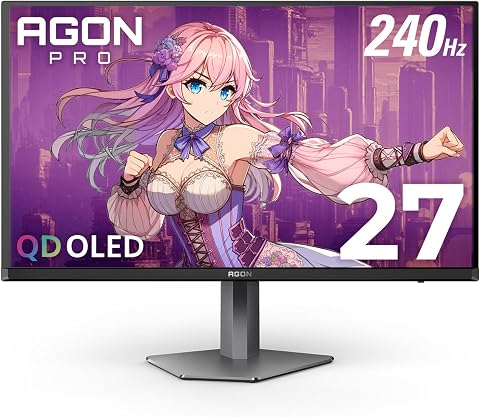 AOC Agon Pro 27-Inch Gaming Monitor QD OLED 240Hz 0.03ms, AG276QZD2View on Amazon →
- 6
 GIGABYTE GO27Q24G 27" W-OLED 240Hz QHD Gaming MonitorView on Amazon →
- 7
 Samsung 27” Odyssey OLED G5 (G50SF) Series QHD Gaming MonitorView on Amazon →
- 8
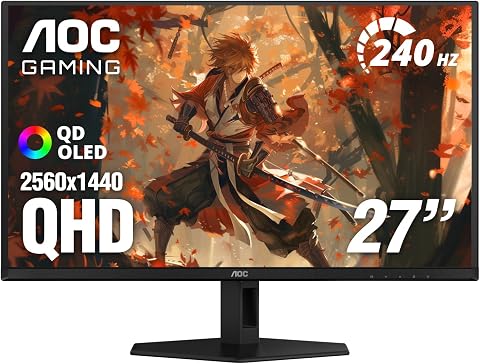 AOC 27" Gaming Monitor QHD 240Hz QD OLED NVIDIA G-SYNC CompatibleView on Amazon →
- 9
 AOC 27-Inch QHD QD-OLED Gaming Monitor with 240Hz, G-SYNC CompatibleView on Amazon →
Why OLED Monitors Are Game Changers in 2026
These OLED gaming monitors significantly enhance visual fidelity and immersion, setting new standards for gaming displays. Their deep contrast and vibrant colors make game environments more realistic and engaging, which is particularly impactful for story-driven and cinematic titles. The high refresh rates and low response times cater to competitive gaming, offering smoother gameplay and reduced motion artifacts. As OLED technology becomes more mainstream, the availability of high-performance, feature-rich models will influence both consumer expectations and industry standards, although concerns about burn-in and cost remain relevant.
Evolution of OLED Gaming Monitors in 2026
OLED technology has rapidly advanced over recent years, transitioning from high-end, niche products to mainstream gaming monitors. In 2026, the market is dominated by models offering high refresh rates, HDR support, and improved longevity features. Notable developments include the introduction of ultra-fast response times and better burn-in mitigation techniques. The popularity of OLEDs has grown alongside the rise of high-performance GPUs capable of driving these displays at their full potential, making them a top choice for serious gamers seeking superior image quality.
Previous years saw concerns over burn-in and high costs, but recent innovations and increased competition have made OLED monitors more accessible and durable. Industry experts highlight that the balance of visual quality and gaming performance makes OLED a preferred option despite some tradeoffs. As the technology matures, more models are expected to include features like wider color gamuts and enhanced longevity, further solidifying their role in gaming setups.
Remaining Concerns About OLED Durability and Cost
While OLED monitors offer superior visuals, issues such as burn-in risk and higher prices compared to LCDs persist. Manufacturers have introduced features like pixel shifting and automatic screen savers to mitigate burn-in, but long-term durability remains a concern, especially for static HUD elements in games. Additionally, the higher initial cost may be prohibitive for some consumers, and the market’s response to these tradeoffs in 2026 is still evolving.
It is not yet clear how widespread or severe burn-in issues will be over extended use, and whether new technological solutions will fully mitigate this risk in future models. Consumer reviews and long-term testing are ongoing, and industry experts continue to monitor these developments.
Future Developments and Market Expectations for 2027
Manufacturers are expected to continue refining OLED technology, focusing on reducing costs and enhancing longevity. Upcoming models may feature even faster response times, higher refresh rates, and wider color gamuts, further improving visual fidelity. The integration of more advanced burn-in prevention techniques and adaptive brightness features is anticipated to address durability concerns. Market analysts predict that OLED gaming monitors will become more affordable and more widespread, influencing both casual and professional gaming setups in 2027.
Consumers can expect ongoing innovation, with potential new form factors such as flexible or foldable OLED screens and increased integration with gaming ecosystems. As the technology matures, the competitive landscape will likely shift, offering more choices and better value for gamers worldwide.
Key Questions
Are OLED gaming monitors worth the extra cost compared to LCDs?
OLED monitors provide superior contrast, deeper blacks, and more vibrant colors, which can greatly enhance the gaming experience. For players prioritizing image quality and immersion, the higher price may be justified. However, budget-conscious gamers might find high-quality LCDs sufficient, especially considering the burn-in concerns associated with OLEDs.
What are the main risks of using OLED monitors for gaming?
The primary risk is burn-in, which can occur if static images or HUD elements remain on the screen for extended periods. Modern OLED monitors include features like pixel shifting and screen savers to help mitigate this risk. Proper usage habits, such as avoiding static images when possible, can extend the lifespan of OLED displays.
Do I need a high-end GPU to fully utilize a 240Hz OLED monitor?
Yes, to fully enjoy a 240Hz refresh rate, a powerful GPU capable of generating high frame rates is necessary. If your system cannot support these frame rates, the benefits of the high refresh rate will be less noticeable, and a slightly lower-spec monitor might be a more practical choice.
Which size is best for an OLED gaming monitor?
The optimal size depends on your gaming setup and preferences. 27-inch models are popular for their balance of immersion and desk space, while ultrawide 34-inch screens provide a broader field of view for racing or simulation games. Consider your desk size and gaming style when choosing.
Source: ThorstenMeyerAI.com
Fall Picks
fall essentials
As an affiliate, we earn on qualifying purchases.