🔍 Read the full analysis: A Look At AI And Work On November 14, 2026 on ThorstenMeyerAI.com

Get hardware and tech essentials delivered free with Prime
- Fast, free delivery on millions of items
- Prime Video, Amazon Music and more included
- Member-only deals all year
TL;DR
ThorstenMeyerAI.com’s November 14 roundup examined how AI-related risks reach workers through financial exposure, technology vendors and the people responsible for operating and maintaining systems. Its reports also described a robot-model performance comparison and an FAA flight halt that officials attributed to maintenance work, not AI.
ThorstenMeyerAI.com’s November 14 roundup connected developments in financial supervision, robotics, a data breach and airline operations to how AI affects work—including the risks carried by workers, firms and people who maintain older systems. The reports include a Federal Reserve survey of market contacts, an Australian regulator’s planned AI stress test, and an account of driver data stolen through an Uber vendor; they do not establish that AI directly caused each event.
The Federal Reserve’s latest Financial Stability Report said 87% of 23 market contacts named AI as a risk, up from 50% in the spring. The Fed emphasized that these were the contacts’ views, not the central bank’s own assessment. Separately, the report put debt issuance tied to advanced computing above $680 billion by October 2026. Australia’s bank regulator, APRA, said its 2027 stress test would examine AI-driven disruption to business models. APRA also found that few institutions had tested how to switch away from a critical AI provider. The roundup said the regulator has not published the figures its test scenarios will use.
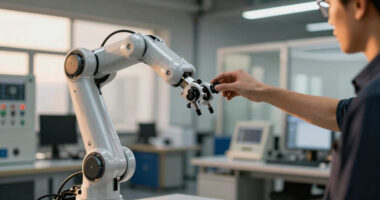
In robotics, Fortune reported that OpenAI had disbanded its standalone robotics team, with the company saying general models, including GPT-6 Astra, could be applied directly to robot control. Runway released Praxis-1, a specialist model with open weights, two days earlier. In a Runway test, GPT-6 Astra took 15.6 times longer and cost 51 times more per completed task than Praxis-1. Those figures come from Runway’s own comparison. A separate Artificial Analysis test reported that GPT-6 Astra took an average of 30 minutes and cost $16.36 per task controlling a real robot arm; a person took about 20 seconds. The two tests have different sources and should not be treated as a single benchmark.
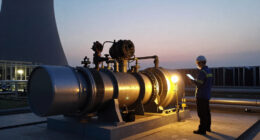
Uber began notifying US drivers whose information was taken in an October breach that began at its vendor Fireworks AI, according to Uber and reports by TechCrunch. Breach notices seen by TechCrunch said driver’s license information was stolen. Notices from three states accounted for 7,870 people, a figure the source describes as a minimum rather than a full count. In a separate incident, the FAA halted departures at US airports for about four hours and 23 minutes on November 13. Transportation Secretary Sean Duffy attributed the disruption to contractor L3Harris switching lines from copper wire to fiber at a remote FAA site. The cause of the problem with the router—whether faulty equipment or an installation error—remained undetermined. FAA Administrator Bryan Bedford told CNN there was “zero evidence of anything AI-related.”
AI Risks Reach Workers and Firms
The reports point to several ways that AI-related business decisions can affect people beyond the teams building models. A financial institution’s reliance on an AI provider can become an operational risk if the provider fails or the institution cannot switch to another. APRA’s planned stress test puts that continuity question into regulatory planning, although its scenarios and measures are not yet public. The roundup’s labor-economics interpretation is that these preparations involve staff who must test alternatives, manage systems and respond when services fail—not just software.
The Uber breach illustrates a different exposure: workers’ personal information may sit in the systems of vendors selected by a platform. The roundup argues that drivers bear consequences even if they did not choose or see that vendor chain. License data can be difficult to replace, unlike a password; however, the full number of affected drivers and the consequences for each person were not established in the material.
Robotics raises questions about which skills and workplace knowledge will matter as systems move from simulation to physical tasks. The reported comparisons suggest that speed and cost can differ sharply between a general model and a specialist model, but the Runway figures are from a vendor test and do not establish performance across all jobs or settings. The roundup’s broader interpretation is that deployment experience and real-world data remain valuable, including knowledge held by people who operate workplaces and equipment.
Products Worth Considering

Apple MacBook Air 15-inch Laptop with M5 Chip, 16GB Memory, 512GB SSD, Liquid Retina Display, and Touch ID (Midnight)

LG UltraGear 45GX950A-B 45-Inch 5K2K Curved OLED Gaming Monitor
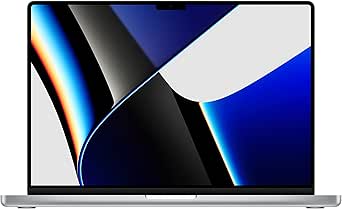
Apple MacBook Pro 16-inch (2021), M1 Pro, 10-core CPU, 16-core GPU, 16GB RAM, 512GB SSD, Silver
As an affiliate, we earn on qualifying purchases.
The Day’s Four Work Connections
The publication presents these stories as a daily video and news roundup, rather than as a single new policy or research finding. Its stated lens is work, wages, skills and firms. The distinctions matter: the Federal Reserve report records the opinions of surveyed market contacts, APRA describes a future test, and the breach and FAA coverage concern separate events. The roundup’s conclusions about labor and workplace effects are its own analysis, not findings attributed to regulators.
The FAA’s October 15 tracker showed that 3,508 of 5,170 telecom connections had been replaced, or 68%, according to the source. The roundup used that figure to frame the November 13 disruption as a maintenance and modernization issue. It also reported that, when the relevant information could not be trusted, operations stopped and were handled manually. Officials’ account did not connect the incident to AI.
Other items in the November 14 edition included an attack on unpatched Check Point gateways, an OpenAI wallet feature requiring approval before each purchase, a data breach affecting email addresses in Osaka, and a trademark complaint involving Anthropic’s “Mythos” name. These stories broaden the roundup’s technology coverage, but the source material does not establish that they were all connected to the labor developments.
“In its test, GPT-6 Astra took 15.6 times longer than Praxis-1 and cost 51 times more per completed task.”
— Runway, as reported in the roundup
Open Questions on Risk and Responsibility
Several key details remain unsettled. APRA has not released the numerical assumptions or scenarios for its 2027 AI stress test, and the roundup does not specify when those details will be published. The survey of market contacts also does not reveal how respondents defined AI risk or whether their views represent the wider financial sector.
For the robotics comparison, Runway’s results are a company test, and the source material does not provide enough detail to determine how well its tasks represent factory, warehouse or other workplace conditions. The real-arm test cited from Artificial Analysis has different reported results and methodology. Neither finding alone establishes how quickly robots could take on particular jobs or what the employment effects would be.
The full number of people affected by the Uber vendor breach remains unknown; 7,870 is a count from notices in three states, not a total. The material also does not say whether the FAA determined if the router was faulty or installed incorrectly. It does not establish that the separate technology and security stories caused job losses, wage changes or changes to employment levels.
Stress Tests, Notifications and Repairs
APRA’s planned 2027 stress test is the clearest upcoming milestone in the roundup. Its published scenarios and results could show how the regulator expects banks to examine AI-driven disruption and dependence on critical providers. The source material does not give a release date for the test’s assumptions or findings.
Uber has started sending letters to affected US drivers, but the reported state notices cover only part of the known population. Further notices or disclosures may clarify the total number affected and what protections or support the company will provide. For the FAA incident, the outstanding question is whether investigators identify faulty equipment, an installation problem or another cause related to the line switch.
For workplace readers, the next useful evidence will be operational rather than speculative: independent tests of robot systems in real settings, clearer information about the workers whose data vendors handle, and details on how financial institutions can continue operating if an AI provider becomes unavailable. The roundup reports no confirmed job-loss total or wage impact from these developments.
Key Questions
What is the main development in this roundup?
ThorstenMeyerAI.com published a November 14 roundup examining AI and work through financial risk, robotics, vendor security and infrastructure maintenance. It is a report connecting several developments, not a single announcement that changed employment policy.
Did the Federal Reserve say AI is a financial stability risk?
The report said that 87% of 23 market contacts surveyed named AI as a risk, compared with 50% in the spring. The Fed said those were the contacts’ views, not its own conclusion.
How many Uber drivers were affected by the data breach?
Not all affected people have been counted in the source material. Notices from three states add up to 7,870 people, which the roundup describes as a floor rather than a total. TechCrunch reported that driver’s license information was stolen.
Was AI responsible for the FAA flight halt?
The FAA administrator told CNN there was “zero evidence of anything AI-related.” The account instead linked the November 13 disruption to contractor L3Harris switching telecom lines from copper to fiber, while the precise router problem remained undetermined.
Do the robot-model tests show that robots are replacing workers?
No. The tests compare performance on specific tasks, and the source provides no evidence of job losses or economy-wide employment effects. Runway’s figures are its own test; other workplace results and the pace of adoption remain unclear.
Source: ThorstenMeyerAI.com