📊 Full opportunity report: Data: The One Thing You Can’t Rent on ThorstenMeyerAI.com — validation score, market gap, and execution plan.
TL;DR
The AI industry faces a new chokepoint: data that cannot be rented or freely scraped. Major legal and economic shifts now restrict access to high-quality, verified human data, favoring large incumbents and specialized sources. This development marks a critical turning point in AI training strategies.
In 2026, the AI industry has transitioned from freely scraping data to facing strict licensing, legal restrictions, and fencing of high-quality, verified human data. This change marks a significant shift in how AI models are trained, with data becoming a scarce, protected resource that favors large corporations and specialized data providers.
Recent legal actions, including Anthropic’s $1.5 billion settlement over copyright infringement, signal the end of the era of free web scraping for training data. The judge’s ruling confirmed that scraping copyrighted books without licensing is not fair use, establishing a legal precedent that effectively fences large portions of data behind paid licenses.
Major publishers like The New York Times and News Corp are moving from lawsuits to licensing agreements, creating a market where data access is increasingly priced. This shift favors well-funded industry giants capable of paying substantial licensing fees, creating barriers for startups and smaller players.
Meanwhile, the industry is shifting from cheap, crowdsourced labeling to sourcing data from domain experts—lawyers, scientists, and specialists—whose time and knowledge are expensive. Companies like Meta and Surge are investing heavily in acquiring expert-generated data, further raising the stakes for access and control.
Data: The One Thing You Can’t Rent
The free part of “all human knowledge” is running out. As compute and models commoditize, the corpus you can’t replicate becomes the moat — so data is being fenced, priced, and, in places, treated as a national asset.
Data was supposed to be the abundant input. It’s the scarce one. It’s also the chokepoint you can actually own — so guard your proprietary data, and don’t hand it to a provider who can become your competitor (the lesson everyone fled Scale to learn). Nations: license it like Ukraine — keep the model, keep the leverage.
Why Data Fencing Reshapes AI Industry Power Dynamics
The fencing and licensing of high-quality data concentrate power within large, resource-rich companies, making it harder for startups to compete. This shift could slow innovation from smaller players and increase barriers to entry, potentially leading to a more centralized AI ecosystem dominated by incumbents with deep pockets.
Furthermore, the move towards paid data sources and expert-generated content underscores the importance of verified, human-made data as a critical asset—one that cannot be replaced by synthetic or web-scraped data—thus redefining the core resources that drive AI progress.

Understanding Open Source and Free Software Licensing
- Condition: Used Book in Good Condition
As an affiliate, we earn on qualifying purchases.
As an affiliate, we earn on qualifying purchases.
Legal and Market Shifts in Data Access in 2026
Historically, AI training relied heavily on freely available web data, but legal actions like Anthropic’s settlement and ongoing lawsuits against publishers have shifted this landscape. The 2026 legal rulings and licensing deals mark the end of unrestricted web scraping and introduce a market-based approach to data access.
This transition is part of a broader industry trend where data is becoming a protected, monetized asset, with companies investing billions in acquiring verified, domain-specific, human-generated data. The industry is also witnessing a move from low-cost crowdsourced labels to expensive expert annotations, further emphasizing data’s central role.
“Data access is now a moat. Large companies can afford to pay for high-quality, verified datasets, leaving startups at a disadvantage.”
— Industry insider
expert-generated data annotation tools
As an affiliate, we earn on qualifying purchases.
As an affiliate, we earn on qualifying purchases.
Unclear Long-Term Impact of Data Fencing
It remains uncertain how rapidly the industry will fully transition to licensed, fenced data sources and whether new legal challenges or technological innovations could alter this trajectory. The full economic and competitive consequences are still unfolding, and smaller players may find ways to adapt or circumvent these barriers.
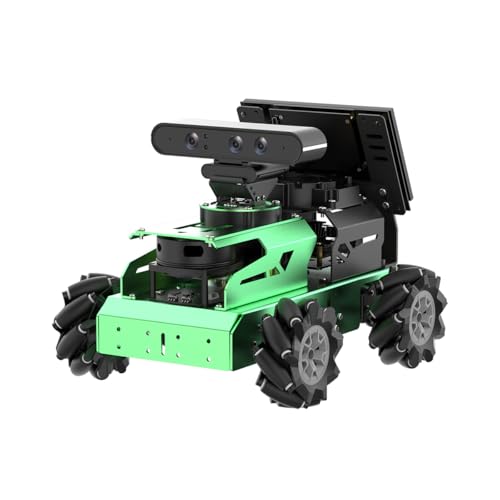
JetAuto ROS2 Robot Car with ChatGPT Large AI Model Lidar Depth Camera AI Voice Control Touch Screen, SLAM Mapping Navigation Path Planning Autonomous Driving Smart Robot, Advanced Kit & JetsonNano 4GB
- ROS2 & ROS1 Compatibility: Supports ROS2 and ROS1 with Jetson controllers
- Advanced SLAM & Navigation: Equipped with 3D camera and Lidar for precise mapping
- Multiple Algorithms for Navigation: Uses gmapping, hector, karto, cartographer, RRT
As an affiliate, we earn on qualifying purchases.
As an affiliate, we earn on qualifying purchases.
Future Developments in Data Licensing and AI Training
Expect continued legal battles and licensing negotiations as the industry consolidates around fenced data sources. Companies will likely invest heavily in acquiring and developing verified datasets, and new regulations or court rulings could further shape access. The industry may also see innovations in synthetic data and domain-specific data collection strategies.
domain expert data collection software
As an affiliate, we earn on qualifying purchases.
As an affiliate, we earn on qualifying purchases.
Key Questions
Why can’t AI models simply use more synthetic data to overcome scarcity?
Synthetic data can help but carries risks of errors and biases, especially in complex domains. Verified human data remains essential for accuracy and reliability, making it a valuable, protected resource.
How does data fencing affect startups and smaller AI labs?
Fencing and licensing increase costs and barriers to access, favoring large companies with deep financial resources and potentially slowing innovation among smaller players.
Will open web scraping completely disappear in AI training?
While legal restrictions are increasing, some scraping may continue in less regulated areas or through licensed agreements, but the dominant model is shifting toward paid, licensed data sources.
What role do domain experts play in future AI training?
Experts provide high-quality, verified data that cannot be easily replicated or replaced, making their contributions increasingly central to advanced AI models.
Could new laws or court decisions further restrict or expand data access?
Future legal developments are uncertain, but ongoing court cases and regulations will likely continue to shape the legal landscape around data licensing and fair use.
Source: ThorstenMeyerAI.com