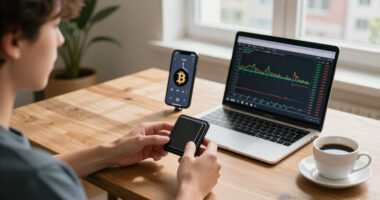

Order flow auctions can change how you evaluate DeFi execution quality by increasing transparency and revealing trading patterns. They help you see liquidity health and detect conflicts of interest, leading to better assessments of trade execution. This revamped approach reduces information asymmetry and builds trust among participants. As market structure evolves through these auctions, your understanding of trading costs and liquidity management improves. Keep exploring to see how these innovations might reshape DeFi’s future and your role within it.

Get hardware and tech essentials delivered free with Prime
- Fast, free delivery on millions of items
- Prime Video, Amazon Music and more included
- Member-only deals all year
Key Takeaways
- Order flow auctions increase transparency, allowing better assessment of liquidity and trade execution quality in DeFi.
- Selling order data reveals trading patterns, helping evaluate execution costs and identify conflicts of interest.
- Enhanced transparency from auctions can reduce information asymmetry, leading to fairer and more accurate measurement of execution quality.
- Understanding market structure through order flow data enables more effective liquidity management in DeFi platforms.
- Adoption of auction mechanisms fosters trust and participation, ultimately improving how execution quality is perceived and measured.

Order flow auctions are a key component of modern trading, where brokers sell their clients’ order data to third-party firms. This practice, widespread in traditional finance, has significant implications for market transparency and liquidity incentives. When you understand how these auctions work, you realize they can influence the quality of trade execution, especially in decentralized finance (DeFi). In DeFi, where transparency and efficiency are core principles, integrating order flow auctions could reshape how execution quality is measured. In traditional markets, the potential for information asymmetry can lead to conflicts of interest that impact trade quality. A deeper understanding of market transparency can help participants better assess the true costs and benefits associated with different trading venues. Market transparency is often limited in traditional trading because order flow data is opaque to most market participants. When brokers sell order data, third-party firms gain insights into trading patterns, liquidity pools, and price movements. If DeFi platforms adopt similar mechanisms, they could offer greater transparency about where and how trades are executed. This transparency allows users to better evaluate execution quality, understand liquidity depth, and detect potential conflicts of interest. Additionally, understanding order flow auctions helps illuminate how liquidity can be strategically managed to benefit all market participants. Recognizing how market structure influences trading outcomes is essential for advancing DeFi’s goals of decentralization and openness. Furthermore, increasing transparency in these auctions could encourage more participation and trust among users.
DeFi order flow auction platform
As an affiliate, we earn on qualifying purchases.
As an affiliate, we earn on qualifying purchases.
Frequently Asked Questions
How Do Order Flow Auctions Impact Retail Traders’ Costs?
Order flow auctions can lower your retail costs by increasing trading efficiency. They enable better price discovery and faster execution, which means you pay less in slippage and fees. By revealing the true market demand, these auctions help you get more favorable prices and reduce hidden costs. Overall, they empower you to trade more effectively, saving money while improving the quality of your trades.
What Are the Main Risks Associated With Order Flow Auctions?
You face risks like reduced market transparency and distorted price discovery. Order flow auctions can obscure true market conditions, making it harder for you to gauge fair prices. This lack of transparency might lead you to accept worse execution quality, increasing costs. Additionally, these auctions could enable front-running or manipulation, further undermining trust and potentially causing you to make less informed trading decisions.
How Do Order Flow Auctions Differ From Traditional Exchange Order Books?
Think of order flow auctions as a dynamic marketplace, unlike traditional exchange order books. You gain quicker, more transparent price discovery, as trades are matched through competitive bidding rather than static listings. This method enhances market transparency and can reduce latency, giving you better execution quality. While order books rely on visible queues, auctions tap into real-time liquidity, making your trades more efficient and reflective of current market conditions.
Can Order Flow Auctions Improve Liquidity in Defi Markets?
Yes, order flow auctions can improve liquidity in DeFi markets by promoting market transparency and offering better liquidity incentives. As a participant, you benefit from clearer price discovery and more efficient trade execution. These auctions attract more traders and liquidity providers, increasing overall market depth. With enhanced transparency, you gain confidence in your trades, while liquidity incentives motivate others to contribute, leading to a healthier, more dynamic DeFi ecosystem.
What Regulations Might Affect the Adoption of Order Flow Auctions?
You might think regulations would be thrilled about order flow auctions boosting market transparency, right? Sadly, regulatory compliance concerns could slow down their adoption. Authorities may worry about hidden conflicts of interest or manipulation, despite the potential for more transparent trading. So, while these auctions promise to shake up DeFi markets, strict regulations could impose hurdles, making it a balancing act between innovation and oversight.
liquidity management tools for DeFi
As an affiliate, we earn on qualifying purchases.
As an affiliate, we earn on qualifying purchases.
Conclusion
Order flow auctions could truly transform how you evaluate DeFi execution quality, making it more transparent and competitive. Imagine you’re trading on a platform that rewards faster, more accurate order matching—like a high-stakes auction where every millisecond counts. This shift might mean better prices and reduced slippage for you, ultimately improving your trading experience. As these auctions evolve, you’ll find yourself in a more fair, efficient DeFi landscape—where your trades are executed with greater precision and trust.
trading execution quality analysis software
As an affiliate, we earn on qualifying purchases.
As an affiliate, we earn on qualifying purchases.
market transparency tools for DeFi
As an affiliate, we earn on qualifying purchases.
As an affiliate, we earn on qualifying purchases.
Halloween Picks
halloween
As an affiliate, we earn on qualifying purchases.