This year, you’ll hear about breakthroughs in zero-knowledge proofs that enhance privacy and security in digital transactions. These advances make it possible to verify information without revealing sensitive details, transforming blockchain, biometric security, and data protection. Expect new methods to improve efficiency and applicability across complex problems. If you’re curious about how these innovations could reshape trust online, continue exploring the latest developments—they hold great potential for future digital security.
Key Takeaways
- Expect advancements in non-interactive zero-knowledge proofs to improve scalability and efficiency for complex applications.
- New conversion techniques like optimized Fiat–Shamir heuristics will enhance practical implementation.
- Innovations will bolster privacy-preserving blockchain transactions, enabling more secure and private digital assets.
- Breakthroughs in zero-knowledge proofs will expand their use in biometric verification and secure digital identification.
- Emerging research will focus on integrating zero-knowledge proofs with other cryptographic protocols for enhanced security solutions.

Have you ever wondered how you can prove something is true without revealing any sensitive details? That’s exactly what zero-knowledge proofs are designed to do. These cryptographic protocols let you demonstrate the validity of a statement without exposing the actual data behind it. Imagine proving you have a secret without revealing what it is—that’s the core idea. First proposed by MIT researchers Shafi Goldwasser and Silvio Micali, zero-knowledge proofs are groundbreaking because they balance verification with privacy. They must satisfy three key properties: completeness, meaning honest proofs are accepted; soundness, so false claims are rejected; and zero-knowledge, ensuring no additional information leaks during the process.
Zero-knowledge proofs verify truths without revealing sensitive details, balancing privacy and security.
The beauty of zero-knowledge proofs lies in their flexibility. There are two main types: interactive proofs, which involve multiple rounds of communication between the prover and verifier, and non-interactive proofs, which require only a single message from the prover. Converting an interactive proof into a non-interactive one is possible through methods like the Fiat–Shamir heuristic, or by using common random strings or random oracles, which simplify the process and make it more practical for real-world applications. Furthermore, recent advances have expanded their applicability to complex problems like verifying large computations efficiently.
One of the most significant advantages is privacy preservation. Zero-knowledge proofs allow you to verify information—like a password, biometric data, or transaction details—without revealing the data itself. This makes them invaluable in secure communication, digital authentication, and data protection scenarios. They also act as a safeguard against cheating, since the soundness property prevents dishonest parties from fooling the verifier. As a result, zero-knowledge proofs boost trust in digital transactions, reducing the risk of data leaks during verification.
In technology, zero-knowledge proofs are transforming multiple fields. They’re used in blockchain to facilitate private and secure transactions, enabling users to prove ownership or authenticity without revealing sensitive details. Biometric systems leverage them for verifying identities securely, while financial services utilize them to authenticate credentials without exposing private data. They also enhance secure communication channels and protect stored data, ensuring privacy while maintaining integrity.
Think of the “color-blind friend” analogy, where someone can prove they know the color of an object without revealing what it is. Similarly, zero-knowledge proofs can confirm knowledge or authenticity without giving away the underlying information. They are like cryptographic puzzles that keep data safe while still allowing verification. As these breakthroughs gain attention throughout the year, expect more innovations in privacy, security, and trust—making zero-knowledge proofs a cornerstone of future digital security solutions.

ELLIPAL Titan 2.0 Crypto Cold Wallet, 100% Offline, Air-gapped - Secure Wallet for 10000+ Coins & Tokens & NFTs
【Ultimate Protection with Air-Gapped & Fully Internet Isolated Design】 ELLIPAL Titan 2.0 uses air-gapped tech for unmatched security...
As an affiliate, we earn on qualifying purchases.
Frequently Asked Questions
How Do Zero-Knowledge Proofs Impact Everyday Online Privacy?
Zero-knowledge proofs greatly improve your online privacy by letting you verify information without sharing sensitive details. You can prove you’re of legal age or a member without revealing your identity or personal data. This minimizes data exposure, reduces risks of hacking or identity theft, and enhances security. With ZKPs, you get a safer, more private online experience, giving you control over what information you share and protecting your personal privacy.
Are Zero-Knowledge Proofs Scalable for Large Blockchain Networks?
You might wonder if ZKPs can handle large blockchain networks. The good news is, they’re designed to scale efficiently by batching thousands of transactions into a single proof, reducing onchain data and computation. Systems like zk-Rollups and STARKs enable faster, cheaper transactions without sacrificing security. Although generating proofs requires effort, ongoing improvements in hardware and algorithms are making ZKPs increasingly practical for big networks.
What Industries Will Benefit Most From Zero-Knowledge Proof Innovations?
You’ll find that industries like finance, voting, and digital identity stand to benefit most from zero-knowledge proof innovations. In finance, ZKPs safeguard transaction privacy while ensuring compliance. Voting systems gain higher security and voter anonymity, boosting trust. Identity verification becomes more secure and private, reducing fraud. These advancements streamline processes, enhance security, and build confidence, making ZKPs a game-changer across sectors that handle sensitive data and trust-based transactions.
Can Zero-Knowledge Proofs Replace Traditional Encryption Methods?
Imagine trying to hide a secret in a locked box, but with ZKPs, you prove you have the key without opening it. Zero-knowledge proofs can’t fully replace traditional encryption yet because they don’t encrypt data itself. Instead, they verify information without revealing it, making them ideal for privacy, but you still need encryption for securing actual data. So, instead of replacing, think of ZKPs as a powerful supplement.
What Are the Main Challenges in Implementing Zero-Knowledge Proof Systems?
Implementing zero-knowledge proof systems presents several challenges for you. You’ll face high computational demands during proof creation and verification, especially with complex statements or large datasets. Ensuring security is tough, as implementation errors can lead to vulnerabilities, and side-channel attacks pose risks. Additionally, you need advanced cryptographic expertise, deal with scalability issues, and navigate interoperability and usability hurdles, making practical deployment a complex and demanding process.

Keystone - Cryptocurrency Hardware Wallet Air-gapped, 4-inch Touch Screen, Store Your Crypto Securely (Keystone 3 Pro)
Visit guide.keyst.one for speedy set up. If you are facing charging/battery issue, please update your Keystone to V-1.5.6...
As an affiliate, we earn on qualifying purchases.
Conclusion
As you stay tuned, these breakthroughs in zero-knowledge proofs will reshape how we think about privacy and security. What’s coming next could uncover even more powerful applications, revealing secrets without ever exposing them. The future is just around the corner, and you won’t want to miss what’s on the horizon. Keep your eyes open — the most exciting developments are yet to come, and they’ll change everything you thought you knew.
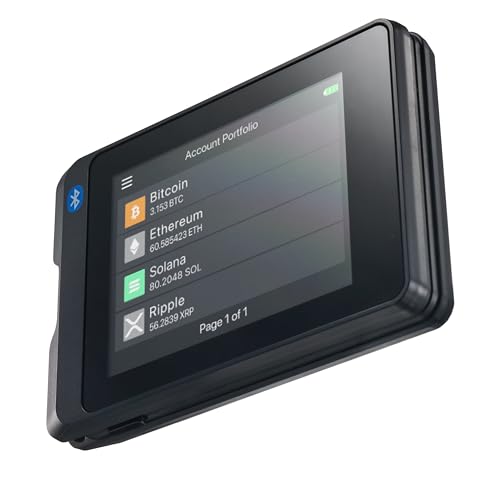
SecuX W20 Crypto Wallet with Intuitive Touchscreen, Hardware Wallet with Bluetooth, Easy to Manage Bitcoin, Ethereum, NFTs, Tokens, and Cryptocurrency with Military-Grade Security Features
Ultimate Security: Certified CC EAL5+. Infineon Solid Flash CC EAL5+ Secure Element (SE) chip embedded
As an affiliate, we earn on qualifying purchases.

SecuX Crypto Wallet Bundle - V20 + W10 Hardware Wallet - w/Touch Screen, USB & NFT Support - Easily Manager Your Bitcoin, Ethereum, BTC, ETH, LTC, Doge, BNB, Dash, XLM, ERC20, BSC and More
As an affiliate, we earn on qualifying purchases.