
Dogecoin's performance around Bitcoin halvings has historically been remarkable. Post-2020 halving, it surged by an incredible 7,185%. You might notice that historical trends often signal major price movements after such events. With the next halving on April 20, 2024, analysts predict a potential dip to around $0.13, but they also expect significant gains thereafter. As you observe current trading patterns and established support levels, you're likely to see possible resistance near $0.75. This context sets the stage for potential growth, leading you to wonder what else the future might hold for Dogecoin.
Key Takeaways
- Dogecoin surged 7,185% since the last Bitcoin halving, significantly outperforming Bitcoin's 610% increase, indicating strong potential for future rallies.
- Historical trends show post-halving price increases, suggesting Dogecoin may experience a substantial uptrend following the upcoming April 2024 halving.
- Current price consolidation near $0.40 with established support at $0.3950 could set the stage for a breakout towards $1.
- Anticipation around Bitcoin halving often leads to increased market activity and investor interest, which could benefit Dogecoin's price.
- Previous Dogecoin rallies demonstrate potential for dramatic price swings, with predictions ranging from 20,000% increases to prices between $5 and $20.

Bitcoin Home Miner Nerdqaxe++12TH/s 240W with Four Fans and Eight BM1370 ASIC Chips Dual-Fan Plug-and-Play 2.4G WiFi and Quiet for Crypto Machine Bitcoin Miner for Beginners
Powerful 12TH/s Performance at 240W:Powered by eight advanced BM1370 ASIC chips, this Bitcoin miner delivers a strong 12TH/s...
As an affiliate, we earn on qualifying purchases.
Historical Performance Overview
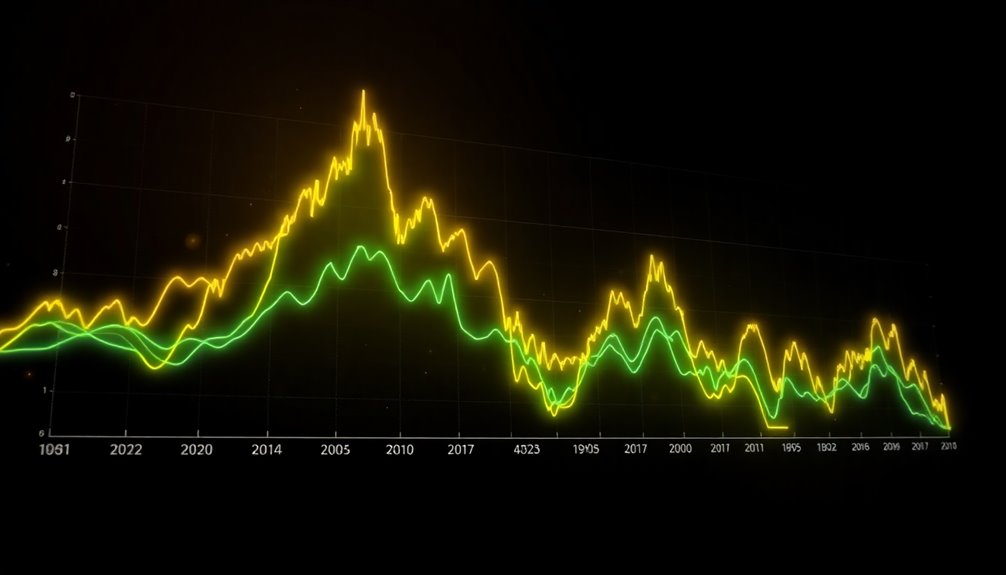
Since the last Bitcoin Halving on May 11, 2020, Dogecoin's performance has been nothing short of remarkable. Initially, both Bitcoin and Dogecoin experienced price declines, but Dogecoin quickly rebounded with an impressive 40% surge from June to July 2020. This growth was fueled by Dogecoin's high transaction speed and low fees, attracting more investors to the meme coin.
While Bitcoin remained in a downward trend during this period, Dogecoin's rise demonstrated its unique market dynamics.
By July to August 2020, Bitcoin recovered slightly, increasing by 27%, but Dogecoin faced a slight 3% dip. However, the real highlight came a year after the halving when Dogecoin reached its all-time high of $0.68 in May 2021. This surge coincided with increased social media attention, driven by viral trends that fueled investor interest.
Looking at the longer-term performance, Dogecoin's price skyrocketed by 7,185% since the halving, significantly outpacing Bitcoin's 610% increase. Additionally, with the upcoming Bitcoin Halving scheduled for April 20, 2024, market analysts are closely watching how this could impact Dogecoin's performance once again.
With its market capitalization jumping from $300 million to $28 billion, Dogecoin's rank improved from 29th to 8th in the crypto space. This striking performance showcases how Dogecoin has capitalized on market sentiment and social trends since the last Bitcoin Halving.

Bitaxe Gamma 601 Bitcoin Miner, Open Source Solo BTC Mining Machine, BM1370 ASIC Chip, 1TH/s - 1.2TH/s SHA-256, 2.4G WiFi, Home Crypto Miner, incl. 5V Power Supply & Stand, AxeOS, Black
1-1.2TH/s Efficient Mining with BM1370 ASIC Chip: Powered by a single high-performance BM1370 ASIC chip—optimized for SHA-256 Bitcoin...
As an affiliate, we earn on qualifying purchases.
Dogecoin's Rally Patterns
Dogecoin's rally patterns reveal intriguing historical trends that suggest significant growth potential after periods of retracement. For instance, during the 2017 rally, Dogecoin surged by 212% before experiencing a 40% retracement, only to rebound with a staggering 5,000% increase afterward. This pattern indicates that significant growth often follows corrections.
In 2021, the trends continued, with a 476% surge followed by a 56% retracement, leading to a phenomenal 12,000% rally. These historical retracement percentages indicate that similar performance could occur again.
You'll notice that rally phases often include a period of sideways movement, which serves as a precursor to major price increases. Current trends suggest that Dogecoin's price fluctuations between $0.3033 and $0.3213 may provide a crucial opportunity for investors.
Currently, Dogecoin has risen by 440% and retraced 46%, echoing past bull runs. The critical support zone between $0.20 and $0.30 could set the stage for the next rally, with potential resistance levels near $0.75.
Analysts suggest that if Dogecoin maintains its position within an Ascending Parallel Channel, it could break above these resistance levels, signaling a new phase of price discovery with targets between $5 and $20.

NerdOctaxe Gamma 9.6 TH/s Bitcoin ASIC Miner – Open-Source Home Miner with BM1370, Wi-Fi & USB-C, Complete Kit, Power Supply & Stand
⚡ Up to 9.6 TH/s total hash rate with ~180 W power consumption (~15 J/TH), delivering powerful and...
As an affiliate, we earn on qualifying purchases.
Bitcoin Halving Impact
As Bitcoin approaches its next halving event, the implications for the cryptocurrency market become increasingly significant. This halving will reduce the mining rewards by 50%, cutting the daily new Bitcoin supply from 900 to 450 coins.
With a tighter supply, you can expect increased demand if adoption continues to grow. Historically, these halving events have triggered bullish trends in Bitcoin's price, partly due to the scarcity effect they create, making Bitcoin more appealing as a digital store of value. Additionally, the next halving is scheduled for April 20, 2024, highlighting the importance of timing for investors and miners alike.
The anticipation and speculation surrounding the halving often lead to heightened market activity, driving investor interest. You might notice that previous halvings have resulted in bear markets transitioning into bull markets, kickstarting new growth phases in the crypto ecosystem.
Empirical data suggests upward price pressure typically follows these events.
While the immediate effects on mining operations can pose challenges, they often encourage miners to adopt more energy-efficient techniques. This shift not only helps maintain the sustainability of the Bitcoin network but can also reduce its environmental impact.
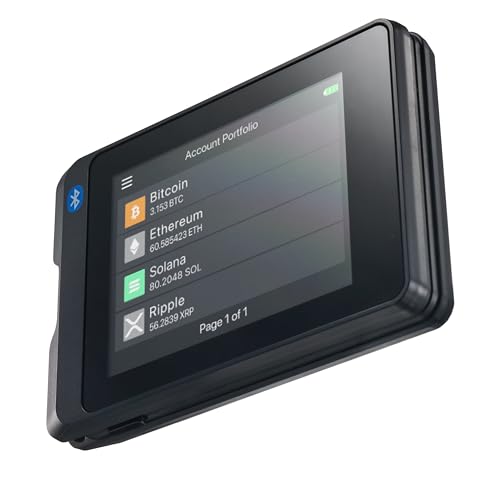
SecuX W20 Crypto Wallet with Intuitive Touchscreen, Hardware Wallet with Bluetooth, Easy to Manage Bitcoin, Ethereum, NFTs, Tokens, and Cryptocurrency with Military-Grade Security Features
Ultimate Security: Certified CC EAL5+. Infineon Solid Flash CC EAL5+ Secure Element (SE) chip embedded
As an affiliate, we earn on qualifying purchases.
Current Market Dynamics
In the midst of evolving market conditions, Dogecoin has carved out a stable price point near $0.40, following recent fluctuations. This stability is underpinned by a support level at $0.3950, indicating a potential bottom formation. The price action has established a clear trading range, allowing you to navigate the market with greater confidence.
Notably, the $0.3963 mark has been tested, revealing a zone of price equilibrium where buying and selling pressure remains balanced. Recently, Dogecoin traded at $0.321, reflecting a 2.23% increase over 24 hours. Analysts project the price range for 2024 between $0.26 and $0.45, while some forecasts hint at a potential surge past $0.45 if resistance is breached.
Trading volume has reached $21.7 billion, showcasing maintained interest despite price corrections, and a remarkable 152% gain over the past month signals robust market activity. Broader market influences, particularly from Bitcoin and Ethereum, are positively impacting Dogecoin. Moreover, the influence of celebrity endorsements like those from Elon Musk has historically played a significant role in driving Dogecoin's price fluctuations.
Factors like increased institutional interest and merchant adoption from companies like Microsoft and Tesla further enhance its long-term potential. All these elements create an exciting environment for current and future Dogecoin traders.
Technical Indicators Analyzed
While analyzing Dogecoin's technical indicators, several key metrics reveal significant insights into its price movements and potential trends. The Relative Strength Index (RSI) shows a bearish divergence on the daily chart, where higher highs in Dogecoin's price don't align with lower highs in the RSI. This indicates weakness in momentum, often leading to a trend reversal or a short-term pullback, suggesting a potential sell signal.
Additionally, the Moving Average Convergence Divergence (MACD) recently displayed a bearish crossover, further signaling a sell opportunity. When used alongside the RSI, it helps confirm market direction and identify potential trend reversals.
Support and resistance levels are crucial in your analysis as well. Dogecoin finds support around the $0.3950 mark, with resistance targets at $0.4350 and $0.4500. Notably, the Fibonacci retracement levels, particularly the 61.80% level at $0.350, provide significant support. Furthermore, the recent forecast indicating a 14% dip for DOGE post-Bitcoin halving adds to the caution surrounding its trading outlook.
Lastly, the formation of a golden cross between the 50-week and 200-week moving averages suggests a potential long-term bullish trend, although external factors could influence this trajectory.
Pay close attention to these indicators for informed trading decisions.
Fractal Analysis Insights

Fractal analysis reveals intriguing insights into Dogecoin's price behavior, particularly when examining its historical patterns. You might notice that Dogecoin's current price trend resembles the 2018-2020 fractal, characterized by a prolonged sideways movement within a specific range.
During the 2018-2020 bear market, Dogecoin consolidated between $0.0012 and $0.0056, aligning with the 0.236 and 0.0 Fibonacci retracement lines. Presently, Dogecoin is consolidating at a higher range between $0.055 and $0.181, indicating a similar pattern.
This consolidation phase suggests a relative market equilibrium with low volatility. If Dogecoin breaks above the 0.236 Fibonacci threshold, it could signal a significant shift in market sentiment, reminiscent of the breakout seen in 2020 after Bitcoin's halving. Moreover, the recent decline of 34% in Dogecoin's price from its December high underscores the importance of maintaining support levels for future upward movement.
Historical data indicates that past halvings have led to substantial price surges, and the upcoming Bitcoin halving in April 2024 might trigger similar explosive movements for Dogecoin.
As you analyze these fractal patterns, consider that sustaining a price above the current Fibonacci threshold is crucial for a bullish move. Historical trends show Dogecoin often revisits macro support levels before embarking on upward rallies, making these insights essential for your trading strategy.
Potential Price Levels
Understanding Dogecoin's potential price levels is vital, especially as it approaches the upcoming Bitcoin halving. After the halving, historical trends suggest Dogecoin could dip nearly 14%, potentially falling to around $0.13 from its current $0.15 range. This bearish outlook is supported by on-chain metrics, indicating that both Bitcoin and Dogecoin might experience price declines in the immediate post-halving period.
However, there's a bright side. Historical cycle analysis shows that after consolidation periods, Dogecoin has previously rallied significantly, with gains of 8,773% and even 23,740%. Analysts anticipate a major uptrend following the current consolidation phase, potentially targeting a new peak. This growth could see Dogecoin reach around $1, reflecting a tenfold increase from previous cycles. Additionally, the Bitcoin halving in April 2024 is expected to create additional market anticipation for Dogecoin's price movement.
As for current market structure, Dogecoin trades near $0.40, with established support at $0.3950. Resistance levels are likely to emerge near $0.75, aligning with the previous peak in 2021.
Your focus should be on these support and resistance levels as they'll guide your strategy moving forward.
External Influences on Dogecoin
Numerous external factors can sway Dogecoin's price, making it essential for investors to stay informed. Broad market sentiment is a significant influencer, as bearish trends can decrease demand and lead to lower prices. Since Dogecoin is part of the larger cryptocurrency market, fluctuations in this space—particularly those driven by Bitcoin—often ripple through to Dogecoin. Monitoring market trends is essential for predicting Dogecoin's value, especially during periods of volatility.
Investor psychology plays a crucial role; negative news can trigger sell-offs, further impacting its value. Regulatory developments and macroeconomic trends also weigh heavily on Dogecoin's market performance. Government regulations can incite panic, while broader economic conditions like inflation or recessions influence investor behavior.
Geopolitical tensions add another layer of volatility, causing risk-averse investors to shy away from assets like Dogecoin. Additionally, celebrity endorsements, particularly from figures like Elon Musk, can lead to rapid price surges, as his social media activity directly impacts market sentiment.
Whale investors, holding significant amounts of Dogecoin, can swing prices through their accumulation or selling strategies, creating volatility and unpredictability in the market. Being aware of these external influences can help you navigate Dogecoin's price movements more effectively.
Price Predictions Ahead
As the Bitcoin halving approaches on April 20, 2024, many investors are closely monitoring Dogecoin's potential price movements. Some forecasts suggest that Dogecoin might dip nearly 14%, potentially falling from its current range of $0.15 to around $0.13. If this prediction holds true, a $10,000 investment in DOGE could shrink to about $8,600. However, the cryptocurrency market's inherent volatility makes such predictions uncertain.
Historically, Dogecoin has shown variable outcomes following halving events. For instance, after the 2020 halving, it surged 40% before experiencing a slight dip. Yet, the overall trend since the last halving indicates a stunning 7,185% increase. In fact, historical data shows price increases for Bitcoin post-halving, which might also influence Dogecoin's performance.
Looking forward, analysts suggest a potential for parabolic growth, with predictions ranging from a 20,000% increase, targeting between $5 and $20. Currently, Dogecoin trades near $0.40, with established support around $0.3950. If it breaks past resistance levels near $0.4350 and $0.4500, you might see upward momentum.
While there are risks involved, this could present an opportunity for long-term investors to capitalize on potential gains.
Future Market Scenarios

With the Bitcoin halving on the horizon, investors are keenly eyeing Dogecoin's potential future market scenarios.
Tapping into the political climate, if pro-crypto policies emerge, especially under Trump, you could see significant price gains for Dogecoin. Likewise, continued endorsements from Elon Musk may push prices between $0.50 and $1.00. Additionally, a recent price increase of 155% since the November 5 election victory indicates strong market interest in Dogecoin.
Favorable regulations could further attract institutional investors, stabilizing prices around $0.75 to $1.50. Coupled with broader market sentiment, a surge in mainstream acceptance as a payment method might elevate Dogecoin's price to $1 or even $2.
Technological developments, like payment integrations and upgrades, will enhance utility and drive demand. Historical patterns show that Dogecoin often rallies following Bitcoin halving events, potentially leading to price surges of $1.66 or higher.
In high volatility scenarios, Dogecoin might outperform Bitcoin, reaching prices between $3.01 and $7.05.
As you watch these trends unfold, keep an eye on community momentum and merchant adoption. They could collectively support a market cap of $200 billion, driving the price to $1.35 and beyond.
Frequently Asked Questions
How Can I Buy Dogecoin Before the Next Rally?
To buy Dogecoin before the next rally, start by choosing a reputable exchange like Binance or Coinbase.
Create an account, complete the verification process, and enable two-factor authentication for security.
Fund your account using your preferred payment method.
Once your funds are available, navigate to the Dogecoin trading page, select your order type, and enter the amount you want to buy.
Review the transaction details and confirm your purchase.
What Wallets Are Best for Storing Dogecoin Securely?
When you're looking to store Dogecoin securely, consider wallets like Ledger Nano X for its mobile management and robust security.
Ledger Stax offers excellent customizability and NFT support, while Trezor Safe 3 provides strong brute-force resistance.
For software options, MyDoge is user-friendly and non-custodial, and Exodus supports multiple cryptocurrencies with a simple interface.
Always prioritize wallets with private key encryption and backup options to keep your assets safe.
How Do I Track Dogecoin's Price Movements Effectively?
To track Dogecoin's price movements effectively, you should use multiple tools and resources.
Start by monitoring cryptocurrency exchanges and financial news websites for real-time prices.
Utilize charting platforms to analyze historical data, applying technical indicators like Moving Averages and RSI.
Following social media trends can also provide insights into market sentiment.
Don't forget to set alerts for significant price changes to stay informed and make timely decisions.
What Is the Tax Implication of Trading Dogecoin?
When you trade Dogecoin, it's essential to understand the tax implications.
The IRS treats Dogecoin as property, meaning any sale or exchange triggers capital gains tax. You'll need to report any gains or losses based on the difference between the fair market value and your adjusted cost basis.
Additionally, if you earn Dogecoin through mining or work, that income's taxed as ordinary income.
Keep detailed records for accurate reporting during tax season.
Are There Any Risks in Holding Dogecoin Long-Term?
Yes, there are risks in holding Dogecoin long-term. Its high volatility can lead to significant price swings, making your investment unpredictable.
The lack of intrinsic value and limited use cases means its price is often driven by hype rather than fundamentals. Additionally, the inflationary supply model could erode its value over time.
Keep an eye on regulatory changes and external factors, as they can also impact your long-term investment in Dogecoin.
Conclusion
As you look ahead, remember that Dogecoin’s performance often mirrors Bitcoin’s halving events. Historical patterns suggest a potential rally, but keep an eye on current market dynamics and technical indicators. Price levels could fluctuate based on external influences, so stay informed. While predictions can guide you, the crypto market remains unpredictable. By staying aware of these factors, you can make more informed decisions about your Dogecoin investments in the coming months. Additionally, it’s important to consider the potential impact of any regulatory developments or market sentiment on Dogecoin’s price trajectory. Keeping a close watch on the dogecoin price validation forecast can help guide your investment strategies and provide a clearer understanding of market trends. Ultimately, staying informed and adaptable is key to navigating the ever-evolving landscape of cryptocurrency.