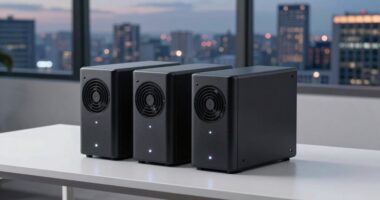
A future-proof mesh WiFi system should do more than cover a dead zone today: it should leave room for faster internet plans, newer devices, and a growing number of connected gadgets. My top pick is the TP-Link Deco 7 Pro for its tri-band WiFi 7, four 2.5G ports per unit, and capacity for more than 200 devices. The NETGEAR Orbi 770 is the stronger alternative for very large homes, while the TP-Link Deco 7 BE5000 offers a lower-complexity WiFi 7 route with broad coverage and wired backhaul support.

Get hardware and tech essentials delivered free with Prime
- Fast, free delivery on millions of items
- Prime Video, Amazon Music and more included
- Member-only deals all year
The main choice is not simply WiFi 7 versus WiFi 6. Tri-band systems can give mesh traffic another band, while dual-band models may be enough for everyday homes and cost less to operate in complexity. I also weigh wired ports, device capacity, coverage claims, and subscription-dependent features. Those details separate a system with room to grow from one that mainly solves a present-day coverage problem.
Key Takeaways
- The TP-Link Deco 7 Pro is the most adaptable pick here: tri-band WiFi 7, more than 200-device capacity, and four 2.5G WAN/LAN ports on each unit.
- The NETGEAR Orbi 770 suits broad coverage and heavy WiFi 7 use, but NETGEAR Armor requires a paid subscription after its 30-day trial.
- The TP-Link Deco 7 BE5000 covers up to 6,600 sq. ft. and supports wired backhaul, though its dual-band design has less room for wireless mesh traffic than the tri-band Deco 7 Pro.
- The NETGEAR Orbi 370 brings WiFi 7 to a dual-band system with up to 6,000 sq. ft. of stated coverage, but its 5 Gbps maximum is below the Orbi 770’s 11 Gbps.
- The Amazon eero 6+ is the only WiFi 6 choice; its built-in Thread and Zigbee hub may be useful, but buyers prioritizing newer WiFi generations should choose one of the WiFi 7 systems.
| TP-Link Deco 7 Pro Tri-Band Wi-Fi 7 Mesh System, BE10000, 3-Pack |  | Best Overall for Long-Term Flexibility | WiFi standard: WiFi 7 | System: Tri-band mesh, 3 units | Coverage: Up to 7,600 sq. ft. | VIEW ON AMAZON | See Our Full Breakdown |
| NETGEAR Orbi 770 Series WiFi 7 Mesh System, 3-Pack |  | Best for Large Homes and High Throughput | WiFi standard: WiFi 7 | System: Tri-band mesh, 3-pack | Coverage: Up to 8,000 sq. ft. | VIEW ON AMAZON | See Our Full Breakdown |
| TP-Link Deco 7 BE5000 Wi-Fi 7 Dual-Band Mesh System |  | Best Value-Oriented WiFi 7 Coverage | WiFi standard: WiFi 7 | Bands: Dual-band, 2.4 GHz and 5 GHz | Maximum combined speed: Up to 5 Gbps | VIEW ON AMAZON | See Our Full Breakdown |
| NETGEAR Orbi 370 Series WiFi 7 Mesh System, 3-Pack |  | Best for Simple WiFi 7 in a Mid-to-Large Home | WiFi standard: WiFi 7 | System: Dual-band router and two satellites | Coverage: Up to 6,000 sq. ft. | VIEW ON AMAZON | See Our Full Breakdown |
| Amazon eero 6+ Mesh Wi-Fi System, 3-Pack |  | Best for Beginners and Smart-Home Basics | WiFi standard: WiFi 6 | System: Mesh WiFi, 3-pack | Internet plan support: Up to 1 Gbps | VIEW ON AMAZON | See Our Full Breakdown |
| future proof mesh wifi system | WiFi standard | Coverage | Device capacity | System |
|---|---|---|---|---|
| TP-Link Deco 7 Pro Tri-Band Wi | WiFi 7 | Up to 7,600 sq. ft. | Over 200 devices | Tri-band mesh, 3 units |
| NETGEAR Orbi 770 Series WiFi 7 | WiFi 7 | Up to 8,000 sq. ft. | Up to 100 devices | Tri-band mesh, 3-pack |
| TP-Link Deco 7 BE5000 Wi-Fi 7 | WiFi 7 | Up to 6,600 sq. ft. | Over 150 devices | — |
| NETGEAR Orbi 370 Series WiFi 7 | WiFi 7 | Up to 6,000 sq. ft. | Up to 70 devices | Dual-band router and two satellites |
| Amazon eero 6+ Mesh Wi-Fi Syst | WiFi 6 | Up to 4,500 sq. ft. | 75+ devices | Mesh WiFi, 3-pack |
More Details on Our Top Picks
TP-Link Deco 7 Pro Tri-Band Wi-Fi 7 Mesh System, BE10000, 3-Pack
I rank the Deco 7 Pro first because its mix of WiFi 7, tri-band operation, and wired connectivity gives it more upgrade paths than the dual-band choices here. The three-unit system is rated for up to 7,600 sq. ft. and more than 200 devices. That capacity is useful for busy homes with streaming equipment, computers, phones, and smart-home gear sharing the network, though it does not guarantee equal performance at every distance.
Its standout practical advantage is four 2.5G WAN/LAN ports on each unit, alongside USB 3.0 and wired or wireless backhaul. Compared with the Orbi 770, the Deco 7 Pro has a lower stated combined speed and coverage figure, but its port layout offers flexibility for wired devices and node connections. A wired backhaul can reduce the load on wireless mesh links when suitable cabling is available. The 6 GHz band also provides room for compatible WiFi 7 devices, while older devices can continue connecting on supported bands.
The Deco app handles setup and management, and HomeShield includes network protection, parental controls, and IoT security. VPN client and server support add options for households with specific remote-access or privacy needs. I would not choose it expecting every home to reach its advertised figures: walls, node placement, client hardware, and internet service all affect results. It also requires a separate modem, and the listed backhaul arrangement needs at least two Deco units. Those are manageable limitations for many buyers, but they matter when planning the full setup.
Pros:- Tri-band WiFi 7 with stated combined speeds up to 10,086 Mbps.
- Rated for up to 7,600 sq. ft. and more than 200 devices.
- Four 2.5G WAN/LAN ports and USB 3.0 on each unit.
- Supports wired and wireless backhaul, plus VPN client and server features.
Cons:- A separate modem is required.
- The published coverage and speed depend on layout, obstacles, devices, and service.
- Using Deco backhaul requires at least two units.
Best for: Households planning to keep a mesh system for years, with WiFi 7 devices, many connected gadgets, or a preference for wired nodes and multi-gigabit networking.
Not ideal for: Buyers with modest internet needs who do not need tri-band operation, multiple 2.5G ports, or the higher device capacity; a simpler dual-band system may fit better.
- WiFi standard:WiFi 7
- System:Tri-band mesh, 3 units
- Coverage:Up to 7,600 sq. ft.
- Maximum combined speed:Up to 10,086 Mbps
- Device capacity:Over 200 devices
- Ethernet:Four 2.5G WAN/LAN ports per unit
- Backhaul:Wired and wireless
- Additional features:USB 3.0, HomeShield, VPN client and server
Our verdict“I recommend the Deco 7 Pro as the strongest all-round future-proof choice when its tri-band capacity and extensive 2.5G ports will see real use.”
NETGEAR Orbi 770 Series WiFi 7 Mesh System, 3-Pack
The Orbi 770 is my large-home pick for buyers who want WiFi 7 and a high stated speed ceiling across a three-piece mesh. NETGEAR lists coverage up to 8,000 sq. ft., support for up to 100 devices, and speeds up to 11 Gbps. That combination puts it ahead of the Deco 7 Pro on those headline figures, making it a compelling fit where broad reach and fast wireless connections are the priority.
Compared with the Deco 7 Pro, however, the Orbi 770’s appeal rests more on its coverage and speed claims than on a listed set of multi-gigabit ports per unit or a stated device capacity above 200. Buyers who expect to connect many wired devices or want the most explicit port flexibility should look closely at the Deco instead. The Orbi is compatible with cable and fiber service and supports plans up to 2.5 Gbps, so the 11 Gbps wireless figure should not be confused with the speed of an internet plan.
App-guided setup can help simplify installation, and built-in security features provide a starting point for network protection. The catch is that NETGEAR Armor becomes a paid subscription after the 30-day trial. Its coverage and speeds also depend on house layout and client devices, so I would not use the maximum figures as a promise for every room. This system is made for use in the US only, a limitation that makes it a poor fit for buyers elsewhere.
Pros:- Tri-band WiFi 7 with stated speeds up to 11 Gbps.
- Three-piece system rated for coverage up to 8,000 sq. ft.
- Supports up to 100 devices and internet plans up to 2.5 Gbps.
- App-guided setup and built-in security features.
Cons:- NETGEAR Armor requires a separate subscription after the 30-day trial.
- Coverage and real-world speeds vary with home layout, devices, and internet service.
- Made for use in the US only.
Best for: US households with a large floor plan, WiFi 7-capable devices, and a preference for a high-throughput mesh with app-guided setup.
Not ideal for: Buyers outside the US, shoppers who want to avoid paid security subscriptions, or households that need a clearly specified multi-gigabit port arrangement.
- WiFi standard:WiFi 7
- System:Tri-band mesh, 3-pack
- Coverage:Up to 8,000 sq. ft.
- Maximum speed:Up to 11 Gbps
- Device capacity:Up to 100 devices
- Plan compatibility:Up to 2.5 Gbps
- Internet types:Cable and fiber
- Security:NETGEAR Armor 30-day trial; subscription required afterward
Our verdict“I would choose the Orbi 770 over the dual-band Orbi 370 when larger stated coverage and a higher WiFi 7 speed ceiling matter most.”
TP-Link Deco 7 BE5000 Wi-Fi 7 Dual-Band Mesh System
The Deco 7 BE5000 is the more straightforward TP-Link WiFi 7 option: it offers dual-band networking, stated combined speeds up to 5 Gbps, and coverage up to 6,600 sq. ft. for more than 150 devices. Its coverage and capacity claims make it more ambitious than the eero 6+, while its WiFi 7 generation gives it a newer foundation. I rank it below the Deco 7 Pro because it lacks a third band and does not list the Pro’s four 2.5G ports per unit.
That distinction matters most when nodes communicate wirelessly. The dual-band design shares its available bands between client traffic and mesh operation, while the Deco 7 Pro’s tri-band layout has another band available. Wired backhaul can help the BE5000 avoid some of that wireless competition, and the system supports both wired and wireless connections between nodes. It also supports 2.5G Ethernet, VPN client and server connections, seamless roaming, and app-based management.
This model makes sense for a household seeking WiFi 7 and broad coverage without needing the Pro’s larger port count or tri-band design. Compatibility with other Deco devices and earlier WiFi generations gives owners options as they build or extend a Deco setup, but mesh networking requires other Deco devices. A separate modem is also needed. The stated coverage is not a guarantee for a complex layout, and buyers with an internet plan beyond the listed system capabilities should check their connection needs before choosing.
Pros:- WiFi 7 with combined speeds up to 5 Gbps.
- Coverage rated up to 6,600 sq. ft. and capacity for over 150 devices.
- Supports wired and wireless backhaul.
- Includes 2.5G Ethernet and VPN client and server support.
Cons:- Dual-band design has less dedicated wireless capacity than the tri-band Deco 7 Pro.
- A separate modem is required.
- Mesh expansion requires other Deco devices.
Best for: Households seeking WiFi 7, broad stated coverage, and wired backhaul support without needing a tri-band system or the Pro model’s extensive ports.
Not ideal for: Buyers expecting wireless mesh links to carry heavy traffic across multiple nodes, or anyone who needs a modem included.
- WiFi standard:WiFi 7
- Bands:Dual-band, 2.4 GHz and 5 GHz
- Maximum combined speed:Up to 5 Gbps
- Coverage:Up to 6,600 sq. ft.
- Device capacity:Over 150 devices
- Backhaul:Wired and wireless
- Ethernet:2.5G
- Additional features:VPN client and server; Deco app
Our verdict“I see the BE5000 as the sensible WiFi 7 alternative for wide coverage when the Deco 7 Pro’s third band and extra ports would go unused.”
NETGEAR Orbi 370 Series WiFi 7 Mesh System, 3-Pack
The Orbi 370 brings WiFi 7 to a dual-band, three-piece mesh rated for up to 6,000 sq. ft. and 70 devices. Its stated speeds reach 5 Gbps, giving it a newer WiFi generation than the eero 6+ without aiming for the Orbi 770’s 11 Gbps ceiling. I place it here because it provides a clear step into WiFi 7, but its dual-band design and lower device capacity leave less headroom than the higher-ranked systems.
For a home that needs a router and two satellites, this system may be enough to improve coverage while retaining support for WiFi 6 and WiFi 5 devices. The Orbi app guides setup and network management, and coverage can be extended with an additional satellite. Compared with the TP-Link Deco 7 BE5000, the Orbi 370 has a lower stated coverage figure and device capacity; the Deco also lists wired and wireless backhaul and VPN support. The Orbi may appeal more to buyers already comfortable with the Orbi app and ecosystem.
NETGEAR lists Advanced Router Protection and automatic firmware updates, but Armor is a separate subscription after its 30-day trial. This model is made for use in the US only. As with the other systems, actual coverage and speed depend on placement, construction, client devices, and the internet plan. I would treat it as a straightforward WiFi 7 upgrade rather than a high-capacity choice for a large number of demanding connections.
Pros:- WiFi 7 with stated speeds up to 5 Gbps.
- Three-piece system rated for coverage up to 6,000 sq. ft.
- Supports WiFi 5 and WiFi 6 devices and up to 70 devices.
- App-guided management and coverage expansion with an additional satellite.
Cons:- Dual-band design offers less wireless capacity than the tri-band Orbi 770.
- NETGEAR Armor requires a subscription after its 30-day trial.
- Made for use in the US only.
Best for: US households wanting a three-unit WiFi 7 mesh for moderate to larger coverage, especially when support for older WiFi 5 and WiFi 6 devices matters.
Not ideal for: Homes with more than 70 connected devices, buyers wanting tri-band mesh, or shoppers seeking the broadest coverage and highest speed figures in this lineup.
- WiFi standard:WiFi 7
- System:Dual-band router and two satellites
- Coverage:Up to 6,000 sq. ft.
- Maximum speed:Up to 5 Gbps
- Device capacity:Up to 70 devices
- Internet compatibility:Cable or fiber; plans up to 2.5 Gbps
- Security:Advanced Router Protection and automatic firmware updates
- Expansion:Additional satellite rated for up to 2,000 sq. ft.
Our verdict“I would choose the Orbi 370 for a moderate WiFi 7 upgrade, but move to the Orbi 770 or Deco 7 Pro for more headroom.”
Amazon eero 6+ Mesh Wi-Fi System, 3-Pack
The eero 6+ is the outlier in this roundup: it uses WiFi 6 rather than WiFi 7. I include it because future-proofing is not the only reason to replace a router. For a household with an internet plan up to 1 Gbps, coverage needs up to 4,500 sq. ft., and a growing smart-home setup, this three-pack may provide the right combination of simplicity and useful hub features. It supports more than 75 devices and a 160 MHz channel.
Its differentiator is a built-in Thread and Zigbee smart-home hub for compatible devices. That can reduce the need for a separate hub in a suitable smart-home setup. Compared with the WiFi 7 models above, however, it does not offer the same generational headroom for newer WiFi 7 clients or higher-speed internet service. The Deco 7 BE5000, for example, supports over 150 devices and has a stated 5 Gbps combined speed, though its separate modem requirement and Deco ecosystem are different tradeoffs.
For a new system expected to serve faster service plans or a large number of high-demand devices over many years, I would favor the WiFi 7 options. The eero’s fit is strongest when a gigabit ceiling is suitable and easy setup plus smart-home compatibility matter more than pursuing the newest wireless standard. Additional security and network management features require a subscription, which buyers should count as an ongoing cost if they want those functions.
Pros:- Three-pack rated for coverage up to 4,500 sq. ft.
- Supports internet plans up to 1 Gbps and more than 75 devices.
- Built-in Thread and Zigbee smart-home hub.
- Supports WiFi 6 with a 160 MHz channel.
Cons:- WiFi 6 offers less generational headroom than the WiFi 7 systems in this roundup.
- Additional security and network management features require a subscription.
- Its stated coverage is below the four WiFi 7 alternatives listed here.
Best for: Beginners with internet service up to 1 Gbps who want straightforward mesh coverage and a built-in Thread and Zigbee hub for compatible smart-home devices.
Not ideal for: Buyers seeking WiFi 7, multi-gigabit internet support, or the greatest long-term wireless capacity for demanding devices.
- WiFi standard:WiFi 6
- System:Mesh WiFi, 3-pack
- Internet plan support:Up to 1 Gbps
- Coverage:Up to 4,500 sq. ft.
- Device capacity:75+ devices
- Channel:160 MHz
- Smart-home hub:Thread and Zigbee
- Subscription note:Additional security and network management features require subscription
Our verdict“I recommend the eero 6+ for an easy smart-home-focused setup, not for buyers whose main goal is the longest runway into WiFi 7.”

How We Picked
I ranked these systems by how well their stated hardware can accommodate future home networking needs—not by headline speed alone. WiFi generation, band design, wired ports, and backhaul options matter because they affect what internet plans, devices, and mesh layouts a system can support over time. A higher maximum speed is not useful to every household if the system lacks suitable ports or if wireless links between nodes are the limiting factor.
I also compared each system’s stated coverage and device capacity, then weighed those figures against its practical tradeoffs. The Deco 7 Pro ranks first because its tri-band WiFi 7, high device capacity, and multiple 2.5G ports give buyers several ways to build beyond a basic mesh setup. The Orbi 770 follows for its large stated coverage and high combined speed, while the dual-band Deco 7 and Orbi 370 trade some capacity for simpler WiFi 7 options. The eero 6+ remains a sensible smart-home and gigabit-plan pick, but its WiFi 6 standard gives it less generational headroom. Coverage and speed figures are manufacturer claims; actual results depend on the home, equipment, placement, and internet service.
I did not treat bundled security trials as permanent features. NETGEAR Armor requires a separate subscription after its trial, and eero’s additional security and network management features also require a subscription. Each product is ranked for a distinct buyer, so a lower position does not mean it is a poor fit for its intended use.
| future proof mesh wifi system | WiFi standard | System | Coverage |
|---|---|---|---|
| TP-Link Deco 7 Pro Tri-Band Wi | WiFi 7 | Tri-band mesh, 3 units | Up to 7,600 sq. ft. |
| NETGEAR Orbi 770 Series WiFi 7 | WiFi 7 | Tri-band mesh, 3-pack | Up to 8,000 sq. ft. |
| TP-Link Deco 7 BE5000 Wi-Fi 7 | WiFi 7 | — | Up to 6,600 sq. ft. |
| NETGEAR Orbi 370 Series WiFi 7 | WiFi 7 | Dual-band router and two satellites | Up to 6,000 sq. ft. |
| Amazon eero 6+ Mesh Wi-Fi Syst | WiFi 6 | Mesh WiFi, 3-pack | Up to 4,500 sq. ft. |
Factors to Consider When Choosing Future Proof Mesh Wifi System
I would choose a mesh system by matching its capabilities to the parts of the network most likely to age first: the internet plan, connected devices, node links, and wired equipment.WiFi 7 Is a Starting Point, Not a Guarantee
Four systems here use WiFi 7, while the eero 6+ uses WiFi 6. Choosing WiFi 7 gives compatible newer devices access to a newer wireless generation, but it will not make an older phone or laptop operate as a WiFi 7 client. Nor does a WiFi 7 label by itself guarantee faster service throughout a home. Internet speed, node placement, device support, and the design of the mesh all affect what buyers experience.
For the longest runway among these options, I favor the tri-band Deco 7 Pro or Orbi 770. The Orbi 370 and Deco 7 BE5000 are WiFi 7 systems too, but both are dual-band models with a stated maximum speed of 5 Gbps. That can still suit many homes; it is simply a different balance of cost, complexity, and wireless headroom.
Understand Dual-Band Versus Tri-Band Mesh
Tri-band systems have three frequency bands available, while the dual-band models have two. In a mesh layout where nodes communicate wirelessly, the extra band can provide additional capacity for traffic moving between nodes and connected devices. This is one reason I rank the Deco 7 Pro and Orbi 770 ahead of the dual-band WiFi 7 options for demanding networks.
Dual-band does not make a system unsuitable. The Deco 7 BE5000 supports wired backhaul, and a wired link between nodes can reduce the need for wireless capacity to carry that connection. If Ethernet cabling is available, a dual-band system may be a sensible fit. If nodes must connect wirelessly across a busy or expansive home, compare tri-band choices more closely.
Match Coverage Claims to the Home
Published coverage figures give a useful starting point, not a room-by-room promise. The Orbi 770 lists the largest figure here at up to 8,000 sq. ft., followed by the Deco 7 Pro at 7,600 sq. ft. and Deco 7 BE5000 at 6,600 sq. ft. The Orbi 370 lists up to 6,000 sq. ft., while the eero 6+ lists up to 4,500 sq. ft. Walls, floors, interference, and node placement can change actual reach.
Rather than selecting a kit from square footage alone, think about the home’s shape and where the internet connection enters. A long layout or multiple floors may need a different node arrangement from an open floor plan of the same size. Keep nodes in useful positions instead of placing them at the far edge of a dead zone, where they may receive a weak signal themselves.
Check Device Capacity and Internet Speed Separately
A system’s device capacity and maximum speed describe different things. The Deco 7 Pro is rated for more than 200 devices; the Deco 7 BE5000 for over 150; the Orbi 770 for up to 100; the eero 6+ for more than 75; and the Orbi 370 for up to 70. These figures can help compare how each product is positioned, but the number of devices does not tell you how much bandwidth each one can use at once.
Also separate mesh WiFi speed from internet plan speed. The Orbi 770 lists compatibility with plans up to 2.5 Gbps, while the eero 6+ supports plans up to 1 Gbps. A high combined wireless speed does not mean an internet subscription will deliver that speed, and many devices cannot use the full potential of a mesh system at the same time.
Ports and Backhaul Can Extend a System’s Usefulness
If you have a desktop computer, network storage, a wired access point, or multi-gigabit internet equipment, count the Ethernet ports before choosing. The Deco 7 Pro stands out with four 2.5G WAN/LAN ports per unit; the Deco 7 BE5000 lists 2.5G Ethernet. The supplied details for the Orbi models and eero do not list the same port count, so buyers with specific wired needs should confirm the exact configuration before ordering.
Backhaul is the connection between mesh nodes. Wireless backhaul is convenient when running cables is impractical; wired backhaul can reserve more wireless airtime for client devices. The two Deco systems explicitly support wired and wireless backhaul. If you expect to add nodes later, also check ecosystem compatibility: the BE5000 works with other Deco devices, while an extra satellite can expand Orbi 370 coverage.
Factor In Modems, Subscriptions, and Region
The two TP-Link Deco products require a separate modem, so include compatible modem hardware in the setup plan. Subscription features matter too: NETGEAR Armor requires a paid subscription after the Orbi trial, and eero’s additional security and network management options also require a subscription. A bundled trial should not be mistaken for a permanent included service.
Finally, check regional compatibility before choosing. Both Orbi models in this roundup are made for use in the US only. Matching a system to the right home and service means checking more than wireless features; it also means confirming that the equipment and any optional services fit how you plan to use them.
Frequently Asked Questions
Which mesh WiFi system in this roundup is the most future-proof?
I rank the TP-Link Deco 7 Pro first for flexibility because it combines tri-band WiFi 7, more than 200-device capacity, four 2.5G WAN/LAN ports per unit, and wired or wireless backhaul. The Orbi 770 has higher stated speed and coverage figures, so it may suit a different priority. Neither system can guarantee a particular lifespan or real-world speed; client devices, internet service, and home layout all matter.
Do I need WiFi 7 for a mesh system in 2027?
Not every household needs WiFi 7. A WiFi 6 system such as the eero 6+ may be a fit if your service is up to 1 Gbps and smart-home hub support is useful. WiFi 7 makes more sense if you are buying for newer compatible devices, faster service, or more room to expand. I would compare the WiFi 7 models by band design, ports, coverage, and backhaul rather than assuming every WiFi 7 product offers the same capacity.
Is tri-band better than dual-band for mesh?
Tri-band can offer more wireless capacity for communication between mesh nodes and connected devices, which may help in a busy layout where nodes use wireless backhaul. The Deco 7 Pro and Orbi 770 are tri-band in this lineup. A dual-band model can still work well, especially if nodes connect through wired backhaul; the Deco 7 BE5000 supports both wired and wireless backhaul. The right choice depends on placement, traffic, and whether Ethernet cabling is practical.
Do these mesh systems include a modem?
The product details supplied for both TP-Link Deco systems state that a separate modem is required. Before purchase, check whether your internet provider supplies a compatible modem or whether you need to provide one. The listed NETGEAR Orbi systems are described as compatible with cable or fiber equipment, and the eero 6+ supports gigabit internet plans; confirm your provider’s equipment requirements for any model.
Will a mesh WiFi system reach its advertised coverage and speed?
Not necessarily. The coverage and speed figures are stated maximums, and real results depend on building materials, floor plan, interference, node placement, connected devices, and the internet plan. A three-pack may cover a large area under suitable conditions, but placement still matters: nodes need a strong enough connection to one another to extend useful service. I would use stated figures to compare products, not as a guaranteed measurement for every home.
Conclusion
For buyers who want the broadest upgrade options, I recommend the TP-Link Deco 7 Pro: tri-band WiFi 7, extensive 2.5G ports, and wired backhaul support make it the most flexible system here. Choose the NETGEAR Orbi 770 if a large stated coverage area and a higher headline speed matter more, and you are comfortable with its US-only limitation and Armor subscription terms.
For a simpler WiFi 7 setup with broad coverage, the TP-Link Deco 7 BE5000 is the practical alternative, particularly if you can use wired backhaul. The NETGEAR Orbi 370 suits a mid-to-large US home that wants WiFi 7 without the Orbi 770’s higher speed claims. If your service is gigabit or below and Thread or Zigbee smart-home support is a priority, the eero 6+ remains the beginner-friendly choice—but I would not make it my first pick when WiFi 7 is the main goal.