For privacy-focused users, the GL.iNet Flint 3e is my best overall pick because it pairs a home-router format with VPN-focused features and modern Wi-Fi 7. The GL.iNet Slate 7 stands out for travel, while the GL.iNet Beryl 7 offers a compact Wi-Fi 7 option for people who want a smaller setup. The main tradeoff is between home coverage and portability, along with how much control you want over VPN configuration and network settings. Decentralized VPN devices such as the Deeper Connect Mini take a different approach, so they suit buyers who have verified that model fits their privacy needs. Continue reading for the full breakdown and help choosing the right kind of router for your network.

Get hardware and tech essentials delivered free with Prime
- Fast, free delivery on millions of items
- Prime Video, Amazon Music and more included
- Member-only deals all year
Key Takeaways
- The Flint 3e leads for home use because its router format and VPN focus make more sense as a primary network device than the travel models.
- The Slate 7 and Beryl 7 separate travel buyers by setup: Slate 7 adds a touchscreen and dual 2.5G Ethernet, while Beryl 7 is the more compact Wi-Fi 7 travel pick.
- Wi-Fi 7 is not the only privacy criterion; VPN configuration, update support, and your willingness to manage network settings matter more than a newer wireless standard alone.
- The two Deeper Connect Mini listings represent a distinct decentralized-VPN approach, not interchangeable substitutes for conventional VPN-router workflows; verify the exact model and service details before buying.
- The Slate AX and Opal remain relevant for simpler travel needs, but their Wi-Fi 6 or AC1200 standards make them less forward-looking than the newer Wi-Fi 7 travel routers.
| GL.iNet GL-BE3600 Slate 7 Wi-Fi 7 Travel Router with Touchscreen and Dual 2.5G Ethernet |  | Best for On-the-Go Control | Wi-Fi: Wi-Fi 7, dual-band 2.4 GHz and 5 GHz | Wireless data rate: 688 Mbps (2.4 GHz) + 2882 Mbps (5 GHz) | Ethernet: 2 × 2.5G ports (1 WAN, 1 LAN) | VIEW ON AMAZON | See Our Full Breakdown |
| Deeper Connect Mini DPN Router with 1 Gbps Ethernet and Lifetime Decentralized VPN |  | Best for Subscription-Free VPN Access | Wi-Fi: Dual-band 802.11a/b/g/n/ac | Data transfer rate: Up to 1 Gbps | Ethernet: 2 ports; LAN bandwidth up to 1000 Mbps | VIEW ON AMAZON | See Our Full Breakdown |
| GL.iNet Flint 3e Wi-Fi 7 Router with VPN |  | Best for High-Speed Whole-Home VPN | Wi-Fi: Wi-Fi 7 (802.11be), dual-band | Maximum Wi-Fi speed: Up to 6.5 Gbps | VPN speed: Up to 1,100 Mbps with OpenVPN and WireGuard | VIEW ON AMAZON | See Our Full Breakdown |
| ASUS RT-BE82U WiFi 7 Router |  | Best for Wired, Mesh-Ready Home Networks | Wi-Fi: Wi-Fi 7 (802.11be), dual-band | Maximum speed: Up to 6500 Mbps | Ethernet: 5 × 2.5GbE ports | VIEW ON AMAZON | See Our Full Breakdown |
| GL.iNet GL-MT3600BE Beryl 7 Dual-Band Wi-Fi 7 Travel Router |  | Best Compact Pick for Faster VPN Throughput | Wi-Fi: Wi-Fi 7, dual-band 2.4 GHz and 5 GHz | Wireless speed: 688 Mbps (2.4 GHz) + 2882 Mbps (5 GHz) | Ethernet: 2 × 2.5G ports (1 WAN, 1 LAN) | VIEW ON AMAZON | See Our Full Breakdown |
| GL.iNet GL-MT3000 Beryl AX Wi-Fi 6 Travel Router | 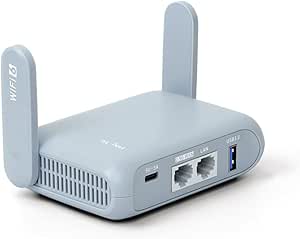 | Best for Fast, Flexible Travel VPN | Wi-Fi: Wi-Fi 6, dual-band 2.4 GHz and 5 GHz | Wireless speed: 574 Mbps (2.4 GHz) + 2402 Mbps (5 GHz) | WAN port: 2.5G | VIEW ON AMAZON | See Our Full Breakdown |
| GL.iNet GL-AXT1800 Slate AX Pocket-Sized Wi-Fi 6 Travel Router with VPN |  | Best for Quick VPN Switching on Trips | Wi-Fi: Wi-Fi 6, dual-band | Combined wireless speed: Up to 1800 Mbps | VPN protocols: OpenVPN and WireGuard | VIEW ON AMAZON | See Our Full Breakdown |
| GL.iNet GL-SFT1200 Opal AC1200 Dual-Band Travel Router | 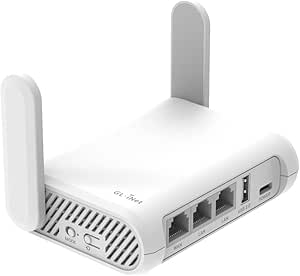 | Best Value for Wired Travel Setups | Wi-Fi standard: Wi-Fi 5 (802.11a/b/g/n/ac) | Wireless speed: Up to 1200 Mbps | 2.4 GHz speed: Up to 300 Mbps | VIEW ON AMAZON | See Our Full Breakdown |
| Deeper Connect Mini Decentralized VPN Router |  | Best for Subscription-Free Network-Level Protection | Wi-Fi standards: 802.11a/b/g/n/ac | Data transfer rate: 1000 Mbps | LAN port bandwidth: 1000 Mbps | VIEW ON AMAZON | See Our Full Breakdown |
| vpn router for privacy focused user | Wi-Fi | Security |
|---|---|---|
| GL.iNet GL-BE3600 Slate 7 Wi-F | Wi-Fi 7, dual-band 2.4 GHz and 5 GHz | — |
| Deeper Connect Mini DPN Router | Dual-band 802.11a/b/g/n/ac | — |
| GL.iNet Flint 3e Wi-Fi 7 Route | Wi-Fi 7 (802.11be), dual-band | WPA-Enterprise, WPA-PSK, WPA3 |
| ASUS RT-BE82U WiFi 7 Router | Wi-Fi 7 (802.11be), dual-band | AiProtection Pro and WPA3 |
| GL.iNet GL-MT3600BE Beryl 7 Du | Wi-Fi 7, dual-band 2.4 GHz and 5 GHz | WPA3, DNS over HTTPS, DNS over TLS, IPv6 |
| GL.iNet GL-MT3000 Beryl AX Wi- | Wi-Fi 6, dual-band 2.4 GHz and 5 GHz | WPA2-PSK and WPA3 |
| GL.iNet GL-AXT1800 Slate AX Po | Wi-Fi 6, dual-band | WPA3 |
| GL.iNet GL-SFT1200 Opal AC1200 | — | — |
| Deeper Connect Mini Decentrali | — | — |
More Details on Our Top Picks
GL.iNet GL-BE3600 Slate 7 Wi-Fi 7 Travel Router with Touchscreen and Dual 2.5G Ethernet
I’d pick the Slate 7 for privacy-minded travelers who want to check and manage VPN status directly on the router. Its touchscreen controls make quick network checks easier than on the Beryl 7, which relies on its admin interface and a configurable physical switch. OpenWrt 23.05, WireGuard and OpenVPN client/server support, and encrypted DNS give more room to tailor how traffic is handled than the plug-and-play Deeper Connect Mini. The two 2.5G Ethernet ports are useful in hotel or temporary office setups with wired equipment. The tradeoff is VPN throughput: the stated ceiling is 540 Mbps with WireGuard and 100 Mbps with OpenVPN, below the Beryl 7’s listed VPN figures. A VPN service subscription is also separate, and the touchscreen feature button needs configuration before use.
Pros:- Touchscreen gives quick access to network status and VPN controls
- OpenWrt 23.05 supports customization and plugin installation
- Includes WireGuard and OpenVPN client and server support
- Two 2.5G Ethernet ports support fast wired connections
Cons:- Listed VPN speed is lower than the Beryl 7’s figures, especially with OpenVPN
- VPN service requires an active subscription
- Feature button needs configuration before it can be used
Best for: Frequent travelers who want visible VPN status, configurable OpenWrt tools, and fast wired connections in a portable setup.
Not ideal for: Buyers who prioritize the highest listed VPN throughput or want a VPN service included without a separate subscription.
- Wi-Fi:Wi-Fi 7, dual-band 2.4 GHz and 5 GHz
- Wireless data rate:688 Mbps (2.4 GHz) + 2882 Mbps (5 GHz)
- Ethernet:2 × 2.5G ports (1 WAN, 1 LAN)
- Firmware:OpenWrt 23.05, Kernel 5.4.213
- VPN support:OpenVPN and WireGuard client and server
- Maximum VPN speed:100 Mbps (OpenVPN); 540 Mbps (WireGuard)
- Privacy and security:WPA3, DNS over HTTPS, DNS over TLS
- Memory and storage:2 GB RAM; 512 MB storage
Our verdict“Choose the Slate 7 if hands-on VPN monitoring and OpenWrt flexibility matter more than maximizing listed VPN speed.”
Deeper Connect Mini DPN Router with 1 Gbps Ethernet and Lifetime Decentralized VPN
The Deeper Connect Mini takes a different privacy route from the OpenWrt GL.iNet models: it centers on a built-in decentralized VPN with lifetime access, rather than asking buyers to bring a separate VPN service. Its app-led, plug-and-play setup is a simpler entry point than the Slate 7 or Beryl 7, both of which offer more conventional VPN client and server controls. The Mini also includes tools to block ads, trackers, and risky sites, which may appeal to households seeking basic filtering alongside encrypted connections. That simplicity has limits. The listed Wi-Fi standard tops out at 802.11ac, and its WPA2 security is less current than the WPA3 support on the GL.iNet options. Its product information also gives less detail about advanced configuration, so I’d skip it if granular router control is a priority.
Pros:- Lifetime decentralized VPN access is included
- App control and plug-and-play setup reduce configuration work
- Includes tools to block ads, trackers, and risky websites
- Gigabit data transfer rate supports everyday wired networking
Cons:- Wi-Fi uses 802.11ac rather than Wi-Fi 7
- WPA2 is less current than the WPA3 support on several alternatives
- Product details provide limited information about advanced network configuration
Best for: Privacy-conscious home users who want built-in decentralized VPN access and basic tracker blocking without managing a separate VPN subscription.
Not ideal for: Advanced users who want OpenWrt-level customization, WPA3, or Wi-Fi 7 performance like the Slate 7 and Flint 3e.
- Wi-Fi:Dual-band 802.11a/b/g/n/ac
- Data transfer rate:Up to 1 Gbps
- Ethernet:2 ports; LAN bandwidth up to 1000 Mbps
- VPN:Built-in decentralized VPN with lifetime access
- Security protocol:WPA2
- Processor and memory:ARM64 quad-core; 2 GB RAM
- Antennas:2 internal antennas
- Stated coverage:Up to 1,500 square feet
Our verdict“Pick the Deeper Connect Mini if included decentralized VPN access and easy setup matter more than newer Wi-Fi or extensive router customization.”
GL.iNet Flint 3e Wi-Fi 7 Router with VPN
For a home where privacy tools need to keep pace with demanding daily traffic, the Flint 3e has the strongest stated VPN throughput in this group: up to 1,100 Mbps with OpenVPN and WireGuard. That gives it a meaningful advantage over the Slate 7’s listed 540 Mbps WireGuard ceiling, while its stated coverage of up to 2,500 square feet suits a broader home setup than either travel router. AdGuard Home and parental controls add filtering options beyond the Flint’s VPN connection, making it a more household-oriented choice than the Beryl 7. Its tradeoff is a dual-band design, not tri-band, and its 1 GB of RAM is less than the Slate 7’s 2 GB. Coverage and throughput also depend on the network environment, so the headline figures shouldn’t be treated as guaranteed performance.
Pros:- Stated VPN speed reaches up to 1,100 Mbps with OpenVPN and WireGuard
- Wi-Fi 7 supports MLO and 4K-QAM
- AdGuard Home and parental controls add household filtering options
- Stated coverage reaches up to 2,500 square feet
Cons:- Dual-band design lacks a dedicated third band
- Coverage and actual speeds vary with network conditions
- Has 1 GB RAM, compared with 2 GB in the Slate 7
Best for: Households seeking a Wi-Fi 7 home router with high stated VPN throughput, network filtering, and parental controls.
Not ideal for: Travelers needing a pocketable router, or buyers who specifically want tri-band Wi-Fi or the Slate 7’s touchscreen management.
- Wi-Fi:Wi-Fi 7 (802.11be), dual-band
- Maximum Wi-Fi speed:Up to 6.5 Gbps
- VPN speed:Up to 1,100 Mbps with OpenVPN and WireGuard
- Coverage:Up to 2,500 square feet
- Ports:5; LAN port bandwidth up to 2,500 Mbps
- Memory:1 GB DDR4
- Security:WPA-Enterprise, WPA-PSK, WPA3
- Additional tools:AdGuard Home support and parental controls
Our verdict“Choose the Flint 3e for a home VPN router when high stated VPN throughput and built-in filtering outweigh the need for travel portability or tri-band Wi-Fi.”
ASUS RT-BE82U WiFi 7 Router
The ASUS RT-BE82U is the wired-connectivity pick: five 2.5GbE ports give a home with multi-gig devices more direct connections than the Flint 3e’s listed port details or the travel-focused Slate 7. AiMesh support also makes it a better fit for an expandable home network than a portable model. For privacy, the combination of VPN support, WPA3, and AiProtection Pro offers several layers of network protection, though the supplied product details don’t name VPN protocols or state VPN throughput. That makes it harder to compare its encrypted-traffic performance directly with the Flint 3e, which lists a specific VPN speed. The RT-BE82U is dual-band rather than tri-band, and its fixed antennas limit physical adjustment. I’d choose it for wired flexibility and mesh expansion, not for the most clearly specified VPN setup.
Pros:- Five 2.5GbE ports provide extensive multi-gig wired connectivity
- AiMesh support allows compatible routers to extend home coverage
- Includes VPN support, WPA3, and AiProtection Pro
- Wi-Fi 7 supports speeds up to 6500 Mbps
Cons:- Product details do not specify VPN protocols or VPN throughput
- Dual-band design has no dedicated third band
- Fixed antennas offer limited placement flexibility
Best for: Home users with several multi-gig wired devices who want AiMesh expansion and router-level VPN support.
Not ideal for: Buyers who need stated VPN speeds or protocol details before choosing, or who want a travel-sized router with OpenWrt customization.
- Wi-Fi:Wi-Fi 7 (802.11be), dual-band
- Maximum speed:Up to 6500 Mbps
- Ethernet:5 × 2.5GbE ports
- VPN:VPN support; protocols and throughput not specified
- Security:AiProtection Pro and WPA3
- Mesh support:ASUS AiMesh
- Antennas:4 fixed antennas
- Wireless technology:4096-QAM
Our verdict“Choose the RT-BE82U if multi-gig wired ports and AiMesh matter more than detailed, published VPN performance specifications.”
GL.iNet GL-MT3600BE Beryl 7 Dual-Band Wi-Fi 7 Travel Router
The Beryl 7 is the portable choice for buyers who care more about listed VPN throughput than on-device status controls. Its stated ceilings—1,100 Mbps with WireGuard and 1,000 Mbps with OpenVPN-DCO—are substantially higher than the Slate 7’s listed 540 Mbps WireGuard and 100 Mbps OpenVPN figures. Both travel routers offer Wi-Fi 7, dual 2.5G Ethernet, USB 3.0, and OpenWrt-based customization, but the Slate 7 adds a touchscreen that makes quick monitoring more immediate. The Beryl 7 instead offers a configured physical switch and travel plug options for US, UK, EU, and AU sockets. It supports up to 120 devices, though actual performance depends on network setup. A VPN service subscription is separate, and the switch must be configured in the admin panel before it can control the intended function.
Pros:- Listed VPN speeds reach 1,100 Mbps with WireGuard and 1,000 Mbps with OpenVPN-DCO
- Two 2.5G Ethernet ports and USB 3.0 suit flexible travel setups
- Supports up to 120 devices
- WPA3 and encrypted DNS options support privacy-focused network configuration
Cons:- VPN services require an active subscription
- Physical toggle switch must be configured in the admin panel
- Real-world VPN speeds vary with network configuration
Best for: Travelers who want a portable OpenWrt router with high stated VPN throughput, dual 2.5G ports, and broad plug compatibility.
Not ideal for: Users who want touchscreen controls or a VPN service included, or who prefer a router that needs no switch setup.
- Wi-Fi:Wi-Fi 7, dual-band 2.4 GHz and 5 GHz
- Wireless speed:688 Mbps (2.4 GHz) + 2882 Mbps (5 GHz)
- Ethernet:2 × 2.5G ports (1 WAN, 1 LAN)
- VPN support:WireGuard and OpenVPN client and server
- Maximum VPN speed:1,100 Mbps (WireGuard); 1,000 Mbps (OpenVPN-DCO)
- Firmware:OpenWrt 21.02, Kernel 5.4.281
- Security:WPA3, DNS over HTTPS, DNS over TLS, IPv6
- Device capacity and storage:Up to 120 devices; 512 MB storage
Our verdict“Choose the Beryl 7 over the Slate 7 if high listed VPN throughput and travel versatility matter more than touchscreen management.”
GL.iNet GL-MT3000 Beryl AX Wi-Fi 6 Travel Router
The Beryl AX suits privacy-focused travelers who want a capable Wi-Fi 6 router with room for wired connections. Its WireGuard and OpenVPN client and server support gives more flexibility than the simpler, budget-minded GL.iNet GL-SFT1200 Opal, while the 2.5G WAN port can take advantage of a fast hotel or home uplink. OpenWrt plug-ins and WPA3 add options for people who want to shape their network security rather than accept a fixed setup. The tradeoff is that this flexibility asks for some configuration: the physical feature toggle must be set up in the admin panel, and a VPN service subscription may be needed for a provider-based connection. Its listed 64 MB of RAM is also a modest specification for buyers planning heavier add-ons. I’d choose it over the Slate AX when the faster WAN port matters more than that model’s convenient physical toggle.
Pros:- Supports WireGuard and OpenVPN in both client and server modes
- 2.5G WAN port supports fast wired uplinks
- Wi-Fi 6 dual-band wireless with WPA3
- OpenWrt plug-ins and USB 3.0 allow network customization and device connections
Cons:- Physical feature toggle requires configuration in the admin panel
- VPN provider service may require a separate subscription
- Listed 64 MB of RAM may limit more demanding plug-in use
Best for: Frequent travelers and technically confident users who want Wi-Fi 6, flexible VPN client or server modes, and a fast wired WAN connection in a compact router.
Not ideal for: Buyers seeking an out-of-box VPN switch, substantial memory for a stack of plug-ins, or a VPN service included with the router.
- Wi-Fi:Wi-Fi 6, dual-band 2.4 GHz and 5 GHz
- Wireless speed:574 Mbps (2.4 GHz) + 2402 Mbps (5 GHz)
- WAN port:2.5G
- LAN port:1 Gbps
- VPN protocols:OpenVPN and WireGuard
- Operating system:OpenWrt 21.02
- Security:WPA2-PSK and WPA3
- USB:USB 3.0
Our verdict“Choose the Beryl AX if you want a flexible Wi-Fi 6 travel VPN router with a 2.5G WAN port and are comfortable configuring its controls.”
GL.iNet GL-AXT1800 Slate AX Pocket-Sized Wi-Fi 6 Travel Router with VPN
The Slate AX is the travel pick for people who want to route devices through a VPN without relying on a phone or laptop setting for every connection. Its physical toggle can activate VPN or AdGuard Home after configuration, making quick changes more direct than on the Beryl AX, whose toggle also needs setup. OpenVPN, WireGuard, and OpenWrt 21.02 give advanced users room to customize, while Wi-Fi 6 and support for up to 120 devices offer headroom for shared trips. That capacity does not make it a full home-router replacement: it has just one gigabit LAN port, moderate-to-large coverage, and no built-in battery, so it needs USB-C power. Compared with the Opal, it offers newer Wi-Fi and an easier physical control, but the Opal has more Ethernet ports.
Pros:- OpenVPN and WireGuard support with a physical VPN or AdGuard Home toggle
- Wi-Fi 6 with combined wireless speeds up to 1800 Mbps
- Supports up to 120 simultaneous devices
- OpenWrt 21.02 offers extensive customization
Cons:- Only one gigabit LAN port
- Physical toggle needs manual configuration in the admin panel
- Requires USB-C power and has no built-in battery
Best for: Travelers sharing a connection across many phones, laptops, and tablets who want a physical VPN control and can supply USB-C power.
Not ideal for: Users who need several wired Ethernet connections, battery-powered operation, or a router that works without setup of its shortcut switch.
- Wi-Fi:Wi-Fi 6, dual-band
- Combined wireless speed:Up to 1800 Mbps
- VPN protocols:OpenVPN and WireGuard
- Operating system:OpenWrt 21.02
- LAN:1 gigabit LAN port
- Maximum device count:Up to 120 simultaneous devices
- Security:WPA3
- Power:5 V via USB-C
Our verdict“Pick the Slate AX for shared travel networks when a configured physical VPN toggle matters more than extra Ethernet ports or battery operation.”
GL.iNet GL-SFT1200 Opal AC1200 Dual-Band Travel Router
The Opal AC1200 makes the strongest case for a straightforward, wired-friendly travel router rather than the fastest wireless option. Its three gigabit ports—two LAN and one WAN—give it an advantage over the Slate AX for travelers connecting more than one wired device. OpenVPN and WireGuard support let it create a private network from public Wi-Fi, and its 145 g weight and retractable antennas keep it practical to pack. The main compromise is Wi-Fi 5: compared with the Wi-Fi 6 Beryl AX and Slate AX, it has less wireless headroom for newer devices or busy networks. Its physical toggle also requires setup, and the supplied details say it does not support easytethering. I’d favor this model when port flexibility and portability matter more than newer wireless performance.
Pros:- Three gigabit ports: two LAN and one WAN
- Supports OpenVPN and WireGuard
- Lightweight 145 g design with retractable antennas
- Can create a private network from public Wi-Fi
Cons:- Wi-Fi 5 rather than the Wi-Fi 6 offered by the Beryl AX and Slate AX
- Physical toggle requires configuration before use
- Does not support easytethering
Best for: Travelers who need several wired gigabit connections, support for common VPN protocols, and a lightweight router for turning public Wi-Fi into a private network.
Not ideal for: Buyers prioritizing Wi-Fi 6, high wireless capacity, easytethering, or an immediately usable physical shortcut switch.
- Wi-Fi standard:Wi-Fi 5 (802.11a/b/g/n/ac)
- Wireless speed:Up to 1200 Mbps
- 2.4 GHz speed:Up to 300 Mbps
- 5 GHz speed:Up to 867 Mbps
- Ports:2 gigabit LAN and 1 gigabit WAN
- VPN support:OpenVPN and WireGuard
- Weight:145 g
- Memory:128 MB RAM
Our verdict“Choose the Opal if you need multiple wired ports in a light travel router and can accept Wi-Fi 5 instead of the newer wireless standard on the Slate AX.”
Deeper Connect Mini Decentralized VPN Router
The Deeper Connect Mini takes a different route from the GL.iNet travel models: its appeal is network-level VPN protection paired with ad blocking, traffic monitoring, and firewall features, rather than OpenWrt-based customization or travel-first controls. Its lifetime subscription-free service may suit buyers who want those bundled network functions without maintaining a separate VPN subscription. Residential IP routing is another distinction from the Beryl AX, Slate AX, and Opal, which list OpenVPN and WireGuard support. That difference also means buyers should verify that its routing approach fits their provider and privacy needs instead of assuming it behaves like a conventional VPN client. The Mini has only two ports, supports WPA2-PSK rather than the WPA3 listed for the Beryl AX and Slate AX, and carries a one-year warranty.
Pros:- Provides VPN protection for connected devices at the router level
- Includes network-level ad blocking, traffic monitoring, and firewall features
- Supports residential IP routing
- Offers lifetime service without a subscription
Cons:- Only two ports
- Lists WPA2-PSK rather than WPA3
- Warranty is limited to one year
Best for: Home users seeking router-level protection with built-in ad blocking and traffic monitoring who prefer a subscription-free service model and want residential IP routing.
Not ideal for: Travelers needing a compact, multiport router, users who specifically want listed OpenVPN or WireGuard support, or buyers who require WPA3.
- Wi-Fi standards:802.11a/b/g/n/ac
- Data transfer rate:1000 Mbps
- LAN port bandwidth:1000 Mbps
- Ports:2
- RAM:2 GB
- Security protocol:WPA2-PSK
- Connectivity range:1500 square feet
- Warranty:1 year
Our verdict“Choose the Deeper Connect Mini if bundled, subscription-free network protection and residential IP routing matter more than conventional VPN protocol choice or extra ports.”

How We Picked
I ranked these routers around the privacy decisions buyers actually face: whether the device can fit a home or travel network, whether it offers a practical path to VPN use, how current its wireless and Ethernet features are, and how much setup or ongoing management it may ask of the owner. I also weighed portability, connectivity, and the difference between conventional VPN-router use and the decentralized approach advertised by the Deeper Connect Mini models. Product names and advertised features are not proof of a particular provider’s privacy practices, so I treat those as points to verify rather than guarantees.
The Flint 3e ranks first as the strongest fit for a dedicated home-router role. The Slate 7 and Beryl 7 follow for travelers who want newer Wi-Fi 7 hardware, with the Slate 7’s touchscreen and dual 2.5G Ethernet giving it a more feature-rich profile. The older Slate AX and Opal rank lower for buyers prioritizing current wireless standards, while the Deeper Connect Mini options are better viewed as specialized picks for people who specifically want to investigate decentralized VPN service. The ASUS RT-BE82U is a Wi-Fi 7 home-router alternative, but its fit depends on the buyer’s desired VPN controls and willingness to check those capabilities before purchase.
| vpn router for privacy focused user | Wi-Fi | Security |
|---|---|---|
| GL.iNet GL-BE3600 Slate 7 Wi-F | Wi-Fi 7, dual-band 2.4 GHz and 5 GHz | — |
| Deeper Connect Mini DPN Router | Dual-band 802.11a/b/g/n/ac | — |
| GL.iNet Flint 3e Wi-Fi 7 Route | Wi-Fi 7 (802.11be), dual-band | WPA-Enterprise, WPA-PSK, WPA3 |
| ASUS RT-BE82U WiFi 7 Router | Wi-Fi 7 (802.11be), dual-band | AiProtection Pro and WPA3 |
| GL.iNet GL-MT3600BE Beryl 7 Du | Wi-Fi 7, dual-band 2.4 GHz and 5 GHz | WPA3, DNS over HTTPS, DNS over TLS, IPv6 |
| GL.iNet GL-MT3000 Beryl AX Wi- | Wi-Fi 6, dual-band 2.4 GHz and 5 GHz | WPA2-PSK and WPA3 |
| GL.iNet GL-AXT1800 Slate AX Po | Wi-Fi 6, dual-band | WPA3 |
| GL.iNet GL-SFT1200 Opal AC1200 | — | — |
| Deeper Connect Mini Decentrali | — | — |
Factors to Consider When Choosing Vpn Router For Privacy Focused Users
Choosing a privacy-oriented router starts with the network you need to protect, not the biggest feature list. I would first match the device to home or travel use, then check how VPN operation, updates, and everyday network management fit your expectations.
Decide Whether You Need a Home Router or a Travel Router
A compact travel router is designed to create a personal network from hotel, rental, or shared internet, while a home router must serve as the main connection point for more devices and broader coverage. Buying a travel model for a permanent home network can leave you short on coverage or wired connections even if its VPN features look appealing. A full-size home router may be awkward to pack and unnecessary for someone who only needs to protect a few devices on trips. Think about where the router will sit, how many clients will connect, and whether you need to carry it regularly. For frequent travel, portability and a straightforward way to join unfamiliar networks can matter more than peak wireless capability. For home use, prioritize the router’s coverage and the VPN functions you can actually configure.
Check How VPN Traffic Will Be Routed
A VPN router can send all connected devices through one VPN connection, but some buyers want only selected devices or destinations routed that way. Those are different requirements, so check whether the router’s supported software and configuration options match your plan before purchase. A router-level connection can help protect devices that cannot run a VPN app, yet it may also add setup work and affect connection speed. Do not assume that a product described as a VPN router includes a VPN subscription or supports every provider and protocol you might use. Confirm the exact setup instructions and provider compatibility, then decide whether you want one shared tunnel or per-device control. That choice is more consequential than a headline wireless standard.
Treat Privacy Claims and Decentralized VPNs as Separate Questions
Privacy depends on more than the router: the VPN provider, the router’s software, account requirements, and the network’s logging practices all shape the result. A decentralized VPN product uses a different service model from a conventional VPN connection, so compare how access works, what information is collected, and how traffic is handled. Avoid treating terms such as decentralized or lifetime as a complete explanation of privacy protections. Read the current service terms and technical documentation, and check whether the specific model listing matches the service you intend to use. If you already trust a VPN provider and want to use its service, a router with clear support for that workflow may be easier to evaluate. If the alternative model is the main attraction, research its operating details before making it your only privacy layer.
Balance Wi-Fi Generation Against Coverage and Device Needs
Wi-Fi 7 can be appealing for newer devices and a more current network, but it does not automatically improve privacy or guarantee better coverage in every home. Older devices will not gain the full benefit of a newer wireless standard, and walls, placement, and interference can matter more to day-to-day reliability. Travel buyers may value small size and wired connectivity over the latest wireless features. Home buyers should compare the router’s intended role with their floor plan and client mix rather than buying on the standard name alone. A Wi-Fi 6 or AC1200 model can still suit a modest travel setup if its limitations match your needs. Pay for newer wireless hardware when your devices and network plans can use it, not as a substitute for checking VPN support.
Plan for Updates, Setup, and Ongoing Management
A privacy-oriented router is a network device that needs maintenance, not a set-and-forget privacy guarantee. Before buying, check how the manufacturer publishes firmware updates, what setup documentation is available, and whether you are comfortable changing network settings. A touchscreen or simpler interface may reduce friction, but it cannot replace clear instructions or ongoing software support. Buyers who want granular control should confirm which settings are available rather than assuming every router exposes the same tools. Those who prefer minimal maintenance may be better served by a simpler setup, provided it still meets their VPN requirements. Set aside time to update firmware, use a strong router administrator password, and review connected devices after setup.
Compare Wired Ports and Real Network Layout
Ethernet ports matter when you have a desktop, network storage, a wired access point, or a connection from a hotel gateway that you want to keep off Wi-Fi. Port speed is useful only if the rest of the network can make use of it, so match the router’s wired capability to your internet service and connected equipment. A portable router with multiple fast ports can be more useful to a small work setup than a higher wireless specification. At home, count the devices that need wired connections before deciding whether a compact model will work as your main router. Also check whether the layout requires a separate modem or access point, since a router alone may not replace every piece of existing equipment. This simple inventory can prevent buying a capable device that does not fit the physical network.
Frequently Asked Questions
Can a VPN router replace VPN apps on every device?
Often, a router can route connected devices through a VPN connection, which is useful for devices that do not support VPN apps. It does not automatically provide the same controls as a separate app on each device, and some setups may make choosing different locations or routing rules less convenient. Check whether the router supports your VPN provider and whether its configuration fits the way your household uses the internet. You may still want individual apps for devices that leave the home network. Treat router coverage as a way to simplify some connections, not a reason to discard every device-level option.
Will a VPN router make my internet connection slower?
It can, because VPN encryption and routing add work beyond an ordinary internet connection. The result depends on the router, the VPN service, the selected server, the connection itself, and how many devices share it. A faster Wi-Fi standard does not by itself guarantee high VPN throughput. If speed-sensitive activities matter, check independent technical information for the exact model and VPN setup you plan to use. For everyday browsing, the privacy tradeoff may be acceptable, but demanding workloads call for more careful performance research.
Should I buy a Wi-Fi 7 router if most of my devices use older Wi-Fi?
Not necessarily. Older clients will continue to connect according to the standards they support, so they may not benefit from the router’s newest wireless features. A Wi-Fi 7 model can still make sense if you expect to add compatible devices or want newer connectivity for other reasons. For a small travel network, size, wired ports, and setup can matter more than the wireless generation. Compare the devices you own now with the ones you expect to use during the router’s service life before paying for a newer standard.
Is a decentralized VPN router the same as using my existing VPN provider?
No. A decentralized VPN service can have a different network model, access process, and privacy documentation from a conventional provider. Do not assume that its advertised structure means it offers the same server choices, account terms, or protections as a service you already use. Read the current terms and technical details for the exact product and service, including how traffic is handled. If your priority is keeping a familiar VPN workflow, confirm conventional provider compatibility before choosing a specialized device. The two approaches should be compared on their actual operating details, not just their labels.
What should I verify before making a router my main home privacy device?
Check that the router supports the VPN provider and configuration you intend to use, and confirm that its coverage and wired ports suit your home. Review the manufacturer’s firmware update process and setup documentation, since ongoing maintenance affects long-term security. Find out whether the router can apply VPN routing to all devices or offers the device-level rules you want. Confirm whether you need a separate modem or other network hardware to make the setup work. Finally, remember that a router cannot protect traffic outside the VPN tunnel or replace good account security and device updates.
Conclusion
For a dedicated home setup, I recommend the GL.iNet Flint 3e as best overall; it has the clearest role among these picks as a VPN-focused home router. The GL.iNet GL-AXT1800 Slate AX is my best value-style choice for buyers who want a compact travel router and do not need Wi-Fi 7, while the GL.iNet Slate 7 is the more feature-rich travel option for those who value its touchscreen and dual 2.5G Ethernet. For a premium Wi-Fi 7 travel setup, choose the GL.iNet Beryl 7 when compact size is the priority, or Slate 7 when its added connections and interface better suit your kit. The GL.iNet Opal is the simpler pick for beginners with modest travel needs, provided AC1200 fits their devices and expectations. Choose a Deeper Connect Mini only if its decentralized service model is specifically what you want and you have checked the current service details; the ASUS RT-BE82U is worth comparing for home Wi-Fi 7 buyers who verify its VPN workflow before purchase.
Halloween Picks
halloween
As an affiliate, we earn on qualifying purchases.