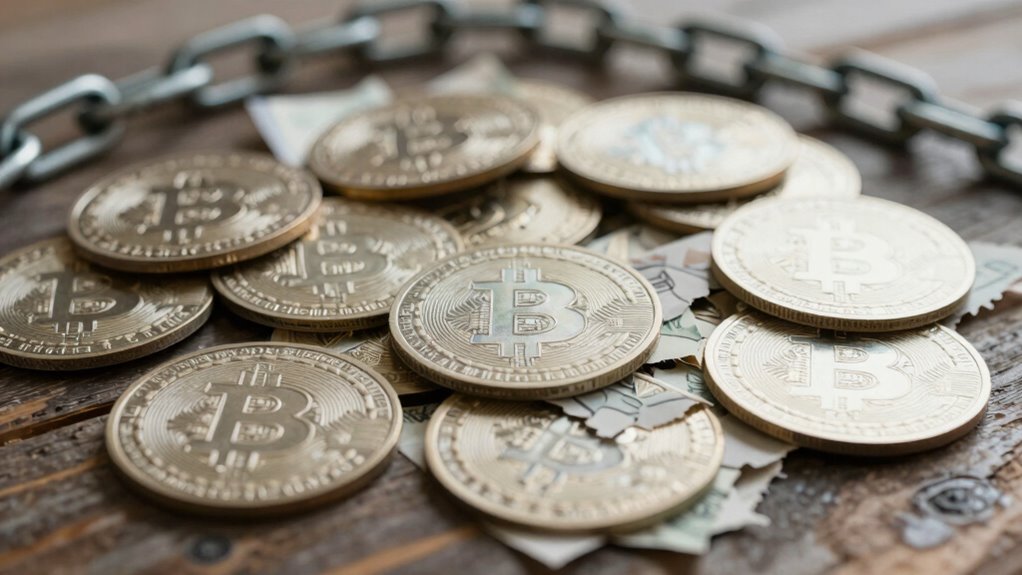
When collateral chains in paper Bitcoin become tangled and opaque, your risk shifts from theoretical to real. Complex layers and untraceable links weaken the security backing your holdings, making them vulnerable to failure, fraud, and systemic shocks. Decentralization relies on transparency, but messy collateral structures undermine trust and increase vulnerability. If you want to understand how these issues can threaten your investments and how to spot warning signs, there’s more to explore ahead.
Key Takeaways
- Messy collateral chains increase the risk of insolvency, fraud, and mismanagement, making paper Bitcoin less secure.
- Complex collateral layers undermine transparency, reducing trust in the true backing of Bitcoin holdings.
- Opaque collateral structures heighten systemic risk, potentially triggering market shocks or failures.
- Regulatory scrutiny intensifies as tangled collateral chains are viewed as systemic vulnerabilities or manipulations.
- Clear and straightforward collateral links are essential to prevent the transition from paper Bitcoin to real financial danger.

When collateral chains become tangled and messy, the risks surrounding paper Bitcoin escalate from theoretical to real. You might think that backing your Bitcoin with collateral provides a layer of safety, but when those collateral chains get complicated, the stability you expect can quickly unravel. The core issue here is decentralized security—while Bitcoin’s design aims to distribute trust and reduce reliance on central authorities, messy collateral chains threaten that very principle. When multiple layers of collateral are involved, and they aren’t perfectly aligned or transparent, the entire system becomes vulnerable to failure. If one link in the chain weakens or becomes untraceable, the entire security structure collapses, exposing your paper Bitcoin to significant risks.
You also need to consider the impact of regulatory challenges. As authorities scrutinize crypto assets more closely, messy collateral chains can draw unwanted attention. When collateral becomes tangled, regulators might interpret this as a sign of systemic risk or even manipulation. This can lead to stricter rules, increased reporting requirements, or outright bans on certain collateralized derivatives. Such regulatory uncertainty complicates your ability to manage and protect your paper Bitcoin holdings. It’s not just about the technical complexity; legal and compliance issues can make the situation even more precarious. When collateral chains get messy, you risk falling afoul of regulations, which could result in penalties or forced liquidation of assets.
The decentralized security model relies heavily on transparency and simplicity. If the collateral backing your paper Bitcoin isn’t clear or is layered through multiple entities, you lose the trust that decentralization promises. This opacity fuels the risk of insolvency, fraud, or mismanagement, especially when collateral chains are convoluted. You must be vigilant, understanding exactly what assets support your Bitcoin and how those assets are linked. If the chain is broken or overly complicated, it becomes difficult to assess the true value or safety of your holdings—making you more vulnerable to sudden shocks or market manipulations.
In essence, the messiness of collateral chains directly threatens the foundational strengths of paper Bitcoin. When these chains become complicated, the decentralized security that protects your assets weakens, and regulatory challenges intensify. You need to stay aware of how collateral structures are built and maintained, ensuring they remain transparent and straightforward. Only then can you mitigate the risks that turn what was once a purely theoretical concern into a very real threat to your Bitcoin holdings.
Additionally, understanding collateral transparency is crucial for assessing the true security of your holdings and avoiding the pitfalls of complex arrangements.

Crypto Seed Cold Storage Wallet with Engraver Pen Kit – Metal Plate and Etching Tool for Cryptocurrency Password Phrase Backup and Recovery
All Inclusive Kit for Crypto Seed Key Storage – Comes a Stainless Steel Plate & Tungsten Steel Engraving…
As an affiliate, we earn on qualifying purchases.
As an affiliate, we earn on qualifying purchases.
Frequently Asked Questions
How Do Collateral Chain Issues Affect Bitcoin’s Overall Security?
Collateral chain issues can weaken Bitcoin’s overall security by causing market volatility and trust erosion. When collateral chains become messy or uncertain, you might see increased risk of liquidation or default, which undermines confidence in the system. This instability can make investors wary, leading to decreased trust in Bitcoin’s security model. Ultimately, these issues threaten the stability you rely on, making it more vulnerable to manipulation and sudden market swings.
What Measures Can Mitigate Risks in Collateralized Paper Bitcoin?
To mitigate risks in collateralized paper Bitcoin, you should use synthetic tokens backed by transparent assets, reducing exposure to collateral chain issues. Additionally, prioritize decentralized custody solutions, which eliminate single points of failure and enhance security. Regular audits and robust governance further guarantee the integrity of your collateralized assets. These measures help maintain trust and stability, even when collateral chains become complex or messy.
Are There Historical Examples of Collateral Chain Failures?
Sure, history offers plenty of lessons. Collateral chain failures happen when collateral transparency slips or chain interoperability falters, leading to domino effects. Remember the 2008 financial crisis? It showed how tangled collateral chains can cause a system-wide collapse. When each link isn’t clear or compatible, risks multiply. So, ensuring transparency and seamless interoperability is key to preventing these messy failures from turning into full-blown crises.
How Does Liquidity Impact the Risk of Paper Bitcoin Collateral Chains?
Liquidity directly impacts the risk of paper Bitcoin collateral chains by affecting your ability to manage synthetic exposure efficiently. When liquidity is high, you can quickly rebalance or unwind positions, reducing exposure to collateral chain failures. However, during liquidity crises, the risk skyrockets, making it harder to exit or adjust positions, which amplifies synthetic exposure and increases the chances of cascading failures if collateral chains become messy.
What Role Do Regulators Play in Managing Collateral Chain Complexity?
Regulators play a vital role in managing collateral chain complexity by providing regulatory clarity and enforcing compliance standards. You rely on clear rules to navigate the tangled web of collateral links, much like untangling a mess of cords. Their oversight ensures transparency and reduces risk, helping you avoid catastrophic failures. Without such regulation, the chaos intensifies, making it harder to trust the integrity of collateral chains and safeguarding your investments.
blockchain transparency verification tools
As an affiliate, we earn on qualifying purchases.
As an affiliate, we earn on qualifying purchases.
Conclusion
So, imagine this: as collateral chains spiral into chaos, your paper Bitcoin risk transforms into a wildfire ripping through the financial forest. One tangled link could ignite a blaze that burns through entire markets, spreading chaos in seconds. The mess isn’t just messy—it’s a tidal wave crashing over your investments, turning paper promises into ash. You better hold tight, because when collateral chains get messy, the risk isn’t just real—it’s an unstoppable storm ready to swallow everything in its path.

Trezor Safe 3 – Passphrase & Secure Element Protected Crypto Hardware Wallet – Buy, Store, Manage Digital Assets Simply and Safely (Solar Gold)
Unparalleled Security: Protect your assets NDA-free EAL 6+ Secure Element, offering robust defense and complete transparency
As an affiliate, we earn on qualifying purchases.
As an affiliate, we earn on qualifying purchases.
crypto collateral tracking software
As an affiliate, we earn on qualifying purchases.
As an affiliate, we earn on qualifying purchases.