

Peter Schiff's recent condemnation of Bitcoin as a reserve asset raises important questions about its legitimacy. He argues that the cryptocurrency's volatility and marketing tactics are misleading, potentially destabilizing the economy. If Schiff's concerns are valid, what does this mean for the future of Bitcoin and its supporters? As the debate rages on, it's crucial to explore the implications of his claims on the broader financial landscape.

Peter Schiff has taken a strong stance against Bitcoin, labeling its promotion as fraudulent. If you follow the cryptocurrency debate, you might've noticed how Schiff's comments often stir controversy. Initially, some enthusiasts misinterpreted his remarks as a sign of support for a Bitcoin reserve. However, Schiff quickly clarified that this was a distortion of his words, and the backlash from the crypto community was immediate and intense.
Peter Schiff's strong opposition to Bitcoin has sparked intense controversy and backlash within the cryptocurrency community.
You might wonder what drives Schiff's opposition. He accuses Bitcoin promoters of spreading misinformation to artificially inflate its value. Schiff consistently compares Bitcoin unfavorably to gold, which he argues has a proven track record as a safe-haven asset. He points out Bitcoin's volatility as a major concern, insisting it undermines its reliability as a strategic asset.
When Donald Trump proposed a U.S. Crypto Reserve that included Bitcoin, XRP, and others, Schiff voiced his strong disapproval. While the market reacted positively to the announcement, his skepticism remained firm, particularly regarding XRP's inclusion. Schiff's comments have also contributed to the volatility in Bitcoin prices, which he argues reflects the inherent instability of the cryptocurrency.
Even as some Congressional members support the idea of a Bitcoin reserve, Schiff warns of potential economic instability. He believes that relying on such a volatile asset could lead to disastrous consequences for the economy. If you listen to him, he argues that a Bitcoin reserve might devalue the dollar, creating a cycle where more dollars would need to be printed to maintain the reserve, further destabilizing the currency.
Schiff labels Bitcoin marketing tactics as "fraudulent," which really gets to the heart of his argument. He believes these tactics mislead investors into thinking Bitcoin has intrinsic value when, in his view, it lacks any real worth. By comparing Bitcoin to a Ponzi scheme, he emphasizes what he sees as its inherent risks. This has led to heated debates within the crypto community, with many defending Bitcoin's legitimacy while others echo Schiff's concerns.
Ultimately, Schiff prefers traditional assets like gold over Bitcoin for reserve purposes. He highlights liquidity risks associated with Bitcoin, arguing that it's unsuitable for inclusion in national reserves. The ongoing regulatory uncertainty surrounding Bitcoin only adds to his concerns, leaving you to ponder whether the future of Bitcoin in reserves is as stable as its supporters claim.
In Schiff's eyes, the promotion of Bitcoin isn't just misguided; it's a dangerous game that could have far-reaching economic consequences.
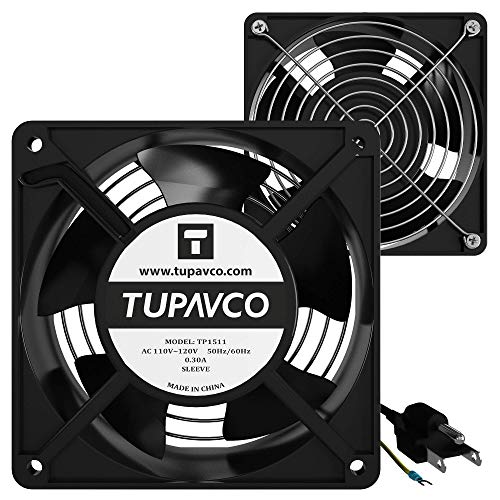
Network Cabinet Fan (2pc Kit) Pair of 120mm 4in Fans 110V AC -Tupavco TP1511
Pair of axial fans made to keep air flow and your equipment at low temperature
As an affiliate, we earn on qualifying purchases.

Pyle 19” Rack-Mount Equipment Cooling Fans - 110V/60Hz Power, 4 Cooler Master 80mm Case Fans, Smart Cooling System, Digital LCD Temperature Display & Installation Hardware Screw Included -PFN41
Four 80mm high velocity ball bearing metal case fans – three digit temperature display w/ Blue illumination
As an affiliate, we earn on qualifying purchases.

GRIFFIN 3U Rackmount Cooling Fan System (UltraQuiet X Edition) – Triple Exhaust Fans, Keep Studio Audio Equipment Gear Cool – Network IT Server Rails – DJ PA AMP Temperature Control Panel Cabinet
DISCOVER THE MOST RELIABLE NETWORK RACK FAN COOLING SYSTEM: When it comes to your professional equipments performance and...
As an affiliate, we earn on qualifying purchases.

AC Infinity CLOUDPLATE T2, Rack Mount Fan 1U, Top Exhaust Airflow, for Cooling AV, Home Theater, Network 19” Racks
An intelligent fan system designed for cooling audio video, DJ, server, network, and IT equipment racks.
As an affiliate, we earn on qualifying purchases.