
TL;DR

Get hardware and tech essentials delivered free with Prime
- Fast, free delivery on millions of items
- Prime Video, Amazon Music and more included
- Member-only deals all year
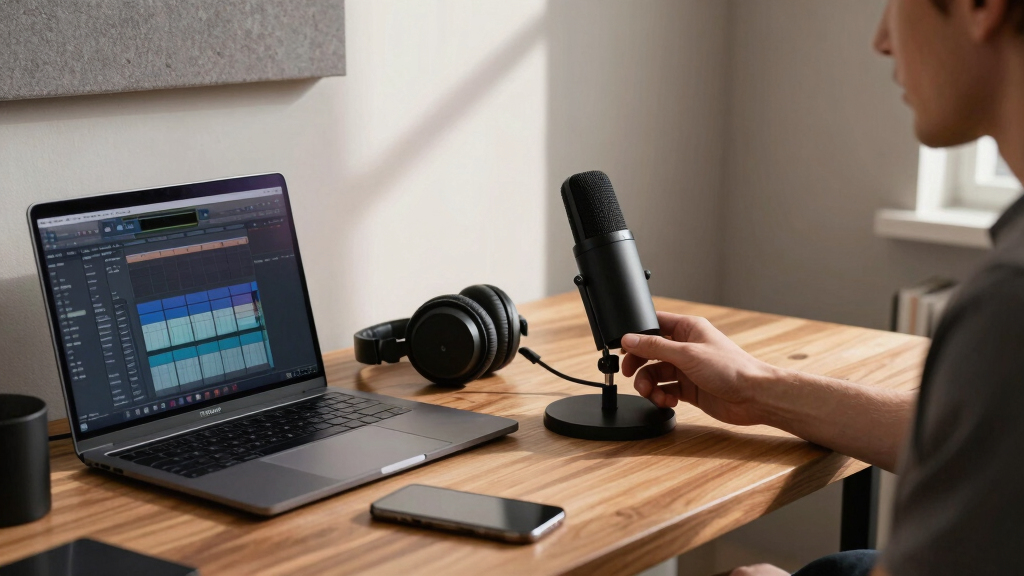
In 2026, AI microphones are revolutionizing sound quality with features like noise cancellation, adaptive sound shaping, and intelligent voice processing. The top picks include models from Logitech, FIFINE, and ZealSound, offering versatile options for creators and professionals.
AI-powered microphones that significantly enhance sound quality and offer intelligent sound processing are now available in 2026, transforming how users record, stream, and communicate. These devices incorporate machine learning algorithms to reduce noise, adapt to environments, and optimize voice clarity, making them essential tools for creators, professionals, and casual users alike.
The leading models include the Logitech Blue Yeti, which now integrates AI-driven noise suppression and adaptive sound modes, and the FIFINE K669B, which offers smart noise filtering at a budget-friendly price. Several other brands like ZealSound and CMTECK have launched microphones with real-time voice enhancement, echo cancellation, and automatic gain control, all powered by AI algorithms.
Manufacturers emphasize that these AI features allow microphones to automatically adjust to different environments, minimizing background noise and echo, and enhancing voice intelligibility. The Blue Yeti remains the top choice for versatility, boasting four polar patterns and now, AI-based sound optimization. Meanwhile, budget models like FIFINE K669B continue to deliver impressive performance with smart noise filtering, making high-quality sound accessible across price ranges.
Industry experts note that these advancements are driven by the increasing demand for high-quality remote communication, streaming, and content creation, where sound quality directly impacts user experience. The integration of AI in microphones is seen as a major step forward, although the specific algorithms and their effectiveness are still being evaluated by users and reviewers.
The 10 picks
- 1
 Logitech Blue Yeti USB Microphone for PC, Mac, Gaming, Streaming, Podcasting,…View on Amazon →
- 2
 FIFINE USB/XLR Dynamic Microphone for Podcast Recording, Gaming, Streaming wi…View on Amazon →
- 3
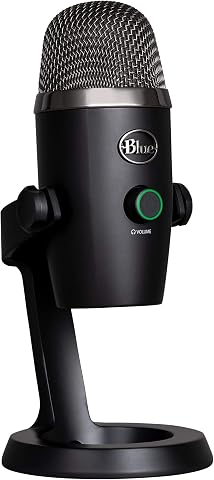 Logitech Blue Yeti Nano USB Microphone for Creators, BlackoutView on Amazon →
- 4
 ZealSound Podcast Microphone for PC, Noise Cancellation USB Mic with Gain, Vo…View on Amazon →
- 5
 FIFINE USB Microphone, Metal Condenser Recording Microphone for Mac OS, Windo…View on Amazon →
- 6
 Tonor Conference USB Microphone, Omnidirectional Condenser PC Mic for Video C…View on Amazon →
- 7
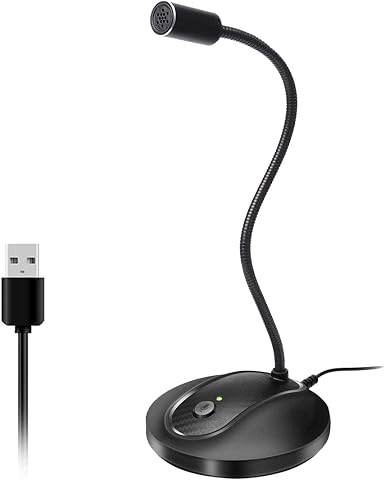 USB Microphone with Adjustable Gooseneck, Mute Button, and Noise-Canceling Te…View on Amazon →
- 8
 CMTECK USB Computer Microphone G009, Noise-Cancelling Desktop Mic for PC/Lapt…View on Amazon →
- 9
 Plug & Play USB Computer Microphone with Flexible Gooseneck and Mute Button LEDView on Amazon →
- 10
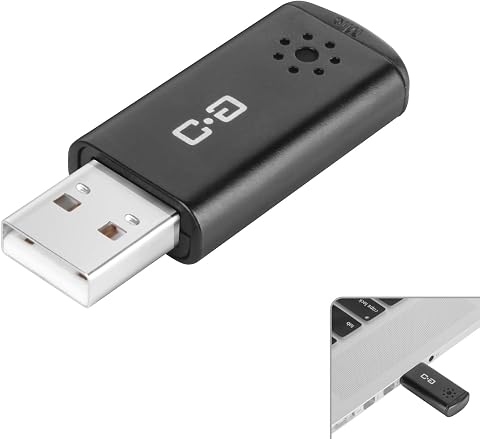 Mini USB Microphone for Laptop & Desktop, Plug-and-Play, High-Sensitivity, Co…View on Amazon →
Why AI Microphones Are Changing Sound Quality in 2026
AI microphones are transforming the landscape of audio recording and communication by providing automatic noise suppression, environment adaptation, and voice clarity improvements. This development matters because it enables users to achieve studio-quality sound without extensive setup or professional equipment, especially important in remote work, streaming, and content creation. As AI features become standard, they reduce the need for manual adjustments and improve accessibility for casual users and professionals alike.
Furthermore, these innovations could influence the future design of microphones, pushing manufacturers to incorporate smarter audio processing capabilities. The ability to automatically adapt to different environments and reduce background noise enhances the overall user experience and broadens the applications of microphone technology in various fields.
Products Worth Considering

LG UltraGear 34GX90SA-W 34-inch WQHD Curved OLED Gaming Monitor

Logitech MX Mechanical Wireless Illuminated Keyboard, Tactile Quiet, Graphite

Logitech MX Keypad Programmable Macro Pad for Developers, Graphite
As an affiliate, we earn on qualifying purchases.
Evolution of Microphone Technology and AI Integration
Over the past decade, microphone technology has advanced from basic analog devices to sophisticated digital tools with multiple pickup patterns and onboard controls. The recent surge in AI integration began around 2024, with companies introducing models that leverage machine learning for noise cancellation, voice enhancement, and environment adaptation.
Leading brands like Logitech, FIFINE, and ZealSound have released AI-enabled microphones that cater to streaming, podcasting, gaming, and professional conferencing. These developments are driven by the increased need for high-quality remote communication, amplified by the global shift toward hybrid work and online content creation. While early models focused on noise reduction, current offerings now include features like automatic gain control, echo cancellation, and environment sensing, making them more adaptable and user-friendly.
Remaining Questions About AI Microphones’ Effectiveness
While AI-enabled microphones are promising, questions remain about the consistency of their noise cancellation, the accuracy of environment sensing, and how well they perform in highly noisy or unpredictable settings. User reviews and independent tests are still emerging, and some models’ algorithms are proprietary, limiting transparency about their capabilities.
It is also unclear how future updates or AI learning processes will impact long-term performance and compatibility with various devices. Manufacturers have not yet disclosed detailed technical specifications for their AI algorithms, leaving some uncertainty about their robustness across different scenarios.
Upcoming Developments and Market Adoption of AI Microphones
Expect further innovations as manufacturers refine AI algorithms to improve noise reduction, environment detection, and voice clarity. New models are anticipated to include more customizable AI settings and integration with smart home or office ecosystems. Market adoption is likely to accelerate as remote work and content creation continue to grow, prompting widespread consumer and professional interest.
Regulatory and standardization efforts may also emerge to ensure AI features meet privacy and performance benchmarks. Industry reviews and user feedback over the coming months will clarify the real-world effectiveness of these AI microphones and guide future product development.
Key Questions
How do AI microphones improve sound quality?
AI microphones use machine learning algorithms to automatically reduce background noise, cancel echoes, and optimize voice clarity, providing clearer audio in various environments.
Are AI microphones suitable for noisy environments?
Many AI microphones are designed to handle noisy settings through active noise suppression and environment sensing, but their effectiveness can vary depending on the model and noise levels.
Will AI features require software updates?
Some AI capabilities may be improved or expanded via firmware or software updates, but core functionalities are typically built into the hardware at purchase.
Are AI microphones more expensive than traditional models?
AI-enabled microphones tend to be priced higher due to their advanced features, but many models offer a range of options to suit different budgets.
What brands are leading in AI microphone technology in 2026?
Leading brands include Logitech, FIFINE, ZealSound, and CMTECK, all of which have launched models with integrated AI sound processing features this year.
Source: ThorstenMeyerAI.com