🔍 Read the full analysis: How Claude Fable 5.2 And Gemini 4 Differ At Work on ThorstenMeyerAI.com

Get hardware and tech essentials delivered free with Prime
- Fast, free delivery on millions of items
- Prime Video, Amazon Music and more included
- Member-only deals all year
TL;DR
Artificial Analysis data available November 17, 2026, puts Claude Fable 5.2 ahead of Gemini 4 Carbon on its overall Intelligence Index, but individual results vary by task. Gemini models score higher on several workflow tests and cost less per benchmark task; Fable scores higher on repository coding and long-context reasoning. The comparison is based on benchmarks, not evidence that either model will outperform the other for every workplace team.
Independent benchmark results available November 17, 2026 show Claude Fable 5.2 leading Gemini 4 Carbon on the Artificial Analysis Intelligence Index, while Google’s models outperform it on several individual work tests and cost less per benchmark task. The results offer no single winner for workplace use: performance depends on the task, and the reported prices for two Gemini models are scheduled to rise on December 1.
On the Artificial Analysis Intelligence Index, Fable 5.2 scored 65 at Max effort and 62 at High. Gemini 4 Carbon scored 60 at High, Gemini 4 Hydrogen scored 54 at its highest setting, and Gemini 4 Argon scored 50 at High. These scores aggregate benchmark performance; they do not establish that one model is best for every job.
The task-level results differ. In Artificial Analysis tests, Fable 5.2 at High scored 49.1% on FrontierCode-AA 2.0, which evaluates agentic coding in open-source repositories, compared with Carbon’s 40.6%. Fable also led on long-context reasoning, scoring 83.3% against Carbon’s 79.3%. Carbon led on Terminal-Bench 4.0, professional-document reasoning and business workflow automation, with scores of 65.2%, 28.4% and 77.8%, respectively. The two models’ corresponding scores were 59.6%, 21.8% and 71.4%.
Artificial Analysis estimated the cost of one Intelligence Index task at $26.54 for Fable 5.2 at Max and $9.08 at High, compared with $5.48 for Carbon, $4.97 for Argon and $3.16 for Hydrogen. Google’s Carbon and Argon task-cost figures use introductory prices that are due to double December 1. Task costs account for model usage in the test, including tokens used while reasoning; they are distinct from listed per-token rates.
How Task Choice Changes the Comparison
For companies selecting a model, the results make the decision a trade-off between task performance, reliability and cost, not a simple choice of the highest overall score. A team whose work centers on coding in existing repositories or handling long documents may give more weight to Fable’s benchmark leads. Teams focused on terminal work or automated business software may find Carbon’s results more relevant. Those tests are indicators, not guarantees of performance in a particular company’s systems.
Cost differences may affect how often organizations can run a model, especially in automated workflows that make many calls. But a lower cost per benchmark task does not by itself establish a lower bill for a real-world project: usage, prompt length, output length, reasoning effort and product pricing all matter. Google’s stated introductory prices for Carbon and Argon also have a near-term expiry, making the December 1 change relevant to budgeting.
Reliability presents another trade-off. The source reports Fable as more accurate overall on a test of whether models know answers, but says it was more likely to guess incorrectly when it did not know. That distinction matters in work where an unsupported answer can be costly. It does not mean either model should be trusted without review, and benchmark rates do not predict error rates for every workplace task.
Products Worth Considering

Ledger Stax Crypto Wallet with Touchscreen
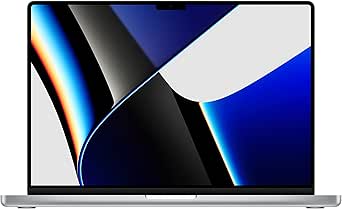
Apple MacBook Pro 16-inch (2021, M1 Pro, 10-core CPU, 16-core GPU, 16GB RAM, 512GB SSD, Silver)

Apple MacBook Air 13-inch with M5 Chip, 16GB Memory, 512GB SSD, Silver
As an affiliate, we earn on qualifying purchases.
Three Gemini Models, Two Launch Windows
Anthropic released Claude Fable 5.2 on November 9. Google opened Gemini 4 Carbon to paying users on November 10 and released Gemini 4 Hydrogen to all users, including through Google Search, on November 12. Gemini 4 is a family: Carbon is described by Google as its most capable reasoning model, Argon as its efficient model for a broad range of work, and Hydrogen as designed for rapid execution across agent workflows.
Anthropic describes Fable 5.2 as intended for ambitious, open-ended technical work. According to the source, it offers five effort levels, a one-million-token context window and up to 128,000 output tokens. Carbon, Argon and Hydrogen also have one-million-token context windows. The source says Carbon and Hydrogen accept text, images, speech and video, while Argon and Fable accept text and images.
The source compares independent Artificial Analysis results accessed November 17 and also cites Epoch AI’s Capabilities Index. Fable scored 173.44 on that index, with an uncertainty range of 169.93 to 177.49; Carbon scored 169.76, with a range of 166.48 to 173.5. The ranges overlap, so the figures do not establish a clear separation between the two models on that measure. Vendor-published tests cited in the source show mixed results too, but those runs are not independently repeatable, according to the comparison.
““the most ambitious, open-ended technical work””
— Anthropic
Benchmark Results Have Limits
The comparison does not establish which model performs better across real workplaces, where results may depend on the software, prompts, data and human review involved. The source provides benchmark scores but does not give enough detail here to assess every test’s methodology or how closely each task matches a particular organization’s work. The overlapping Epoch AI uncertainty ranges also leave the models’ relative standing on that index unresolved.
The source says Fable answers more questions correctly in a reliability test, reporting 77.2% accuracy versus Carbon’s 58.3%. It also reports a higher hallucination rate for Fable when it does not know an answer: 58.0% versus 11.4% for Carbon. The supplied material does not describe the test setup or sample size, so those numbers should be read as results from that test, not as a universal measure of workplace error risk. The article’s author disclosed that AI, including an Anthropic model, helped research and draft the comparison; the source says neither Anthropic, Google nor Artificial Analysis reviewed or sponsored it.
Pricing is also time-sensitive: the listed introductory Carbon and Argon prices are due to change on December 1. The source does not establish what an individual company’s total bill would be, or whether product access, limits or pricing outside the cited API rates will differ.
Pricing Changes Take Effect December 1
The next stated pricing milestone is December 1, 2026, when Google’s introductory per-token prices for Gemini 4 Carbon and Argon are scheduled to double, from $2 to $4 per million input tokens and from $10 to $20 per million output tokens. Teams comparing costs will need to check the rates in force when they plan to use the models; Hydrogen’s listed rates are $1.50 per million input tokens and $7.50 per million output tokens.
For organizations considering a switch or rollout, the available results point to testing models on their own representative tasks and tracking both output quality and full usage costs. The supplied source does not announce a new benchmark release or a future model update. Further comparisons may change the picture, but which system fits a particular team remains an operational question rather than something settled by these aggregate scores.
Key Questions
Which model scored highest on the Artificial Analysis Intelligence Index?
Claude Fable 5.2 scored 65 at Max effort, the highest figure among the models listed. At High, Fable scored 62, compared with 60 for Gemini 4 Carbon. The index does not determine the best model for every individual task.
Which model is stronger for workplace tasks?
The results vary by task. Fable 5.2 led the cited open-source repository coding and long-context reasoning tests; Gemini 4 Carbon led on terminal tasks, professional documents and business workflow automation. A team’s results may differ from benchmark scores.
Which model had the lowest reported cost per benchmark task?
Gemini 4 Hydrogen had the lowest reported Intelligence Index task cost at $3.16, followed by Argon at $4.97 and Carbon at $5.48. Carbon and Argon figures use introductory prices scheduled to double on December 1, 2026. Benchmark task cost is not a quote for a company’s full workload.
What do the reliability figures say?
In the test cited by the source, Fable had higher overall accuracy than Carbon, 77.2% versus 58.3%. But its reported hallucination rate when it did not know an answer was also higher, 58.0% versus 11.4%. The supplied material does not establish that these rates apply to all workplace uses.
When do Gemini 4 Carbon and Argon prices change?
Google’s cited introductory API rates for Carbon and Argon are scheduled to change on December 1, 2026. The source lists the new per-million-token rates as $4 for input and $20 for output, up from $2 and $10.
Source: ThorstenMeyerAI.com