

📊 Full opportunity report: IdeaClyst: The Engine That Decides What’s Worth Building on ThorstenMeyerAI.com — validation score, market gap, and execution plan.
TL;DR
IdeaClyst is a new idea engine that helps product teams identify valuable work by analyzing roadmaps, scouting market opportunities, and proposing prioritized ideas across features, spin-offs, and services. It aims to solve the problem of scalable ideation for fast-growing companies.
IdeaClyst, a new idea engine, has been launched to help product teams identify what to build next by generating validated, targeted ideas based on market opportunities and existing roadmaps. This development aims to fill a tooling gap in scalable ideation, which is a persistent challenge for fast-growing companies.
IdeaClyst is designed to turn rough product concepts into concrete, founder-ready plans by scouting the web for real opportunities and analyzing existing roadmaps to identify gaps. It operates as a companion to Threlmark, a roadmap execution tool, but focuses specifically on ideation — the process of generating ideas worth building.
The core of IdeaClyst is a council of AI models, specifically Claude and Codex, working together to propose, critique, and refine ideas. This council approach helps surface more nuanced and valuable suggestions than a single model could produce, mimicking a collaborative brainstorming process.
It also integrates live web research to ground ideas in real market conditions, ensuring proposals are relevant and actionable. The engine reads a company’s current roadmap, analyzes coverage across categories, and creates a deterministic gap map, highlighting areas that are underdeveloped or missing entirely. This targeted approach ensures suggestions fill actual holes in the product strategy, rather than random ideas.
Proposals are categorized into three lanes: Features, Spin-offs, and Services, broadening the scope of potential initiatives beyond just product features. Each idea is scored based on impact, evidence, fit, and effort, allowing teams to prioritize effectively and slot suggestions directly into their backlog.
The engine that decides what’s worth building
Every roadmap tool assumes you arrive knowing what to build. IdeaClyst inverts that — it generates the candidate work, aims it at the real gaps in a roadmap it can read, scores it, backs it with research, and drops it where you decide.
Most tools wait for you to know what to build
Ideation is real work — and the work most likely to get skipped under pressure, because it has no deadline and ships nothing the day you do it. So the roadmap fills with whatever was easiest to think of. IdeaClyst closes that gap.
A council, not a single prompt
One model produces a confident, plausible, slightly generic list. A council — models proposing, critiquing, refining against each other — catches the weak ideas that sound good and pushes the survivors sharper.
The Claude–Codex council
Like brainstorming with a sharp colleague who isn’t afraid to say “that one’s obvious — dig deeper.”
Scouts the web for opportunities
Ideas in a vacuum are guesses; ideas grounded in a real market are proposals. The engine researches the landscape and anchors what it suggests.
Roadmap → gap map → three lanes → Inbox
This is “Roadmap Intelligence.” Pick a Threlmark project; IdeaClyst reads it read-only, maps the gaps, and three lanes propose scored work that lands in your Inbox. Watch it run.
How a proposal is born
Deterministic gap map in, scored proposals out — aimed at the holes you actually have.
Not “build X” — a small, defensible case
Each suggestion arrives scored on the same four axes Threlmark ranks by, so it slots straight into a prioritized backlog — and carries its provenance: what kind, why, and the sources behind it.
Anatomy of an IdeaClyst proposal
A proposal is a stack of evidence, not a one-liner. Here’s one as it lands in the Inbox.
An open contract, not magic
IdeaClyst can read your roadmap and write proposals into it only because Threlmark keeps everything as open files. No API to be granted, no account to connect — just a small layer speaking the file shapes.
Reads everything · writes only suggestions
IdeaClyst reads roadmaps read-only (computing the same priority, building the gap map) and writes only the Inbox — dropping one suggestion file via the same atomic pattern, never touching your board. And because the contract is open, any tool can do the same: IdeaClyst is the first complete example, not a gatekeeper.
Why IdeaClyst Changes Product Ideation
IdeaClyst addresses a critical bottleneck in product development: the inability to scale ideation effectively. By automating the generation of validated, prioritized ideas, it helps companies avoid the trap of rehashing the same solutions or missing adjacent opportunities. This can lead to more innovative products, faster growth, and better market fit, especially for companies with rapidly expanding roadmaps.
Furthermore, by incorporating real market research and a structured analysis of existing roadmaps, IdeaClyst offers a more disciplined and data-driven approach to ideation, reducing reliance on subjective judgment and intuition alone. This could significantly improve the quality and relevance of product initiatives.
Gamedev Production and Design Workbook: Practical Companion for Producers, Designers & Leads
As an affiliate, we earn on qualifying purchases.
As an affiliate, we earn on qualifying purchases.
The Need for Better Ideation Tools in Product Development
Traditional roadmap tools help teams organize and execute tasks but assume that teams already know what to build. The initial phase of ideation — deciding what ideas are worth pursuing — remains a manual, often subjective process. Companies frequently run out of validated ideas, leading to stagnation or reactive development based on competitors’ moves.
Existing tools do not effectively address the challenge of generating new, valuable ideas at scale. This gap has become more apparent as product teams grow larger and the pace of market change accelerates. The launch of IdeaClyst responds to this unmet need by offering a systematic, AI-driven approach to ideation grounded in real-world data and strategic gap analysis.
“IdeaClyst is built to answer the fundamental question of what should even be on the roadmap in the first place, turning vague concepts into validated work that fills real market gaps.”
— Thorsten Meyer, founder of ThorstenMeyerAI.com

As an affiliate, we earn on qualifying purchases.
Unanswered Questions About IdeaClyst’s Effectiveness
It is not yet clear how well IdeaClyst performs in real-world product teams or how effectively it integrates into existing workflows. User feedback and case studies are still to be gathered to evaluate its impact on idea quality and team productivity. Additionally, the extent to which it can adapt to different industries or company sizes remains unknown.

Mark Twain Forensic Investigations Workbook, Using Science to Solve High Crimes Middle School Books, Critical Thinking for Kids, DNA and Handwriting Analysis Labs, Classroom or Homeschool Curriculum
- Develops Deductive Reasoning: Builds critical thinking skills in students
- Multiple Outcomes: Encourages broad interpretation of evidence
- Hands-On Activities: Includes handwriting, body language, fingerprinting, and more
As an affiliate, we earn on qualifying purchases.
As an affiliate, we earn on qualifying purchases.
Next Steps for Adoption and Validation
Following its announcement, the developers plan to release beta access to select product teams for testing and feedback. They aim to refine the AI council’s proposal process and improve the accuracy of market scouting. Broader rollout and integration with popular roadmap tools are expected within the next few months, along with publication of case studies demonstrating its impact.
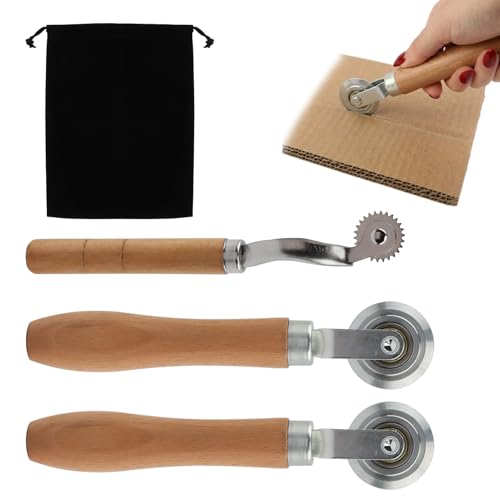
Adjustable Pressure Creasing & Scoring Tool Kit – 17×3.7cm Creasing Wheels(0.5/1.2cm), 15×2cm Scoring Wheel and Flocked Storage Bag for Paper Crafts & Cardboard Box Assembly(Color:as Shown)
- Precise Wheel Dimensions: 17×3.7cm creasing, 15×2cm scoring wheels
- Dual Creasing Widths: 0.5cm and 1.2cm interchangeable wheels
- High-Quality Materials: Beech wood, steel, iron for durability
As an affiliate, we earn on qualifying purchases.
As an affiliate, we earn on qualifying purchases.
Key Questions
How does IdeaClyst generate ideas?
It uses a council of AI models, Claude and Codex, to propose, critique, and refine ideas based on analysis of existing roadmaps and real-world market opportunities.
What types of ideas does it suggest?
Proposals are categorized into Features, Spin-offs, and Services, covering product enhancements, new adjacent products, and revenue-generating offerings.
Can it integrate with my current roadmap tools?
Yes, it reads roadmap data from files in common formats, allowing it to analyze your existing plans and identify gaps without disrupting your workflow.
Is IdeaClyst suitable for all industries?
It is designed to be adaptable, but its effectiveness across different sectors and company sizes will be clearer after further testing and user feedback.
When will it be generally available?
A broader rollout is expected within the next few months after initial beta testing and refinement based on early user experiences.
Source: ThorstenMeyerAI.com