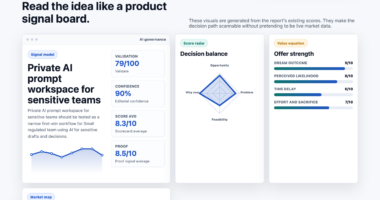
📊 Full opportunity report: Maximizing AI Performance With High Talent Density on ThorstenMeyerAI.com — validation score, market gap, and execution plan.

Get hardware and tech essentials delivered free — and shop member deals
- Fast, free delivery on millions of items
- Access to Prime Big Deal Days deals on October 6–7
- Prime Video, Amazon Music and more included
TL;DR
AI-driven talent density is reshaping organizational performance, allowing small, high-skill teams to generate unprecedented revenue per employee. This shift is driven by AI automating functions and enabling fewer, more capable personnel.
AI’s integration into organizational workflows is significantly increasing talent density, allowing small, high-performing teams to generate revenue per employee that surpasses historical norms by multiple factors. This development is transforming organizational structures and investment patterns, making talent concentration a key competitive advantage.
Recent data from leading AI-native companies show a dramatic increase in revenue per employee, with some firms reaching nearly $4.7 million per head, compared to traditional SaaS averages of $130,000. Companies like Midjourney, Cursor, Gamma, and Lovable exemplify this trend, achieving high revenue with small teams, often in the low hundreds of employees. This shift is driven by AI automating entire functions—such as customer support, content creation, and sales—reducing headcount needs while maintaining or increasing output.
Additionally, the concept of talent density—a high concentration of top-tier skills—has become an operational mode, not just a management philosophy. High-trust, low-overhead teams excel because they require less coordination, decision-making is faster, and the specific skills needed are more critical than roles or titles. This effect is amplified as AI tools enable individuals with the right expertise to accomplish what once needed entire departments.
For a decade, revenue per employee was stable and boring. AI-native companies posted figures that don’t fit on the same chart — a 10-to-38× break.
Impact of AI-Enhanced Talent Density on Business Scale
This trend indicates a fundamental shift in how organizations are structured and scaled. Small, highly skilled teams can now outperform much larger organizations, reducing costs and increasing agility. For investors and executives, talent density becomes a key metric, influencing funding, hiring, and strategic decisions. The ability to operate with fewer personnel while maintaining or exceeding previous revenue levels could redefine competitive advantage across industries.
AI-powered team collaboration tools
As an affiliate, we earn on qualifying purchases.
As an affiliate, we earn on qualifying purchases.
Historical and Current Trends in Organizational Efficiency
Traditionally, revenue per employee was a stable metric for measuring efficiency, with top SaaS companies reaching $300–$400K. However, in 2026, AI-native firms have shattered these benchmarks, with some generating millions per employee. This acceleration is linked to AI automating functions that previously required large teams, and a shift towards high-trust, dense teams that operate with minimal overhead. The phenomenon builds on earlier management insights from Netflix but is now driven by technological capabilities.
"AI amplifies talent density, enabling small teams of top performers to operate at scales once thought impossible."
— Thorsten Meyer
high-performance AI automation software
As an affiliate, we earn on qualifying purchases.
As an affiliate, we earn on qualifying purchases.
Unclear Aspects of AI-Driven Talent Density Growth
While data shows impressive revenue per employee figures, some of these are based on run-rate projections rather than full-year audited results. It remains unclear how sustainable these figures are long-term, especially as companies scale further. Additionally, the precise threshold of talent density needed to unlock these benefits and how it varies across industries is still being studied.
enterprise AI content creation tools
As an affiliate, we earn on qualifying purchases.
As an affiliate, we earn on qualifying purchases.
Next Steps in Measuring and Scaling Talent Density
Expect further research into the sustainability of high revenue per employee metrics and the development of best practices for building high-talent-density teams. Companies will likely experiment with AI tools and organizational structures to optimize for this new operational mode. Investors and leaders will monitor these trends to inform strategic decisions about talent acquisition and resource allocation.
AI-driven customer support software
As an affiliate, we earn on qualifying purchases.
As an affiliate, we earn on qualifying purchases.
Key Questions
How does AI contribute to increasing talent density?
AI automates many functions, reducing the need for large teams and enabling highly skilled individuals to focus on high-value tasks, thus increasing overall talent density.
Is high talent density sustainable long-term?
While current data shows promising results, the long-term sustainability depends on continued AI advancements, talent availability, and organizational adaptation. Further analysis is ongoing.
Does this trend apply to all industries?
The trend is most evident in AI-native sectors like software, content creation, and digital services. Its applicability to traditional industries remains to be seen, as some functions are less automatable.
What are the risks of focusing on talent density?
Over-reliance on a small number of high performers can create vulnerabilities, such as talent shortages or bottlenecks. Managing this balance is crucial.
Source: ThorstenMeyerAI.com
Fall Picks
fall essentials
As an affiliate, we earn on qualifying purchases.