

Designing post-quantum wallets is now a complex engineering challenge that requires you to address new cryptographic vulnerabilities, update hardware components, and guarantee seamless user experience. You’ll need to integrate quantum-resistant algorithms, upgrade hardware security modules, and rethink security protocols for larger keys. Balancing these technical demands with usability isn’t easy, but staying ahead of threats is vital. Keep exploring to understand how these innovations shape the future of digital asset protection.

Get hardware and tech essentials delivered free — and shop member deals
- Fast, free delivery on millions of items
- Access to Prime Big Deal Days deals on October 6–7
- Prime Video, Amazon Music and more included
Key Takeaways
- Integrating quantum-resistant algorithms requires balancing performance, compatibility, and scalability within existing wallet architectures.
- Upgrading hardware security modules (HSMs) is essential to prevent quantum-related tampering and side-channel attacks.
- Developing secure key management protocols must accommodate larger keys and new cryptographic primitives.
- Rethinking overall security models involves ensuring robustness against both classical and quantum threats.
- Cross-disciplinary collaboration is crucial to address the engineering challenges of implementing post-quantum wallet solutions effectively.
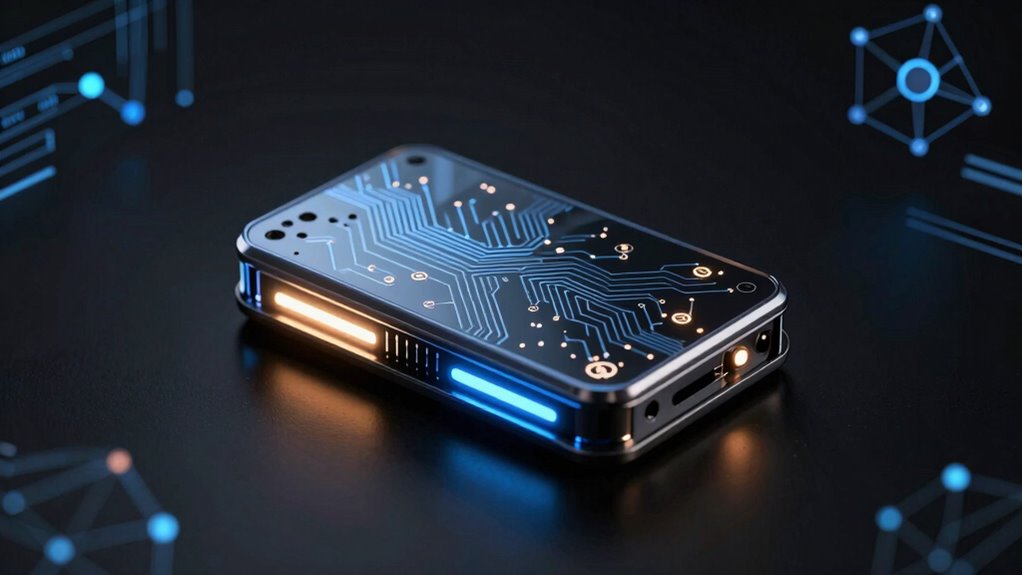
As quantum computing advances, designing secure digital wallets no longer remains a theoretical challenge; it’s quickly becoming a tangible engineering problem. Traditional cryptographic methods, like RSA and ECC, are vulnerable to quantum attacks, which threaten to expose your digital assets. To counter this, you need to focus on quantum resistant algorithms—cryptographic solutions designed specifically to withstand quantum computing threats. These algorithms are fundamental in ensuring your wallet remains secure once quantum computers become powerful enough. Implementing quantum resistant algorithms isn’t just about selecting new encryption methods; it involves integrating them seamlessly into your wallet’s architecture. You’ll need to contemplate how these algorithms impact performance, compatibility, and scalability, all while maintaining user experience.
Hardware security plays a pivotal role in this shift. Securing the physical components of your wallet—whether it’s a hardware device or a secure enclave within a smartphone—is essential to prevent tampering or side-channel attacks. Hardware security modules (HSMs) need to be upgraded or redesigned to support quantum resistant algorithms, ensuring that cryptographic keys are generated, stored, and processed in a way that’s resistant to quantum-enabled breaches. This upgrade process isn’t trivial; it requires careful engineering to balance security, cost, and usability. You must also think about how hardware security interacts with the software layers, creating a robust, multi-layered defense system. Additionally, understanding the impacts of quantum computing on current cryptography is crucial for developing effective post-quantum solutions. It’s also important to stay informed about the evolving standards and cryptographic research that shape these advancements, as ongoing research continually refines our understanding of quantum vulnerabilities. Staying aware of cryptanalytic techniques is vital for assessing the robustness of new schemes against potential future threats.
Designing post-quantum wallets isn’t just about plugging in new algorithms or upgrading hardware. It’s about rethinking the entire security model. You’ll need to develop new key management protocols that accommodate quantum resistant algorithms, which often have different requirements than classical ones. This might mean adopting larger key sizes or different cryptographic primitives, all while ensuring that your wallet remains easy to use and quick to access. Testing and validation become more complex as well, since quantum-resistant schemes are still relatively new and less battle-tested than traditional methods. You must rigorously evaluate their resilience against both classical and quantum attacks before deploying them in real-world settings. Moreover, comprehensive security audits are essential to identify any unforeseen vulnerabilities that could compromise your wallet’s integrity in the face of quantum threats.
Ultimately, safeguarding digital assets in a post-quantum world demands a proactive, engineering-focused approach. You’re not just updating algorithms—you’re redesigning the entire security infrastructure. This involves close collaboration between cryptographers, hardware engineers, and software developers. The goal is to create a wallet that’s not only secure against future threats but also practical and user-friendly today. As quantum computing continues to develop, your ability to anticipate and adapt to these challenges will determine whether your digital assets remain protected or become vulnerable.
hardware security modules HSMs for post-quantum cryptography
As an affiliate, we earn on qualifying purchases.
As an affiliate, we earn on qualifying purchases.
Frequently Asked Questions
How Will Quantum-Resistant Wallets Impact Everyday Cryptocurrency Users?
Quantum-resistant wallets will greatly enhance your security by using quantum keys that protect your assets from future quantum threats. As blockchain resilience improves, you’ll notice increased confidence in your transactions and stored assets. These wallets will guarantee your cryptocurrency remains safe even as quantum computing advances, making your digital assets more secure and reliable in the long run. You’ll benefit from a more robust, future-proof system that adapts to evolving technological challenges.
What Are the Main Challenges in Integrating Post-Quantum Algorithms?
Think of integrating post-quantum algorithms as building a fortress with unbreakable walls. Your main challenge lies in ensuring quantum key security while keeping the fortress agile for everyday use. Algorithm security must be airtight, yet adaptable enough to fit within existing wallet architectures. Balancing these elements is like walking a tightrope—requiring precision, innovation, and foresight to prevent vulnerabilities before quantum storms arrive.
How Secure Are Current Post-Quantum Cryptographic Methods?
You should know that current post-quantum cryptographic methods are considered quite secure, but their robustness depends on ongoing advancements like quantum key distribution, which enhances security by detecting eavesdropping. Algorithm agility lets you quickly adapt your systems to new algorithms if vulnerabilities emerge. While no method is entirely invulnerable, combining quantum key distribution with flexible algorithms substantially boosts your defenses against future quantum attacks.
When Will Quantum-Resistant Wallets Become Widely Available?
Quantum-resistant wallets will likely become widely available within the next 3 to 5 years as new encryption standards are adopted and quantum key technology advances. You’ll see these wallets incorporate quantum-safe algorithms to protect your assets. Developers are actively working on integrating these standards into user-friendly designs, making it easier for you to secure your digital assets against future quantum threats. Stay updated on industry progress for the latest releases.
What Are the Cost Implications of Upgrading to Post-Quantum Wallets?
Upgrading to post-quantum wallets involves costs related to developing and deploying quantum-resistant cryptographic algorithms, which can be significant initially. You’ll need to invest in new hardware, software, and security protocols, impacting blockchain resilience. Over time, these costs may decrease as technology matures. The key is balancing the expense against the critical need for quantum-safe quantum keys, ensuring your blockchain remains secure against future quantum threats.
quantum-resistant digital wallet hardware
As an affiliate, we earn on qualifying purchases.
As an affiliate, we earn on qualifying purchases.
Conclusion
Imagine you’re an adventurer exploring a shifting landscape, where new threats and tools constantly reshape your path. Post-quantum wallet design is that terrain, demanding your ingenuity and resilience. As you forge ahead, you’ll need to build sturdy bridges and hidden tunnels—robust solutions that stand the test of time and technology. Embrace the challenge, because in this evolving landscape, your choices today will secure your treasure for the journeys yet to come.
post-quantum cryptography wallet solutions
As an affiliate, we earn on qualifying purchases.
As an affiliate, we earn on qualifying purchases.
secure key management hardware device
As an affiliate, we earn on qualifying purchases.
As an affiliate, we earn on qualifying purchases.
Fall Picks
fall essentials
As an affiliate, we earn on qualifying purchases.