

You've likely heard about the growing interest in soft robots, but have you considered how 'embodied energy' could transform their capabilities? These robots, made from flexible materials, can adapt to diverse tasks with remarkable efficiency. As they enter sectors like healthcare and manufacturing, their potential is significant. However, there are still challenges in control and design that need addressing. What could this mean for the future of human-robot interactions?

Get hardware and tech essentials delivered free — and shop member deals
- Fast, free delivery on millions of items
- Access to Prime Big Deal Days deals on October 6–7
- Prime Video, Amazon Music and more included
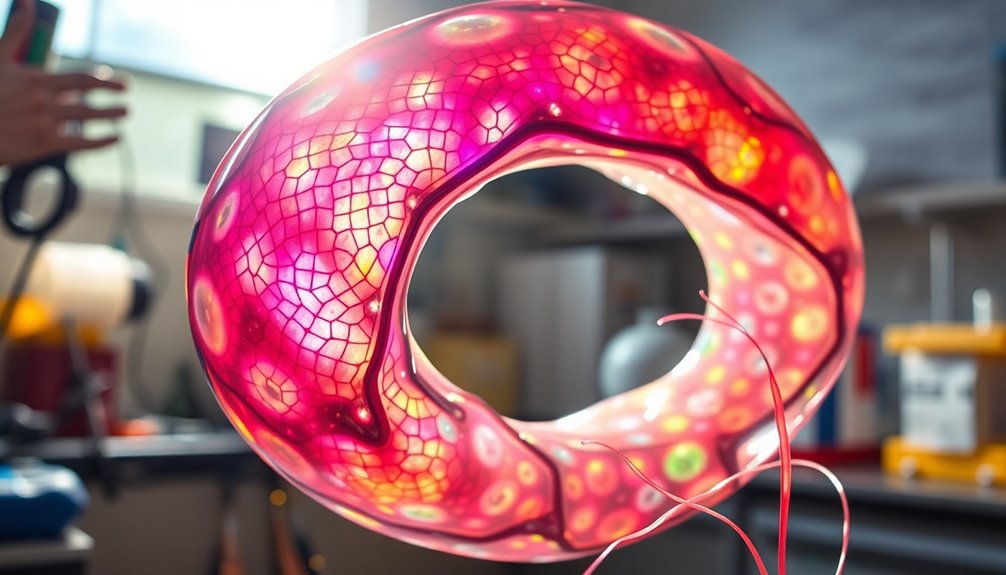
Soft robotics is revolutionizing the field of robotics by utilizing flexible materials that mimic the natural movements of living organisms. You'll discover that these robots are crafted from materials like silicone rubber, gels, and elastomers, allowing them to stretch and bend in ways traditional robots can't. This unique design makes soft robots incredibly versatile, enabling them to perform tasks across various industries, from healthcare to ocean exploration.
One of the standout features of soft robots is their biocompatibility. Because they're made from soft materials, they can interact safely with living tissue, making them ideal for medical applications such as surgery, rehabilitation, and prosthetics. Imagine a soft robot delicately assisting in a surgical procedure or providing support to a patient in recovery.
Their flexibility allows them to navigate tight spaces, making them invaluable in search and rescue missions, where maneuverability can mean the difference between success and failure. Additionally, soft robots demonstrate structural flexibility that enables them to bend, stretch, and twist to achieve complex tasks.
You'll also find that soft robots are designed to be energy-efficient. Their lightweight nature, combined with innovative actuation methods like air or fluid pressurization, allows them to operate with less energy than traditional robots. This efficiency not only reduces operational costs but also extends the potential applications for soft robotics.
For instance, in manufacturing, they can handle delicate objects without damaging them, streamlining processes and improving productivity.
Adaptability is another key characteristic of soft robots. They can adjust to dynamic environments and interact safely with humans, which is critical in collaborative settings. Their structural complexity can lead to surprisingly intricate movements despite a simple design. This adaptability makes them suitable for a range of future applications, including agriculture, where they could be integrated into tools for crop harvesting.
However, challenges remain. The quest for energy-efficient designs, such as the eViper robot, is ongoing. Innovations in materials, including biodegradable options, are essential for sustainable development.
Yet, designing and controlling soft robots can be tricky due to their low mechanical impedance, and the lack of standardized manufacturing machines complicates the production process.
As you look to the future, soft robots hold promise for integration into various industries. They're not just about flexibility and adaptability; they represent a transformative leap in how we think about robotics. With continued advancements, soft robots powered by 'embodied energy' could indeed become the next big thing in robotics.
As an affiliate, we earn on qualifying purchases.
biocompatible soft robots for healthcare
As an affiliate, we earn on qualifying purchases.
As an affiliate, we earn on qualifying purchases.
soft robotic actuators for manufacturing
As an affiliate, we earn on qualifying purchases.
As an affiliate, we earn on qualifying purchases.
flexible silicone rubber materials for robotics
As an affiliate, we earn on qualifying purchases.
As an affiliate, we earn on qualifying purchases.
Evergreen bestsellers Picks
bestsellers
As an affiliate, we earn on qualifying purchases.