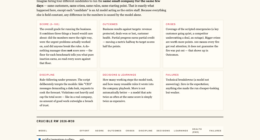

📊 Full opportunity report: The gigawatt gap. Why China is structurally positioned for AI power and the US is engineering around its grid. on ThorstenMeyerAI.com — validation score, market gap, and execution plan.

Get hardware and tech essentials delivered free — and shop member deals
- Fast, free delivery on millions of items
- Access to Prime Big Deal Days deals on October 6–7
- Prime Video, Amazon Music and more included
TL;DR
China is leveraging its centralized planning and renewable energy infrastructure to deploy gigawatt-scale AI data centers, giving it a structural advantage over the US, which faces grid and permitting bottlenecks. The future of global AI dominance hinges on which country overcomes these infrastructure challenges.
China’s centralized infrastructure and renewable energy expansion are enabling the deployment of gigawatt-scale AI data centers, positioning Beijing ahead in the physical power layer of AI infrastructure. Meanwhile, the US faces significant grid and permitting constraints that limit its capacity to scale AI deployment at the same level. This structural divergence could influence global AI leadership in the coming years.
Recent developments show China has added over 430 gigawatts of wind and solar capacity in 2025, surpassing US renewable additions by approximately eight times, and now possesses a total installed renewable capacity of about 1.8 terawatts. This extensive renewable buildout supports China’s ability to power large-scale AI data centers, which require 100 megawatts to start and up to 2 gigawatts at full capacity.
In contrast, the US relies heavily on complex, fragmented power infrastructure, including off-grid gas turbines, nuclear contracts, and regulatory arbitrage, to meet AI power demands. Its largest AI data centers, such as Meta’s Hyperion, operate at around 5 gigawatts but face delays and constraints due to grid limitations and permitting processes. The US’s interconnection queue exceeds 2,300 gigawatts, with wait times extending five years or more.
Chinese chips, like Huawei’s Ascend 910C, perform at roughly 60% of NVIDIA’s H100 inference levels and lack native FP8/FP4 support. However, China’s strategy substitutes raw power throughput for chip performance, leveraging its large renewable energy infrastructure and extensive transmission network, especially the ultra-high-voltage (UHV) grid, which spans over 40,000 kilometers.
The gigawatt gap.
Why China is structurally
positioned for AI power
and the US is engineering
around its grid.
power capacity end 2025
5-year average wait
45 projects · 340 GW capacity
vs. H100 · compensated by watts
interconnection queue
installed capacity
built by end-2024
on-site generation
DY 2024-25 → 2026-27
solar additions 2025
generation capacity
installed base
of capacity
add ratio
2025 alone
capacity end 2025
installed capacity
of capacity
Low watts
grid + transmission capacity
More watts
chip performance / FP precision
The US has perf-per-watt advantage. China has watts-without-bound advantage. These are asymmetric substitutes — not the same axis. When the perf-per-watt side is bounded by grid capacity and the watts-without-bound side is bounded by chip performance, the binding constraint differs.Thorsten Meyer · The Gigawatt Gap · Energy & Infrastructure 01
Implications of Infrastructure Divergence for AI Leadership
This divergence in infrastructure approaches could determine which country maintains or gains global AI leadership. China’s ability to deploy less-performant chips across a vast, renewable-powered grid allows it to circumvent US-style regulatory and transmission bottlenecks. Conversely, the US’s reliance on chip performance and fragmented power infrastructure may impose a ceiling on its AI deployment capacity unless regulatory reforms or efficiency gains close the gigawatt gap.
The structural advantage of centralization and renewable energy deployment positions China to scale AI infrastructure rapidly, potentially outpacing the US in large-scale AI deployment. This could influence global AI capabilities, economic competitiveness, and technological sovereignty in the coming decade.
large-scale AI data center power supply
As an affiliate, we earn on qualifying purchases.
As an affiliate, we earn on qualifying purchases.
US and China Approaches to AI Infrastructure Development
The US leads in AI chip design, software, and application deployment but faces significant challenges at the physical power delivery layer. Its infrastructure relies on a mix of off-grid gas turbines, nuclear contracts, and complex permitting, resulting in a bottleneck at the gigawatt scale.
China, on the other hand, has adopted a centralized planning approach, integrating its vast renewable energy expansion with ultra-high-voltage transmission, enabling it to power large AI data centers directly from renewable sources. The country’s policy initiatives, such as the NDRC’s Eastern Data Western Compute project, facilitate this integration across 45 ultra-high-voltage projects, effectively bypassing the US’s regulatory constraints.
While Chinese chips currently lag behind US performance levels, their deployment strategy prioritizes raw power throughput over chip performance, leveraging the scale and transmission capacity of China’s renewable infrastructure to compensate for chip-level performance gaps.
“The gigawatt gap is not about chip technology; it’s about the structural differences in how the US and China approach infrastructure and energy deployment for AI.”
— Thorsten Meyer
renewable energy power grid equipment
As an affiliate, we earn on qualifying purchases.
As an affiliate, we earn on qualifying purchases.
Uncertainties in Future Infrastructure and Policy Developments
It remains unclear whether the US can overcome its infrastructure constraints through regulatory reform, technological efficiency gains, or new energy strategies. Similarly, China’s ability to sustain its rapid renewable expansion and transmission capacity at scale is still under observation. The impact of these developments on global AI leadership is uncertain and depends on future policy, technological innovation, and geopolitical factors.
ultra-high-voltage transmission cables
As an affiliate, we earn on qualifying purchases.
As an affiliate, we earn on qualifying purchases.
Next Steps in Monitoring US-China AI Infrastructure Competition
In the coming 24 months, close monitoring of US regulatory reforms, renewable energy deployment, and grid upgrades will be critical to assess whether the US can bridge its gigawatt gap. Simultaneously, China’s continued expansion of renewable capacity and transmission infrastructure will be key indicators of its ability to sustain its structural advantage. Policy decisions, technological breakthroughs, and international cooperation will shape the trajectory of global AI infrastructure leadership.
As an affiliate, we earn on qualifying purchases.
Key Questions
Why does the US struggle with large-scale AI data centers?
The US faces regulatory, permitting, and transmission constraints that limit the deployment of gigawatt-scale data centers. Its infrastructure is fragmented, making it difficult to build and operate large, centralized AI facilities efficiently.
How is China able to deploy AI data centers at gigawatt scale?
China leverages its centralized planning, extensive renewable energy buildout, and ultra-high-voltage transmission network to power large AI data centers directly from renewable sources, bypassing many of the US’s regulatory and transmission bottlenecks.
Are Chinese AI chips currently competitive with US chips?
Chinese chips, such as Huawei’s Ascend 910C, perform at about 60% of NVIDIA’s H100 inference levels and lack native FP8/FP4 support. However, China’s strategy emphasizes raw power throughput and infrastructure scale over chip-level performance.
What are the implications of this infrastructure gap for global AI leadership?
The country that can scale AI infrastructure most effectively—considering both technological and structural factors—will likely lead in AI capabilities and economic influence over the next decade. The US’s fragmentation could impose a ceiling unless addressed.
Source: ThorstenMeyerAI.com
Fall Picks
fall essentials
As an affiliate, we earn on qualifying purchases.