Finding a reliable 3D printer suitable for daily use involves balancing consistency, ease of maintenance, and build quality. The Bambu Lab A1 stands out as the best overall choice for its ease of use and durability, making it ideal for frequent projects. The FlashForge AD5X offers excellent multi-color capabilities and high-speed printing for creative workflows. Meanwhile, the Creality Ender 3 V3 SE remains a favorite for those seeking affordability and proven reliability. Tradeoffs often involve balancing feature sets against ongoing maintenance and upfront costs. Continue reading for a detailed look at these options and more.

Get hardware and tech essentials delivered free with Prime
- Fast, free delivery on millions of items
- Prime Video, Amazon Music and more included
- Member-only deals all year
Complete the kit


Key Takeaways
- The top-ranked printers blend ease of use with consistent performance for daily tasks.
- Features like auto-leveling and high-speed printing significantly reduce setup time and increase productivity.
- Price varies widely; high-end models offer advanced features but may be less accessible for casual users.
- Build volume and material compatibility are key considerations for different use cases.
- Ongoing support and community backing influence long-term reliability and troubleshooting ease.
| Bambu Lab A1 3D Printer, Ready-to-Use FDM 3D Printer for Beginners and Kids |  | Best Overall for Ease and Precision | Product Dimensions: 21.76 x 20.83 x 12.87 inches | Item Weight: 22 pounds | VIEW ON AMAZON | See Our Full Breakdown | |
| FlashForge AD5X Multi-Color 3D Printer, CoreXY, 600mm/s High-Speed, Auto Leveling, 300°C Extruder, 220x220x220mm Build Volume | 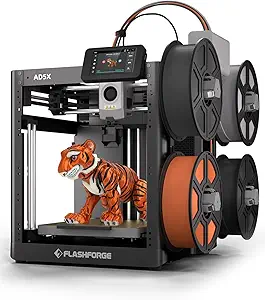 | Best for Rapid Prototyping and Multi-Color Detail | Build Volume: 220x220x220mm | Max Speed: 600mm/s | Extruder Temperature: 300°C | VIEW ON AMAZON | See Our Full Breakdown |
| Bambu Lab P1S 3D Printer |  | Best for Multi-Color and Multi-Material Enthusiasts | Color Capabilities: Up to 16 colors | Speed: 500mm/s | Auto Bed Leveling: Yes | VIEW ON AMAZON | See Our Full Breakdown |
| Snapmaker U1 3D Printer, 4-Toolhead with 5s Toolchanger, Multi-Color Printing |  | Best for Multi-Material, Detailed Prototypes | Product Dimensions: 22.6 x 13 x 14.2 inches | Item Weight: 59 pounds | Build Volume: 270 x 270 x 270 mm | VIEW ON AMAZON | See Our Full Breakdown |
| FLASHFORGE Adventurer 5M Pro 3D Printer with Auto Printing System |  | Best for High-Speed and Quiet Home Use | Product Dimensions: 16 x 14 x 18 inches | Item Weight: 22 pounds | Maximum Nozzle Temperature: 280°C | VIEW ON AMAZON | See Our Full Breakdown |
| Creality Ender 3 V3 SE 3D Printer Bundle with PLA Filament (Black, White, Red, Blue) |  | Best for Power Users Who Need Speed and Precision | Maximum Printing Speed: 250mm/s | Extruder: Full metal dual-gear “Sprite” | Auto Leveling: CR Touch sensor | VIEW ON AMAZON | See Our Full Breakdown |
| reliable 3d printer for daily use | Build Volume | Product Dimensions | Item Weight |
|---|---|---|---|
| Bambu Lab A1 3D Printer | — | 21.76 x 20.83 x 12.87 inches | 22 pounds |
| FlashForge AD5X Multi-Color 3D | 220x220x220mm | — | — |
| Bambu Lab P1S 3D Printer | — | — | — |
| Snapmaker U1 3D Printer | 270 x 270 x 270 mm | 22.6 x 13 x 14.2 inches | 59 pounds |
| FLASHFORGE Adventurer 5M Pro 3 | 220 x 220 x 220 mm | 16 x 14 x 18 inches | 22 pounds |
| Creality Ender 3 V3 SE 3D Prin | 220 x 220 x 250mm | — | — |
More Details on Our Top Picks
Bambu Lab A1 3D Printer, Ready-to-Use FDM 3D Printer for Beginners and Kids
This model stands out for its balance of speed, accuracy, and user-friendliness, making it ideal for those new to 3D printing or families. Unlike the FlashForge AD5X, which emphasizes high-speed prototyping, the A1 excels in precision and quiet operation, with automatic calibration reducing setup headaches. Its support for multi-color printing with the AMS lite adds versatility, though the extra cost for the module might be a barrier for budget-conscious users. Its large footprint could be a concern for limited spaces, but its intuitive touchscreen and reliable print quality make it a top choice for daily, reliable use at home or in classrooms.
Pros:- High-speed and precise printing with automatic calibration
- Supports multi-color printing with AMS lite
- Quiet operation with active noise canceling
- User-friendly touchscreen interface
Cons:- Requires additional purchase of AMS lite for multi-color
- Relatively large size may not fit small spaces
- Setup can be complex for first-time users
Best for: Beginners, parents, and educators seeking a straightforward, high-quality starter printer.
Not ideal for: Advanced users needing large build volumes or specialized materials like carbon fiber composites.
- Product Dimensions:21.76 x 20.83 x 12.87 inches
- Item Weight:22 pounds
- First Available:May 17, 2024
- Manufacturer:Shenzhen Tuozhu Technology Co., Ltd
Our verdict“This printer is perfect for beginners and families who prioritize ease of use, accuracy, and quiet operation for daily printing needs.”
FlashForge AD5X Multi-Color 3D Printer, CoreXY, 600mm/s High-Speed, Auto Leveling, 300°C Extruder, 220x220x220mm Build Volume
Compared with the Bambu Lab A1, the FlashForge AD5X prioritizes speed and multi-color versatility, making it ideal for quick turnarounds on detailed prototypes. Its auto leveling and smart features streamline setup, but its high-speed operation can sometimes compromise print quality if not properly calibrated, especially for complex multi-color jobs. The smaller build volume limits larger projects, yet its support for multiple nozzle sizes and rapid printing up to 600mm/s make it a strong choice for professionals needing fast, multi-color output. This model is less suited for beginners who prefer simplicity over speed and complex calibration.
Pros:- Supports up to 4 colors simultaneously
- High-speed printing up to 600mm/s
- Auto leveling and smart controls
- Supports multiple nozzle sizes
Cons:- Complex setup requiring technical knowledge
- Potential quality issues at high speeds without proper calibration
- Limited build volume for larger parts
Best for: Prototypers and designers needing fast, multi-color, multi-material output in small to medium sizes.
Not ideal for: Hobbyists seeking larger build volumes or users with limited technical experience due to complex setup.
- Build Volume:220x220x220mm
- Max Speed:600mm/s
- Extruder Temperature:300°C
- Auto Leveling:Yes
- Connectivity:Mobile app control
Our verdict“This printer is best suited for professionals needing rapid, multi-color prototypes in tight timelines, accepting some setup complexity.”
Bambu Lab P1S 3D Printer
The Bambu Lab P1S offers vibrant multi-color and multi-material capabilities, setting it apart from the AD5X’s speed focus by emphasizing versatility and ease of use. Its automatic bed leveling and quick setup support consistent quality, while its enclosed design helps manage fumes and temperature. Compared to the A1, it accommodates more colors and materials, but it doesn’t support carbon fiber reinforced filaments, limiting some advanced applications. Its high-speed printing and simple interface make it suitable for users who want variety without sacrificing reliability, though it’s less ideal for those needing larger print volumes or specialized materials.
Pros:- Supports up to 16 colors
- Automatic bed leveling
- Fast setup (15 minutes)
- Enclosed design for stable environment
Cons:- Not compatible with carbon/glass fiber filaments
- Limited to PLA, PETG, TPU, PVA, PET ABS, ASA
- May require Bambu Lab AMS for multi-color use
Best for: Artists, educators, and hobbyists interested in multi-color/multi-material projects with quick setup.
Not ideal for: Users needing large-scale prints or working with high-strength composites like carbon fiber.
- Color Capabilities:Up to 16 colors
- Speed:500mm/s
- Auto Bed Leveling:Yes
- Supported Filaments:PLA, PETG, TPU, PVA, PET ABS, ASA
- Setup Time:15 minutes
Our verdict“This model is ideal for users who prioritize multi-color, multi-material flexibility with straightforward operation and fast deployment.”
Snapmaker U1 3D Printer, 4-Toolhead with 5s Toolchanger, Multi-Color Printing
The Snapmaker U1 combines multi-material capabilities with rapid tool changes, making it particularly suitable for complex prototypes and functional parts. Its four toolheads and 5-second automatic toolchanger streamline multi-color and multi-material workflows better than the other options, like the P1S, which requires manual filament swaps. However, its weight and size are less convenient for portability, and the setup process can be daunting for newcomers. Its large build volume is advantageous for bigger projects, but the learning curve might deter casual hobbyists.
Pros:- Fast 5-second tool changes
- Supports multiple materials, reducing waste
- Large build volume
- Smart calibration features
Cons:- Heavy and less portable
- Complex initial setup
- Higher price point for non-professional users
Best for: Professionals or serious hobbyists creating detailed, multi-material prototypes requiring quick multi-color switching.
Not ideal for: Casual users or those with limited space, due to its weight and setup complexity.
- Product Dimensions:22.6 x 13 x 14.2 inches
- Item Weight:59 pounds
- Build Volume:270 x 270 x 270 mm
- Print Speed:up to 500 mm/s
- Warranty:1 year
Our verdict“This printer fits those demanding quick multi-material, multi-color production with a large workspace, accepting some complexity and cost.”
FLASHFORGE Adventurer 5M Pro 3D Printer with Auto Printing System
Compared to the U1 or P1S, the Adventurer 5M Pro emphasizes speed and quiet operation, making it ideal for home or classroom environments. Its high-speed 600mm/s printing outperforms many competitors, including the A1, especially when surface finish smoothness is a priority. Auto-leveling and quick-release nozzles simplify setup, but some users report calibration issues, which can impact reliability. The limited build volume may be restrictive for larger projects, yet its support for high-temperature filaments and smart controls offers flexibility for diverse materials. It’s a strong choice for frequent, fast printing in shared spaces, with some caveats about calibration precision.
Pros:- High-speed printing up to 600mm/s
- Quiet operation
- Auto leveling and quick-release nozzles
- Supports high-temp materials
Cons:- Some calibration issues reported
- Limited build volume
- Higher price for casual hobbyists
Best for: Home users, teachers, and small offices needing fast, quiet, reliable daily printing with high-speed capability.
Not ideal for: Users requiring large-scale prints or working with advanced composite materials like carbon fiber.
- Product Dimensions:16 x 14 x 18 inches
- Item Weight:22 pounds
- Maximum Nozzle Temperature:280°C
- Heated Bed Temperature:110°C
- Print Speed:600mm/s
- Build Volume:220 x 220 x 220 mm
Our verdict“This printer suits those who need speed and quiet operation for daily use in home or educational settings, with some tradeoffs in calibration and size.”
Creality Ender 3 V3 SE 3D Printer Bundle with PLA Filament (Black, White, Red, Blue)
The Creality Ender 3 V3 SE stands out for its impressive high-speed capability of up to 250mm/s, making it a compelling choice for those who prioritize quick turnarounds without sacrificing quality. Its upgraded “Sprite” direct extruder and dual Z-axis setup improve print stability and detail, positioning it above basic models like the FlashForge Adventurer 5M Pro, which emphasizes ease but not speed. Compared to the Bambu Lab A1, the Ender 3 V3 SE offers a more customizable platform, though it requires more technical skill during setup, especially with features like auto leveling using the CR Touch sensor. The bundle’s inclusion of four filament packs adds value for immediate printing, but the complex setup and limited filament compatibility might deter less experienced users. This pick is ideal for hobbyists or professionals who need fast, accurate prints and are comfortable with some assembly and calibration.
Pros:- High-speed printing capability up to 250mm/s for faster production
- Enhanced stability with dual Z-axis design
- Auto leveling with CR Touch sensor simplifies calibration
- Includes multiple filament colors for diverse projects
Cons:- Complex setup process may overwhelm users unfamiliar with calibration
- Limited filament compatibility restricts material choices
- No enclosed build chamber, which affects temperature control for certain prints
Best for: Power users, experienced hobbyists, or small studios needing fast, high-precision prints with flexible filament options.
Not ideal for: Beginners or users seeking plug-and-play simplicity; the setup process is more involved and requires technical know-how.
- Maximum Printing Speed:250mm/s
- Extruder:Full metal dual-gear “Sprite”
- Auto Leveling:CR Touch sensor
- Z-axis:Dual Z-axis lead screws
- Included Filaments:4 packs of PLA (Black, White, Red, Blue)
- Build Volume:220 x 220 x 250mm
- Frame Material:Metal
- Connectivity:SD card, USB
- Display:LCD touchscreen
Our verdict“This model suits experienced users who need rapid, precise printing and are comfortable with technical setup.”

How We Picked
The selection process focused on evaluating each printer’s reliability, usability, build quality, and maintenance demands. I prioritized models known for consistent performance over time, especially under frequent use. Additional factors included ease of setup, auto-calibration features, print quality, and value for money. The ranking favors printers that balance durability with user-friendly features, making them suitable for daily, repetitive tasks. Models with proven track records and good support networks scored higher, ensuring that buyers invest in reliable tools for consistent results.Factors to Consider When Choosing Reliable 3d Printer For Daily Use
When choosing a reliable 3D printer for daily use, it’s important to look beyond initial features and consider the long-term implications of your purchase. A machine that is easy to maintain, offers consistent output, and is supported by a robust community can save time and reduce frustration. Price is a factor, but investing in a slightly higher-quality model often pays off through durability and fewer breakdowns. Compatibility with common filaments and ease of troubleshooting are also critical for daily productivity. Keep these considerations in mind to find a printer that truly fits your ongoing needs.Ease of Use and Setup
For daily use, a printer that is simple to set up and operate saves time and reduces errors. Features like auto-leveling beds, touchscreen controls, and straightforward filament loading are advantageous. Avoid models with complicated calibration procedures or steep learning curves, as they can hinder productivity over time. A user-friendly interface often correlates with better support and documentation, which is invaluable for ongoing maintenance and troubleshooting.
Build Quality and Durability
Durability is paramount for a machine that will see regular use. Look for sturdy frames, high-quality components, and reliable motors. Cheaper models might save money upfront but often require more repairs or replacements, leading to higher long-term costs. A well-constructed printer can handle continuous operation without frequent breakdowns, which is essential for both hobbyists and professionals relying on consistent output.
Print Quality and Consistency
Consistent print quality reduces waste and time spent on reprints. Pay attention to layer resolution, extrusion stability, and filament compatibility. An auto-calibration feature can maintain quality over long print runs, especially important for complex or large projects. Remember, a cheaper printer that produces uneven results regularly can negate the initial savings and cause frustration.
Material Compatibility
Choosing a printer that supports a wide range of filaments, such as PLA, ABS, PETG, or flexible materials, increases versatility for daily projects. Some models are limited to PLA or have temperature restrictions that limit material options. Consider your typical use cases and select a machine that can handle the materials you plan to work with regularly, avoiding future upgrades or replacements.
Support, Community, and Upgradability
Long-term reliability depends heavily on available support and an active user community. A well-supported model offers easier troubleshooting, firmware updates, and accessories. Upgradability options, such as modular parts or firmware enhancements, can extend the lifespan of your printer, ensuring it remains a reliable tool for daily use. Avoid models with limited documentation or poor customer service, as these can lead to prolonged downtime.
Frequently Asked Questions
How often should I calibrate my 3D printer for daily use?
Calibration frequency depends on usage and the model, but for daily use, it’s wise to check auto-leveling features before each print or at least weekly. Regular calibration ensures consistent print quality and reduces filament waste. Many modern printers include automatic bed leveling, which simplifies this process significantly, but manual checks can help catch issues early. Proper calibration can extend the lifespan of your printer by preventing mechanical strain or misalignments.
Can I use cheaper filament with a reliable 3D printer for daily use?
While many reliable printers support a range of filament qualities, using cheap filament can lead to print failures, clogs, or uneven layers, especially during frequent use. Investing in higher-quality filament often results in better adhesion, fewer jams, and more consistent results. However, a well-built printer with good extrusion control can sometimes handle budget filaments better, but expect some tradeoffs in print quality and reliability.
Is auto-leveling necessary for a reliable daily 3D printer?
Auto-leveling greatly reduces manual setup time and helps maintain consistent print quality over time. For daily use, it minimizes the risk of failed prints due to uneven beds, especially if you print multiple times a week. While manual leveling can work, it requires more skill and regular attention, which may be impractical for busy schedules. Many high-quality models include auto-leveling, making them a better choice for ongoing reliability.
How important is print volume for daily projects?
Print volume determines the maximum size of your projects and can influence workflow efficiency. Larger volumes are beneficial if you frequently produce big parts or multiple smaller items in one session. However, larger printers tend to be more expensive and may require more maintenance. For most daily use scenarios, a moderate size offers a good balance, enabling flexibility without compromising ease of handling or increasing downtime.
Should I prioritize speed over print quality for daily use?
Speed is tempting, but for reliable, daily printing, consistent quality often matters more. High speeds can cause vibrations, layer misalignments, or detail loss, especially with less robust machines. Many reliable printers include high-speed modes that still maintain good quality, but pushing for maximum speed typically increases the risk of defects. A balanced approach—speed with a focus on quality—tends to produce the best long-term results for daily tasks.
Conclusion
For general daily use, the Bambu Lab A1 earns the title of best overall due to its ease of use, reliability, and support. Those on a budget might prefer the Creality Ender 3 V3 SE for proven performance at a lower price point. Professionals or heavy users should consider the FlashForge AD5X for multi-color capabilities and faster workflows, while beginners will find the FLASHFORGE Adventurer 5M Pro straightforward and reliable. For advanced users seeking versatility, the Snapmaker U1 offers multi-tool functionality. Your choice depends on your specific needs, but prioritizing build quality and support will pay off in daily reliability.Evergreen bestsellers Picks

Dyson Big Ball Multi Floor Canister Vacuum, Yellow

KitchenAid Artisan 5-Qt Tilt-Head Stand Mixer – Almond Cream (KSM150PS)

Dreame X60 Max Ultra Complete Robot Vacuum and Mop
As an affiliate, we earn on qualifying purchases.