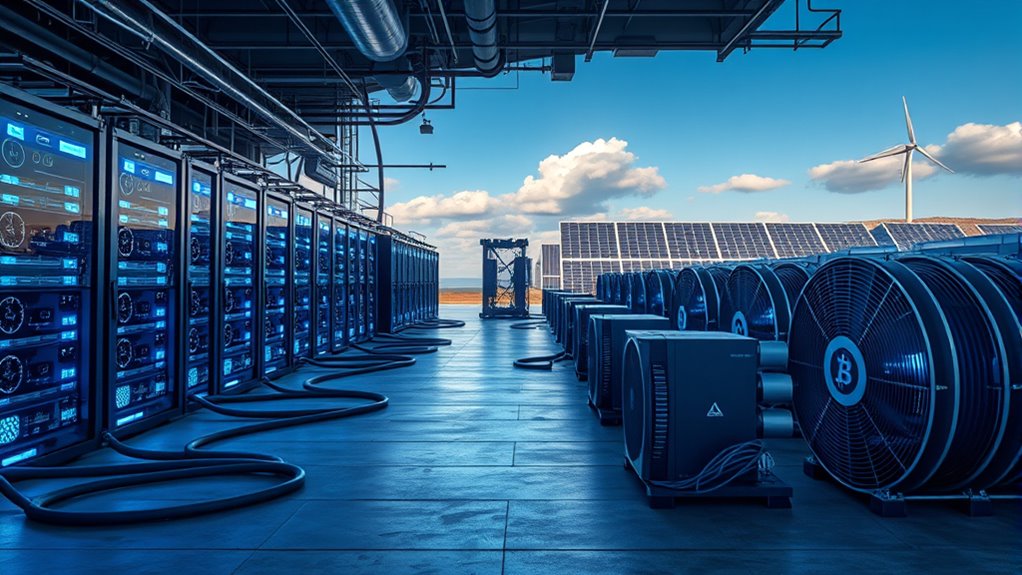

Bitcoin’s environmental impact is notable due to its high energy use, often relying on fossil fuels and contributing to greenhouse gases. However, efforts to mitigate this include shifting towards renewable energy sources like wind, solar, and hydropower, which lower the carbon footprint. Some miners invest in carbon offset initiatives and benefit from government incentives. If you’re interested, you’ll discover how industry innovations are making Bitcoin mining greener and more sustainable.

Get hardware and tech essentials delivered free — and shop member deals
- Fast, free delivery on millions of items
- Access to Prime Big Deal Days deals on October 6–7
- Prime Video, Amazon Music and more included
Key Takeaways
- Bitcoin mining consumes significant energy, often sourced from fossil fuels, leading to high greenhouse gas emissions.
- Adoption of renewable energy like wind and solar reduces Bitcoin’s carbon footprint.
- Carbon offset projects, such as reforestation, help compensate for mining-related emissions.
- Economic incentives and policy support encourage miners to utilize renewable energy sources.
- Locating mining farms near renewable resources and advanced technologies promotes sustainable practices.
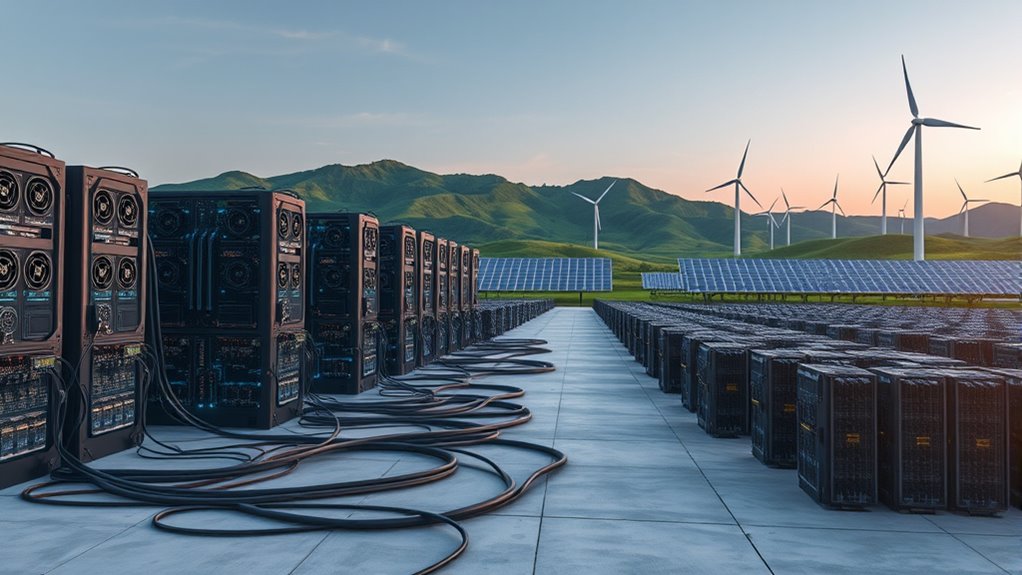
Bitcoin has come under increasing scrutiny for its environmental impact, primarily due to the significant energy consumption required for mining operations. As miners chase after the rewards, they often use vast amounts of electricity, much of which comes from fossil fuels, contributing to greenhouse gas emissions. However, there’s a growing shift toward integrating renewable energy sources into mining activities. You might not realize it, but some miners are now powering their operations with wind, solar, or hydropower, significantly reducing their carbon footprint. This move toward renewables helps mitigate the environmental concerns associated with Bitcoin mining, aligning the industry closer to sustainable practices.
Some miners are now using wind, solar, and hydropower to reduce Bitcoin’s environmental impact.
You can also play a part in reducing Bitcoin’s environmental impact by supporting initiatives that use carbon offsets. These offsets essentially compensate for the emissions generated by mining activities by investing in projects that remove or reduce an equivalent amount of CO2 elsewhere. For example, investing in reforestation projects or renewable energy development helps balance out the carbon footprint of mining operations. When miners adopt carbon offset programs, they demonstrate a commitment to responsible sustainability, which can help improve public perception and encourage further eco-friendly innovations within the industry.
Many industry players recognize that shifting to renewable energy isn’t just good for the environment; it can also be economically advantageous. Solar or wind-powered mining farms often enjoy lower operational costs once established, making them more sustainable long-term. Governments and private organizations are increasingly offering incentives for renewable energy adoption, creating a more favorable environment for eco-conscious mining operations. This movement not only reduces emissions but also diminishes reliance on volatile fossil fuel markets, providing greater stability for miners and investors alike.
It’s essential that you stay informed about these developments, as the future of Bitcoin’s environmental footprint hinges on continued innovation and commitment to sustainability. Supporting miners and companies that prioritize renewable energy and carbon offsets can influence the industry toward greener practices. As the industry evolves, expect more advanced solutions like using excess renewable energy or locating mining farms in regions with abundant hydropower. These strategies can further lessen Bitcoin’s environmental impact, making it a more sustainable asset for your portfolio.
Ultimately, reducing Bitcoin’s environmental footprint requires collective effort. By encouraging and supporting renewable energy adoption and carbon offset initiatives, you help push the industry toward a more sustainable future. Your choices can influence miners, developers, and policymakers to prioritize environmentally friendly practices, ensuring that Bitcoin’s growth doesn’t come at the planet’s expense. With continued innovation and commitment, it’s possible to enjoy the benefits of Bitcoin while minimizing its ecological footprint. Supporting renewable energy adoption is a crucial step toward a greener blockchain industry.
solar-powered Bitcoin mining rig
As an affiliate, we earn on qualifying purchases.
As an affiliate, we earn on qualifying purchases.
Frequently Asked Questions
How Does Bitcoin’s Energy Consumption Compare to Traditional Banking Systems?
You’ll find Bitcoin’s energy consumption is higher than traditional banking systems, mainly due to its energy-intensive mining process. While banks use energy for data centers and transactions, Bitcoin’s proof-of-work method demands significant electricity, increasing its carbon footprint. Despite some efforts to improve energy efficiency, Bitcoin’s current footprint remains larger, highlighting the need for sustainable practices to reduce its environmental impact and make it more comparable to traditional banking systems.
What Are the Most Promising Renewable Energy Sources for Bitcoin Mining?
Think of renewable energy sources for Bitcoin mining as a shining beacon. Solar integration stands out, allowing you to harness abundant sunlight efficiently. Hydroelectric potential is equally promising, providing a steady, clean power supply from flowing water. Both options reduce environmental impact considerably, making your mining operations more sustainable. By focusing on these sources, you can lower carbon footprints and promote greener crypto practices, aligning your efforts with global sustainability goals.
How Can Individual Miners Reduce Their Environmental Impact?
You can reduce your environmental impact by switching to renewable energy sources like solar or wind for your mining operations. Additionally, you should consider carbon offsetting by investing in projects that absorb or reduce emissions. Using energy-efficient hardware also helps lessen your carbon footprint. Combining these strategies allows you to mine more sustainably, minimizing harm to the environment while supporting cleaner, renewable energy initiatives.
What Policies Are Governments Implementing to Regulate Bitcoin’s Environmental Footprint?
Governments are implementing policies like strict environmental regulations and incentivizing carbon offsetting to reduce Bitcoin’s environmental impact. You can expect regulations that require miners to use renewable energy sources or limit emissions. Some governments also promote carbon offsetting programs, encouraging miners to invest in projects that absorb or reduce carbon emissions. These measures aim to make Bitcoin mining more sustainable, so you play a part in supporting environmentally responsible practices.
Are There Innovative Technologies Emerging to Make Bitcoin Mining More Sustainable?
You might be surprised to learn that innovative technologies are emerging to make Bitcoin mining more sustainable. Green algorithms optimize energy use, reducing overall power consumption, while carbon capture technologies help sequester emissions from mining operations. Imagine a future where miners harness renewable energy sources, like solar or wind, paired with these advancements—creating a stark contrast between traditional energy-intensive mining and eco-friendly, sustainable practices that protect our planet.
wind energy Bitcoin mining equipment
As an affiliate, we earn on qualifying purchases.
As an affiliate, we earn on qualifying purchases.
Conclusion
While Bitcoin’s environmental impact is significant, it’s not beyond repair. You can choose to support greener mining practices or advocate for renewable energy use in the industry. Every small action counts toward reducing its carbon footprint. So, aren’t you curious to see how your choices can influence a more sustainable crypto future? Together, we can make a difference—one transaction at a time.
As an affiliate, we earn on qualifying purchases.
carbon offset reforestation project
As an affiliate, we earn on qualifying purchases.
As an affiliate, we earn on qualifying purchases.
Fall Picks
fall essentials
As an affiliate, we earn on qualifying purchases.