
Blockstream’s satellite upgrade lets you receive the Bitcoin blockchain directly via geostationary satellites, meaning you can access and verify transactions without relying on traditional internet infrastructure. This technology provides censorship resistance and enhanced privacy, especially in remote or restricted areas. It’s compatible with inexpensive satellite dishes and works alongside Bitcoin Core software. If you want to understand how this system creates a more resilient and accessible Bitcoin network, keep exploring the details.
Key Takeaways
- Blockstream’s satellite network broadcasts the Bitcoin blockchain globally via geostationary satellites.
- The upgrade enhances coverage, reliability, and accessibility for Bitcoin nodes without traditional internet.
- Satellite signals enable secure, censorship-resistant Bitcoin transactions and blockchain synchronization.
- Ground stations use inexpensive satellite dishes, enabling cost-effective, decentralized connectivity.
- The system supports future features like encrypted messaging and offline Bitcoin transactions.

Bitcoin in space is revolutionizing how we access and secure the cryptocurrency network. Thanks to Blockstream Satellite, the Bitcoin blockchain now broadcasts globally via geosynchronous satellites, covering the entire planet. These satellites orbit roughly 35,786 km above Earth, providing a wide coverage area that allows you to receive Bitcoin data regardless of your location. You can connect to this network with a small satellite dish and a USB receiver, which pick up signals from the satellites and deliver blockchain data directly to your device. Multiple ground stations, called teleports, work together to form a network ring. This setup ensures redundancy and prevents network partitioning, so even if one teleport or ground station experiences issues, others maintain the flow of data.
This satellite service is a game-changer, especially in areas lacking reliable internet. You no longer depend on traditional internet infrastructure, which can be slow, expensive, or vulnerable to disruptions. If undersea cables are cut or local infrastructure fails, you can still sync with the Bitcoin network using satellite signals. Also, receiving blockchain data via satellite doesn’t cost bandwidth like broadband connections do, making it accessible and cost-effective. This setup enhances your ability to use Bitcoin in remote or censored regions around the world, where internet restrictions or outages are common. Internet not required, which means you can participate in the network without traditional connectivity.
Security and censorship resistance see considerable improvements with satellite use. Since you only passively receive data—not broadcast back—you gain plausible deniability. It becomes harder for governments or ISPs to distinguish whether you’re just watching satellite TV or receiving Bitcoin blocks. In restrictive regimes, this can protect your activity from detection, sanctions, or shutdowns. You’re less vulnerable to government-imposed connectivity restrictions or censorship efforts, making your Bitcoin activities more resilient. Integrating satellite technology also increases the network’s overall decentralization, reducing reliance on centralized internet infrastructure.
Setting up the system is straightforward. You aim a small satellite dish using location-specific azimuth and elevation data, then lock onto signals from the geosynchronous satellites. The hardware is compatible with inexpensive existing satellite TV equipment, and the node software—based on Bitcoin Core—supports satellite-only operations. You can monitor and manage your satellite data reception through command-line interface commands, ensuring your node stays synchronized.
Beyond just syncing the blockchain, the satellite infrastructure opens new possibilities. Encrypted messages can be sent over satellite using Lightning Network microtransactions, enabling secure, internet-independent communication and transactions. These innovations could expand Bitcoin’s use in offline environments, remote areas, or under oppressive regimes. While the technology still evolves, it’s clear that satellite-based Bitcoin connectivity markedly enhances network resilience, decentralization, and privacy, shaping a more accessible and censorship-resistant future for cryptocurrency.
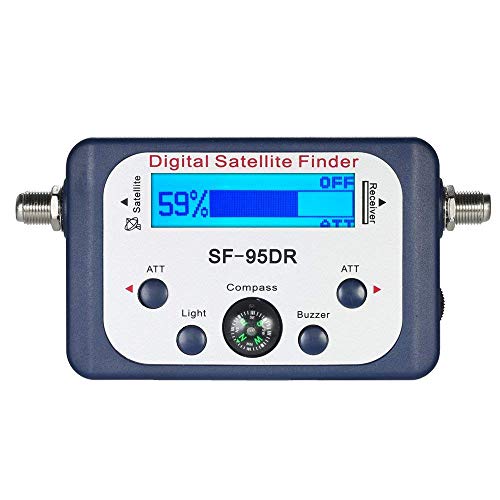
AGPtek Digital Satellite Signal Finder Meter for Dish Network Directv FTA with Compass and Audio Tone – Blue
High Quality Component: and professional design; Designed with a compass for easier and quicker tuning. Powered by the…
As an affiliate, we earn on qualifying purchases.
As an affiliate, we earn on qualifying purchases.
Frequently Asked Questions
How Does Satellite Communication Affect Bitcoin Transaction Security?
Satellite communication enhances your Bitcoin transaction security by enabling passive data reception, making it harder for others to detect your activity. It also allows offline transactions, reducing exposure to online hacking threats. With satellite links, your data stays private and resistant to censorship. You can synchronize your node securely without relying on internet, ensuring continuous access and reducing risks of interception, tampering, or targeted censorship, therefore strengthening your overall transaction security.
Can Satellite Coverage Be Hacked or Intercepted?
You might wonder if satellite coverage can be hacked or intercepted. The answer is yes; signals transmitted between satellites and ground stations are vulnerable in transit. Skilled adversaries can intercept, reroute, or copy these signals using advanced antennas and decryption tools. While encryption helps protect data, metadata and traffic patterns can still be analyzed. To stay secure, you need strong encryption, regular updates, and vigilant monitoring of satellite signals.
What Are the Costs Involved in Using Blockstream’S Satellite Service?
Think of the costs like planting seeds—small investments grow into bigger opportunities. You can receive Bitcoin blockchain data for free with just a simple antenna and USB receiver. If you want to broadcast custom data, costs are now much lower, starting at just 1 millisatoshi per byte, with a minimum fee of 1,000 millisatoshis. Hardware is a one-time expense, and micropayments make sending multimedia or large files affordable.
How Does Satellite Connectivity Impact Bitcoin’S Decentralization?
You might think satellite connectivity could centralize Bitcoin, but it actually enhances decentralization. It allows you to access the network in remote areas, bypassing traditional internet restrictions and censorship. With global coverage and redundant systems, satellite links strengthen network resilience. Plus, you don’t need expensive infrastructure—just a simple setup—making participation easier worldwide. Overall, satellites promote a more inclusive, resilient, and censorship-resistant Bitcoin network, boosting decentralization rather than hindering it.
Are There Plans to Expand Satellite Coverage Globally?
Thinking of the horizon like a canvas, you might wonder if satellite coverage will ever truly encompass the entire world. Currently, plans aim for worldwide coverage, building on recent expansions across continents. While full global reach hasn’t been officially declared, ongoing efforts and future experiments suggest you’re moving closer to a truly connected world. So, yes, expanding satellite coverage globally is an active goal, bringing Bitcoin access to every corner of the Earth.
USB satellite receiver for blockchain data
As an affiliate, we earn on qualifying purchases.
As an affiliate, we earn on qualifying purchases.
Conclusion
So, now you see how Blockstream’s satellite upgrade takes Bitcoin’s reach beyond Earth’s borders, making transactions faster and more resilient—even in a world where you might be sipping a latte on Mars someday. It’s like having a secret agent network, but for your digital currency. With this tech, you’re truly part of a universe where financial freedom knows no gravity. The future’s bright, and it’s just a rocket ride away.
AGPtek Digital Satellite Signal Finder Meter for Dish Network Directv FTA with Compass and Audio Tone – Blue
High Quality Component: and professional design; Designed with a compass for easier and quicker tuning. Powered by the…
As an affiliate, we earn on qualifying purchases.
As an affiliate, we earn on qualifying purchases.

Satellite Communications
As an affiliate, we earn on qualifying purchases.
As an affiliate, we earn on qualifying purchases.