📊 Full opportunity report: AMD Acquires Taalas To Explore Models Etched Directly In Silicon on IdeaNavigator AI — validation score, market gap, and execution plan.

Get hardware and tech essentials delivered free with Prime
- Fast, free delivery on millions of items
- Prime Video, Amazon Music and more included
- Member-only deals all year
TL;DR
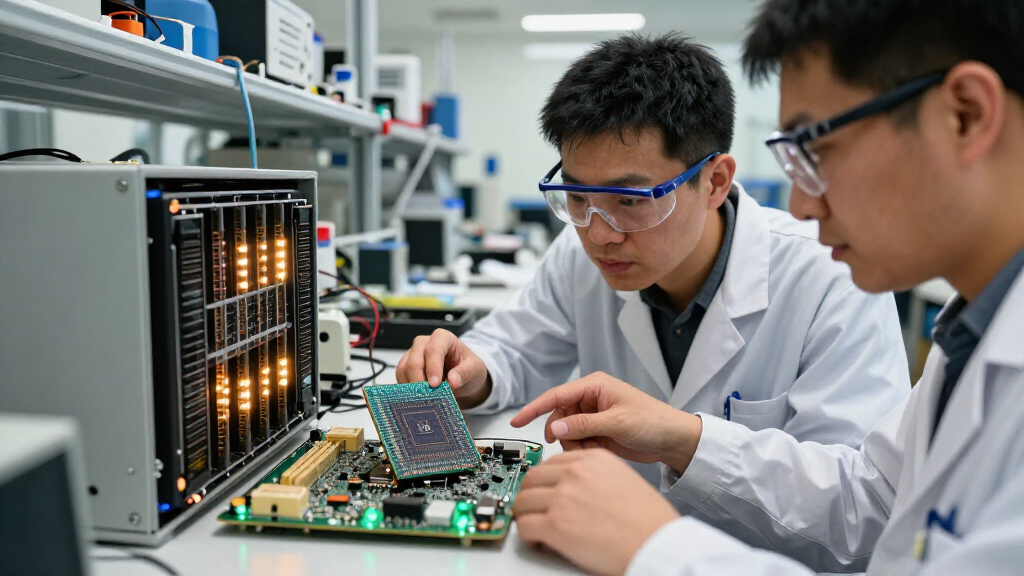
IdeaNavigator AI reports that AMD acquired Taalas, a development that could give AMD a way to explore placing AI models directly into silicon. The available information does not establish the deal’s terms, Taalas’s technology details, or AMD’s plans for using it.
AMD has acquired Taalas in a deal described as a way to explore AI models etched directly into silicon, according to IdeaNavigator AI. The report frames the acquisition around improving AI inference performance, but does not provide transaction details or confirm what AMD plans to build or release.
The item characterizes Taalas’s approach as placing models directly into silicon rather than relying only on conventional software running on general-purpose hardware. That description points to a hardware-focused effort to accelerate inference—the process of running a trained AI model to produce outputs. The item does not explain Taalas’s design, identify a specific chip or model, or give performance measurements.
No purchase price, closing date, or deal terms are provided. The report also does not identify Taalas’s leadership, employees, existing products, or whether its technology will be integrated into AMD’s current processors and accelerators. Accordingly, the acquisition is the reported development; its technical and commercial implications remain unverified in the material available here.
IdeaNavigator AI presents the development as relevant to people deploying AI tools, but it offers no direct AMD statement, Taalas statement, regulatory filing, or independent technical evaluation. There is no confirmed announcement of a product, customer rollout, production schedule, or change to AMD’s public roadmap in the supplied information.
AMD acquires Taalas to explore silicon based AI
IdeaNavigator AI reports that AMD acquired Taalas to explore placing AI models directly into silicon. The deal’s terms, technology details, and AMD’s plans remain unconfirmed.
What the report says
The reported acquisition points to interest in specialized hardware for running AI models.
The report describes Taalas’s approach as placing models directly into silicon.
The stated aim is to improve inference, the process of running a trained model to produce outputs.
Potential tradeoffs
Specialized silicon may involve different choices from software running on general purpose hardware.
- Could target particular operations or models.
- May offer another route to faster or more efficient inference.
- How models would be updated or supported.
- Whether practical gains depend on workloads, manufacturing, or design.
What remains unknown
The available report provides no company statements or independent technical evaluation.
| Area | Available information |
|---|---|
| Deal | No price, closing date, or terms |
| Technology | No chip details or performance measurements |
| Products | No rollout, schedule, or roadmap change confirmed |
What buyers should watch
Technical and product details would clarify whether this leads to a commercial offering.
- AMD or Taalas confirmation
- Transaction and technology details
- Prototype, benchmark, customer test, or product schedule
Potential Impact on AI Inference Hardware
If the reported acquisition is intended to advance model-specific silicon, it could add another route for AMD to pursue faster or more efficient AI inference. Encoding aspects of a model into hardware may, in principle, reduce some work normally handled by software and general-purpose processors. Whether that approach produces practical gains depends on design choices, workloads, manufacturing, and the ability to update or support models over time.
For companies choosing AI infrastructure, the immediate significance is limited: no measured performance, cost, power use, or availability data is included. The acquisition does not by itself show that AMD’s existing products have changed or that customers should alter deployment plans. It does, however, signal a reported interest in specialized hardware as competition continues over the speed and cost of running AI systems.
Operations teams evaluating AI services may eventually care if the work leads to different inference prices, response times, or hardware requirements. Those effects are not established yet. Until AMD or Taalas provides technical and product information, the development is best treated as a possible research or product direction, not a confirmed change in what buyers can use.
Products Worth Considering

Apple MacBook Pro 16.2-inch with M5 Pro, 18-core CPU, 20-core GPU, 64GB Memory, 1TB SSD, Space Black

LG UltraGear 32GS60QC-B 32-inch Curved QHD Gaming Monitor (180Hz, 1ms, 1000R, AMD FreeSync, HDR10)

Apple MacBook Pro 14-inch (2021) – M1 Pro Chip, 10-Core CPU, 16-Core GPU, 16GB RAM, 1TB SSD, Space Gray
As an affiliate, we earn on qualifying purchases.
From Model Software to Silicon
AI inference is commonly run on processors designed to handle many kinds of computing tasks. A more specialized design can target particular operations or models, potentially trading flexibility for speed or efficiency. The description of Taalas’s approach as models etched into silicon suggests a focus on that specialization, though the supplied report does not spell out what “etched” means technically or how the system would work.
That distinction matters because software models can be revised and deployed across compatible hardware, while a model-specific silicon approach could involve different constraints on updates, supported workloads, and production. These are general considerations, not confirmed characteristics of Taalas’s technology. The report gives no information about whether a model would be fixed in a chip, how changes would be handled, or what parts of the system would remain programmable.
The available item describes the acquisition as an opportunity for AMD to boost inference performance, but provides no earlier Taalas announcements or AMD product timeline to establish how the deal fits into a particular roadmap. The only concrete development presented is the reported acquisition and its stated connection to silicon-based models.
Deal Terms and Technology Details
Key details remain unconfirmed in the available reporting. It does not state when the acquisition occurred, whether it has closed, how much AMD paid, or whether Taalas will operate as a separate group. No named spokesperson or direct statement from either company is included.
The technical claims also lack supporting measurements or descriptions. There is no disclosed chip architecture, inference benchmark, power comparison, manufacturing plan, supported model, or explanation of how model updates would work. It is also unclear whether the effort is research-stage, intended for an AMD product, or aimed at a longer-term technology program. Without company confirmation or technical documentation, claims about the scale of any performance improvement should be treated as unestablished.
Awaiting AMD’s Product and Deal Details
The next useful developments would be confirmation from AMD or Taalas, details of the transaction, and an explanation of the technology’s status. Any announced prototype, benchmark, customer test, or product schedule would help clarify whether the acquisition is focused on research or a commercial offering.
Until those details appear, customers and operations teams have no confirmed product change to act on. Readers should watch for company announcements and technical evidence before drawing conclusions about performance, cost, or deployment timelines. The supplied information does not name a scheduled announcement or milestone.
Source: IdeaNavigator AI
Key Questions
What did AMD reportedly acquire?
IdeaNavigator AI reports that AMD acquired Taalas. The available item does not describe Taalas in detail or provide transaction terms.
What does it mean to etch AI models into silicon?
The report uses that phrase to describe a hardware-focused approach to running AI models. It does not provide a technical explanation of Taalas’s design, so the precise implementation is unclear.
Has AMD confirmed a performance improvement?
No benchmark or measured improvement is included. The item describes the acquisition as aimed at boosting inference performance, but that intended benefit is not demonstrated with data.
When will products based on Taalas technology be available?
No product, release date, or customer rollout is specified in the available information. AMD’s plans and any commercial timeline remain unclear.
Source: IdeaNavigator AI