
🔍 Read the full analysis: Google Adds Two AI Chips: What A Second Nvidia Alternative Could Mean For You on ThorstenMeyerAI.com

Get hardware and tech essentials delivered free with Prime
- Fast, free delivery on millions of items
- Prime Video, Amazon Music and more included
- Member-only deals all year
TL;DR
Google announced two additions to its eighth-generation TPU lineup: TPU 8tx for confidential inference and TPU 8i Max for workloads with very long inputs. Google says both are due in 2027, but has not published prices or independent benchmark results.
Google announced two new eighth-generation TPU systems on November 9: TPU 8tx, designed for confidential AI inference, and TPU 8i Max, intended to handle very long inputs. The additions give cloud customers more specialised options beyond Nvidia GPUs, but neither system is available yet; Google says they are due in 2027.
TPU 8tx is based on the same silicon as Google’s TPU 8t training system, but is configured for confidential computing. Google says it can protect sensitive data and model weights while they are being processed, and claims up to two times lower latency than TPU 8t with a near-zero performance penalty. The company is targeting regulated businesses and government workloads. These are Google’s claims; independent testing has not been reported.
TPU 8i Max pairs two TPU 8i chips in one package. Google says the system doubles the standard TPU 8i’s compute, on-chip SRAM and high-bandwidth memory bandwidth, while fitting within the existing rack footprint. It is aimed at tasks involving large context windows, such as processing extensive codebases or long video. Google has not published absolute performance or memory figures for either new system.
Google’s chip chief, Amin Vahdat, told Bloomberg the variants are not entirely new silicon designs, but systems reconfigured around customer needs. Google’s TPU product page lists all four eighth-generation systems as “Coming soon.” The company has not announced prices or availability by cloud region.
Google Adds Two AI Chips: What Buyers Need to Know
Google’s new TPU systems target confidential inference and very long inputs. Their 2027 launch plans expand cloud options, but pricing and independent performance evidence are still missing.
Two systems, two bottlenecks
Each configuration is designed for a distinct cloud workload.
TPU 8tx
Google says it protects sensitive data and model weights while processing them, targeting regulated businesses and government workloads.
TPU 8i Max
Pairs two TPU 8i chips in one package for workloads such as extensive codebases or long video.
What buyers can weigh today
- More specialised options beyond Nvidia GPUs
- Confidential computing for sensitive workloads
- More compute and memory resources for long inputs
- No announced prices or exact release dates
- No regional availability details
- No independent benchmarks for either new system
The path from announcement to access
Pricing, specifications, regions and customer access are still to come.
Google says both variants are due in 2027; Oracle also plans to offer Google TPUs from calendar year 2027.
Independent tests can help assess performance, costs and migration needs against alternatives.
More Choices for AI Cloud Buyers
The announcement matters to organisations looking for alternatives to Nvidia-based AI infrastructure. Google says nearly 100 customers use its TPUs, while Alphabet has described its AI chip supply as constrained. A second supplier or system option can give buyers more flexibility and may strengthen their negotiating position, though the announcement alone does not establish how costs or access will compare.
The two variants target distinct bottlenecks. Confidential computing could appeal to organisations that cannot process sensitive workloads without safeguards while data is in use. TPU 8i Max focuses on memory and bandwidth for lengthy inputs, rather than simply claiming a faster chip for every task. For customers, the practical question will be whether those features improve performance on their own models and workloads.
Moving from Nvidia GPUs to TPUs is not automatic. Companies may need to adapt software, test performance and retrain engineering teams. Google points to support for PyTorch, Hugging Face models and inference engines including vLLM and SGLang, but software compatibility does not establish equal performance or remove migration costs. Buyers will need independent comparisons and real availability before judging the systems against alternatives.
Products Worth Considering

Apple MacBook Pro 16.2-inch with M5 Pro, 18-core CPU, 20-core GPU, 48GB Memory, 2TB SSD, Space Black
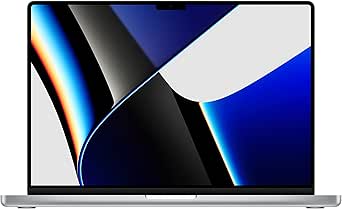
Apple MacBook Pro 16-inch (2021), M1 Pro, 10-core CPU, 16-core GPU, 16GB RAM, 512GB SSD, Silver
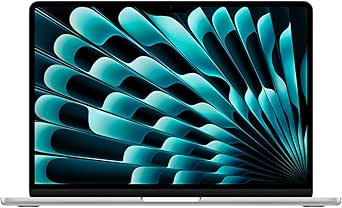
Apple MacBook Air 13-inch Laptop with M5 Chip, 16GB Memory, 512GB SSD, Liquid Retina Display, and 12MP Center Stage Camera (2026, Silver)
As an affiliate, we earn on qualifying purchases.
How Google Split Its TPU Lineup
Google introduced the first two eighth-generation systems at its Cloud Next conference on April 22, 2026. TPU 8t is designed for model training, while TPU 8i is designed for inference, the process of running a trained model to produce responses. The November announcement adds confidential-computing and long-context configurations, bringing the year’s total to four TPU systems.
Google’s April technical post gave specifications for the base systems. TPU 8t has 216 GB of high-bandwidth memory and 6,528 GB/s of memory bandwidth. TPU 8i has 288 GB of that memory and 8,601 GB/s of bandwidth, alongside more on-chip SRAM but lower stated peak compute. Google says TPU 8i Max doubles several TPU 8i resources, but has not released its absolute figures.
Google also claims the base TPU 8t improves performance per dollar by up to 2.7 times over its previous generation for large-scale training, and that TPU 8i improves that measure by up to 80% for inference. Those figures are vendor comparisons, not independent benchmarks of the new variants. Oracle has said it plans to offer Google TPUs in its cloud from calendar year 2027, potentially widening access beyond Google Cloud.
“This is the first time we have introduced four TPU systems in a single year.”
— Google, in its November 9 announcement
Prices, Benchmarks and Access Remain Open
Google has not provided prices, launch regions or exact release dates for TPU 8tx or TPU 8i Max. Its stated 2027 timing does not specify when during the year customers will be able to use them. It is also unclear how much capacity will be available while the company and its customers face reported supply constraints.
No independent benchmarks are available for either new system. Google’s performance and latency figures are company claims, and the published ratios do not show how the variants will perform across different models, workloads or competing hardware. The announcement also does not provide third-party security evaluations of TPU 8tx or detailed absolute specifications for the new systems.
The source report disclosed that it was drafted with help from Anthropic’s Claude and that Anthropic is a Google TPU customer, according to Alphabet’s October earnings call. It said neither Google nor Anthropic reviewed or sponsored the article. That disclosure is relevant when weighing the report’s sourcing; it does not independently validate the product claims.
Watch for 2027 Launch Details
The next concrete milestones are Google’s release of pricing, specifications, regional availability and customer access details, followed by independent tests once the systems can be evaluated. Those details should help buyers compare total costs and performance with Nvidia-based infrastructure and other cloud options.
Oracle’s planned TPU offering in calendar year 2027 could provide another route to access, although its availability and terms have not been specified here. Until launch information and external testing emerge, the announcement establishes Google’s product plans—not how much customers will save, how widely the systems will be available or whether they will outperform alternatives on particular workloads.
Key Questions
What are Google’s two new AI chips?
Google announced TPU 8tx, a confidential-inference system, and TPU 8i Max, designed for workloads with very long inputs. Google describes them as specialised systems based on existing TPU silicon, not wholly new chip designs.
When will TPU 8tx and TPU 8i Max be available?
Google’s Amin Vahdat told Bloomberg the two variants are expected in 2027. Google has not given exact launch dates or listed availability by region.
Are the new TPUs proven to be faster or cheaper than Nvidia GPUs?
No independent benchmarks for the new systems have been reported. Google’s published performance claims are vendor figures, and the announcement does not provide prices or a direct comparison with Nvidia GPUs.
Could businesses use these systems outside Google Cloud?
Oracle has said it plans to offer Google TPUs in its cloud from calendar year 2027. The announcement does not specify the systems’ availability or commercial terms through Oracle.
Source: ThorstenMeyerAI.com