Decoding on-chain analytics helps you understand the true health of the crypto market by analyzing blockchain metrics like transaction counts, active wallet addresses, and network hash rates. These insights reveal user engagement, network activity, and potential trend shifts rather than just price movements. By examining wallet behaviors such as fund movements and holdings, you can spot signs of market sentiment. Keep exploring to learn how combining these data points offers a clearer view of market conditions and future opportunities.
Key Takeaways
- On-chain analytics reveal market health by analyzing blockchain metrics like transaction counts and active addresses.
- Wallet behaviors, such as transfer activity and holding patterns, indicate investor confidence and sentiment.
- Combining metrics and wallet data helps distinguish genuine demand from speculative hype.
- Monitoring on-chain data allows early detection of potential market issues before price movements occur.
- Strategic use of on-chain insights supports data-driven decisions, reducing emotional trading and enhancing market understanding.
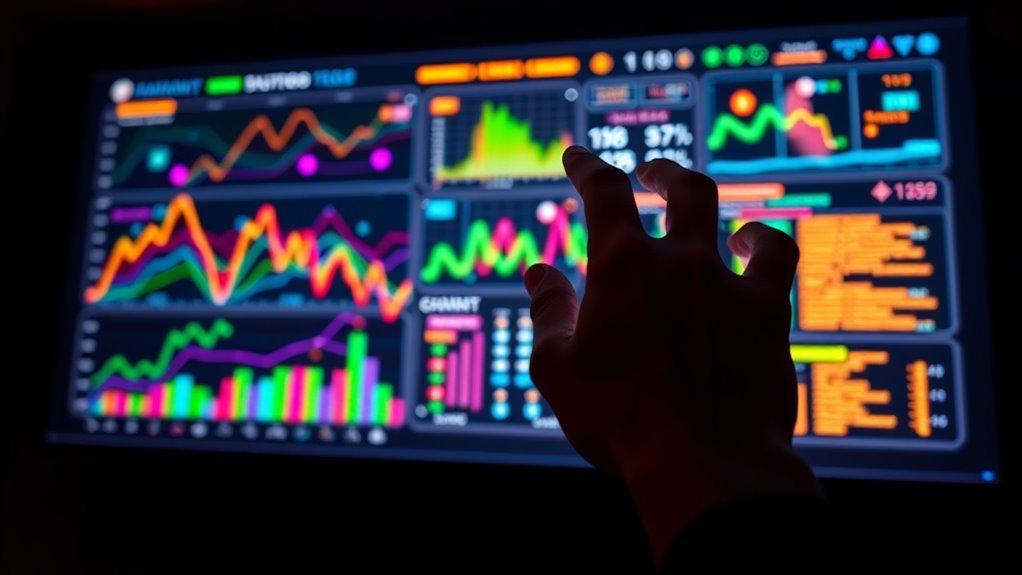
On-chain analytics has become an essential tool for anyone looking to understand the true state of the cryptocurrency market. By analyzing blockchain metrics and wallet behaviors, you gain insights that go beyond price charts and trading volumes. Blockchain metrics are quantifiable data points recorded directly on the blockchain, such as transaction counts, active addresses, and network hash rates. These metrics serve as crucial indicators of network activity, health, and user engagement. For example, a rising number of active addresses signals increased user participation, while a spike in transaction volume may indicate heightened market interest or potential large transfers. Tracking these metrics helps you identify trends and make informed decisions based on the network’s underlying activity, not just market sentiment. Recognizing recurring angel number patterns in transaction data or wallet addresses can add an extra layer of interpretive insight. Wallet behaviors, on the other hand, reveal how users interact with the blockchain at an individual level. By observing wallet activity—like the frequency of transactions, the movement of funds between addresses, and the holding patterns—you can infer investor confidence and market sentiment. For instance, if you notice many wallets consolidating funds or holding large quantities of a particular asset, it might suggest accumulation or long-term confidence. Conversely, widespread wallet movements or sudden transfers out of exchanges could indicate profit-taking or potential market downturns. Recognizing these wallet behaviors allows you to gauge the collective mood of the market and anticipate possible shifts before they become apparent through price changes.
On-chain metrics reveal network activity and health beyond price and volume.
When you combine blockchain metrics with wallet behaviors, you get a thorough picture of the market’s health. For example, if transaction counts are increasing alongside active wallet addresses, it indicates genuine demand and network utility. If, however, metrics show high activity but wallet behaviors reveal many dormant or inactive addresses, it might suggest that the activity is driven by speculative trading rather than real adoption. This layered approach helps you distinguish between superficial hype and fundamental strength, giving you an edge in your investment strategies.
Understanding these core components of on-chain analytics also empowers you to spot potential red flags. Sudden drops in wallet activity or declining blockchain metrics can warn of underlying issues or an impending market correction. By continuously monitoring these indicators, you stay ahead of the curve, making decisions based on data rather than emotions. Ultimately, mastering blockchain metrics and wallet behaviors enables you to decode the pulse of the cryptocurrency ecosystem, transforming raw data into actionable insights that support smarter, more confident investing.

InnoBeta Crypto Gifts, Ballpoint Pen Set of 4, Perfect Crypto Gifts Idea for Men & Women and Any Crypto Investor on Birthday and Christmas
This gift box comes with four ballpoint pens, featuring a unique inscription, making it a highly personalized gift….
As an affiliate, we earn on qualifying purchases.
As an affiliate, we earn on qualifying purchases.
Frequently Asked Questions
How Do On-Chain Metrics Predict Future Crypto Price Trends?
You can predict future crypto price trends by analyzing on-chain metrics like market sentiment and liquidity analysis. When market sentiment turns positive, more investors buy in, pushing prices up. Liquidity analysis reveals how easily assets can be bought or sold without impacting the price, indicating potential price movements. By monitoring these metrics, you gain insights into market dynamics, helping you anticipate trends before they become obvious.
What Are the Best Tools for Real-Time On-Chain Analytics?
You should explore tools like Glassnode, Nansen, and IntoTheBlock for real-time on-chain analytics. These platforms offer insights into decentralized exchanges activity, token valuation models, and other key metrics. They help you monitor wallet movements, liquidity, and market sentiment instantly. With their intuitive dashboards, you can make informed decisions quickly, gaining a competitive edge in understanding how on-chain data influences crypto price trends.
How Can I Interpret Whale Transaction Activities?
You need to stay sharp because whale movement often signals big market shifts. Look for transaction clustering to spot patterns of large transfers, which can indicate intentions or market sentiment. When you see significant whale activity, it’s like reading between the lines—these transactions can precede price moves. Use analytics tools to track wallet activity and analyze transfer sizes to interpret whale behavior effectively.
What Risks Are Associated With Relying Solely on On-Chain Data?
Relying solely on on-chain data risks overlooking regulatory hurdles and data privacy issues. You might face legal challenges if regulations change or if data collection infringes on privacy laws. On-chain data doesn’t always provide a complete picture, so you could miss important context or misinterpret signals. To avoid these pitfalls, combine on-chain analytics with other research methods and stay updated on evolving regulations and privacy standards.
How Do On-Chain Signals Differ Across Various Blockchain Networks?
You’ll notice that on-chain signals differ markedly across blockchain networks, with transaction speed and blockchain consensus playing key roles. For example, networks like Solana process thousands of transactions per second due to their fast consensus mechanisms, while Bitcoin’s slower pace reflects its more secure but less scalable design. These differences influence how you interpret data, as each network’s unique architecture shapes the on-chain signals you analyze for insights.
Blockchain Transaction Data Analytics: Complex Network Approaches (Big Data Management)
As an affiliate, we earn on qualifying purchases.
As an affiliate, we earn on qualifying purchases.
Conclusion
By mastering on-chain analytics, you unseal the heartbeat of the crypto world, turning raw data into a compass guiding your decisions. Think of it as having a crystal ball that reveals market trends before they unfold. With this powerful tool, you can navigate the volatile crypto seas with confidence, spotting opportunities and avoiding pitfalls. Ultimately, understanding on-chain analytics isn’t just a skill; it’s your secret weapon in the ever-changing landscape of digital assets.

MY CRYPTOCURRENCY LOGBOOK
As an affiliate, we earn on qualifying purchases.
As an affiliate, we earn on qualifying purchases.

Day Trading Log book: Investing Planner Organizer to Record Investments and Trade History Profit, Loss and Emotion Tracker for Forex Stock Crypto Market
As an affiliate, we earn on qualifying purchases.
As an affiliate, we earn on qualifying purchases.